Vietnam Paves the Way for Semiconductor Independence with Landmark Government Support Strategy for Domestic Chip Manufacturing

The Vietnamese government has officially launched a transformative initiative to catalyze its semiconductor industry, authorizing a landmark investment of up to 12.8 trillion VND to support the establishment of the nation’s first specialized semiconductor manufacturing plant. This strategic move, underpinned by a recent resolution passed by the National Assembly, seeks to position Vietnam as a pivotal player in the global technology supply chain, ensuring national security and fostering high-tech self-reliance by 2030, with a visionary outlook extending to 2050.
The Strategic Shift: Moving Beyond Assembly
For decades, Vietnam has functioned as a critical node in the global electronics assembly and testing landscape. However, the current geopolitical climate, characterized by supply chain volatility and the increasing importance of "chip sovereignty," has prompted a fundamental shift in national policy.
According to Nguyen Khac Lich, Director of the Authority of Information Technology and Communications Industry under the Ministry of Information and Communications (MIC), the government’s new roadmap is the first long-term strategy of its kind for the nation. The goal is to move beyond mere assembly and into the high-value sectors of research, development, design, and fabrication. By fostering a domestic ecosystem, Vietnam aims to mitigate the risks associated with global supply chain disruptions while simultaneously upgrading its industrial infrastructure to support national defense and telecommunications security.
Legislative Framework and Financial Incentives
The recent resolution regarding specific mechanisms to accelerate scientific and technological development serves as the legal bedrock for this initiative. The government has committed to providing direct financial support for the first domestic semiconductor facility that meets high-tech standards.
Key provisions of this support package include:
- Direct Subsidies: The state will provide up to 30% of the total project investment, sourced from the central budget, provided the plant commences production before December 31, 2030. The total support cap is set at 10 trillion VND.
- Research and Development Support: During the project’s construction and implementation phases, enterprises are permitted to allocate between 10% and 20% of their taxable income to a dedicated Science and Technology Development Fund. This fund is specifically earmarked for the semiconductor project, with total allocations not exceeding the project’s total investment capital.
- Land and Administrative Advantages: To expedite the rollout, selected enterprises will be granted land usage rights through direct allocation, bypassing traditional auction processes. The Prime Minister holds the authority to select the lead enterprise and finalize the specific support mechanisms tailored to each project.
A Chronology of Progress
Vietnam’s ambition in the semiconductor space is not a sudden development but the result of years of incremental investment in digital infrastructure.
- 2020-2022: The Ministry of Information and Communications initiates a comprehensive review of the national technology sector, identifying semiconductors as a "strategic bottleneck" for growth.
- 2023: Significant milestones are reached as domestic tech giants, including Viettel and FPT, announce major investments in chip design and verification.
- Early 2025: The National Assembly ratifies the resolution on special mechanisms for high-tech development, officially opening the door for state-backed funding of domestic fabrication plants.
- Future Outlook (2030-2050): The government aims to establish a robust network of research centers and small-to-medium-scale foundries capable of producing specialized chips for domestic telecommunications, automotive, and defense applications.
Industry Response: The Role of Viettel and FPT
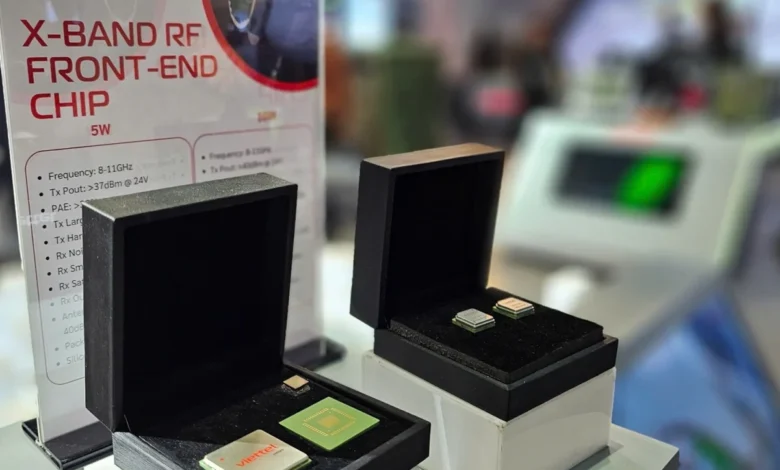
The private sector has been quick to align with the national agenda. Viettel has emerged as a frontrunner in this transition, recently announcing the successful design of the 5G DFE chip—the most complex chip designed in Southeast Asia to date. Capable of handling 1,000 trillion calculations per second, this signal processing unit is a foundational component for next-generation telecommunications infrastructure.
Dr. Nguyen Trung Kien, Deputy Head of the Semiconductor Technology Department at Viettel, emphasized that the semiconductor industry is an incredibly complex, knowledge-intensive field that requires deep expertise in electronics, information technology, and advanced materials. "These fields are tasks that Viettel has set for itself throughout its development process," Kien stated, noting that the foundation for entering this industry was built through years of investment in network infrastructure and software engineering.

Lieutenant General Nguyen Dinh Chien, Deputy General Director of Viettel, framed the move as a marathon rather than a sprint. "We must have a logical approach to research, development, and business. Designing and producing chips that meet the needs of domestic enterprises and national security is the foundation for developing advanced, future-proof technologies and expanding our supply to the international market."
Global Context and Economic Implications
The global semiconductor market is expected to reach $1 trillion by 2030, driven by the proliferation of artificial intelligence, the Internet of Things (IoT), and autonomous systems. For Vietnam, the challenge is to capture a meaningful share of this value.
Le Quang Dam, CEO of Marvell Technology Vietnam, described the current moment as a "once-in-a-century opportunity." Amidst ongoing geopolitical tensions and the reconfiguration of global trade, Vietnam’s stable political environment and commitment to policy reform make it an attractive destination for semiconductor investment.
"This opportunity is not just arriving; it is something we must actively create," said Dam. "We have a clear strategy, support from the government, and a pool of talented engineers—both domestic and those returning from abroad. The goal now is to unify these resources to create real value for the nation."
Analytical Perspective: Challenges and Opportunities
While the state-led support package is a significant milestone, experts note that the path ahead remains challenging. The semiconductor industry is characterized by high barriers to entry, extreme capital intensity, and a constant need for specialized human capital.
- Human Capital Development: Vietnam’s success will largely depend on its ability to scale up the training of engineers specializing in circuit design and fabrication. The government’s focus on research and training facilities within the new plants is a direct attempt to address this gap.
- Specialized Foundries: By focusing on "specialized" chips—those designed for specific purposes like 5G infrastructure or IoT devices—Vietnam is adopting a "niche-first" strategy. This avoids direct competition with global giants producing general-purpose CPUs and GPUs, instead carving out a stronghold in high-demand, high-security applications.
- Supply Chain Integration: Integrating into the global supply chain requires not just state funding, but rigorous adherence to international standards in quality control, intellectual property protection, and environmental sustainability.
Broader Impact on the Vietnamese Economy
The push into semiconductor manufacturing is expected to have a multiplier effect on the Vietnamese economy. Beyond the direct jobs created in high-tech manufacturing, the sector is projected to stimulate growth in the supporting industries of chemicals, specialty gases, and precision engineering.
Furthermore, by reducing reliance on imported components, Vietnam will significantly improve its balance of trade and enhance its technological autonomy. The move signals to the international community that Vietnam is moving up the global value chain, shifting from a labor-intensive manufacturing hub to a sophisticated, knowledge-based economy.
As the implementation phase begins, the coordination between the Ministry of Information and Communications, the Ministry of Planning and Investment, and leading domestic enterprises will be critical. The success of this initiative will ultimately be measured by the nation’s ability to move from design and verification to large-scale, sustainable production, effectively securing its place in the 21st-century digital architecture.