The pristine ecosystem of the Cu Lao Cham Marine Protected Area in Vietnam has recently become the sanctuary for two rescued wild animals, marking a significant success in the ongoing efforts to conserve biodiversity within the region. On October 26, the Management Board of the Cu Lao Cham Marine Protected Area announced the successful rewilding of a yellow-headed tortoise (Indotestudo elongata) and a reticulated python (Malayopython reticulatus). Both species, categorized as endangered, precious, and rare, were returned to their natural habitats following successful rehabilitation protocols.
This dual release underscores the growing awareness among local residents regarding wildlife protection and the efficacy of the collaboration between the public and environmental authorities. By returning these animals to the wild, local stakeholders are not only preventing the loss of individual creatures but are also actively contributing to the ecological health of the archipelago.
Chronology of the Rescue Operations
The successful reintroduction of these animals was the culmination of two separate rescue operations occurring within a 48-hour window in late October.
The first incident occurred on October 23, when Mr. Tran Thanh Chung, a resident of Hoi An City, took the initiative to voluntarily surrender a yellow-headed tortoise to the local police department. The specimen, weighing approximately 1.6 kilograms, was discovered by Mr. Chung, who immediately recognized the need to protect the animal rather than keep it as a captive pet. Upon receipt, police officials coordinated with the Cu Lao Cham Management Board to ensure the tortoise underwent a thorough health evaluation. Veterinarians and biologists confirmed that the tortoise was in excellent physical condition, displaying no signs of injury or malnutrition, which facilitated a swift return to the wild.
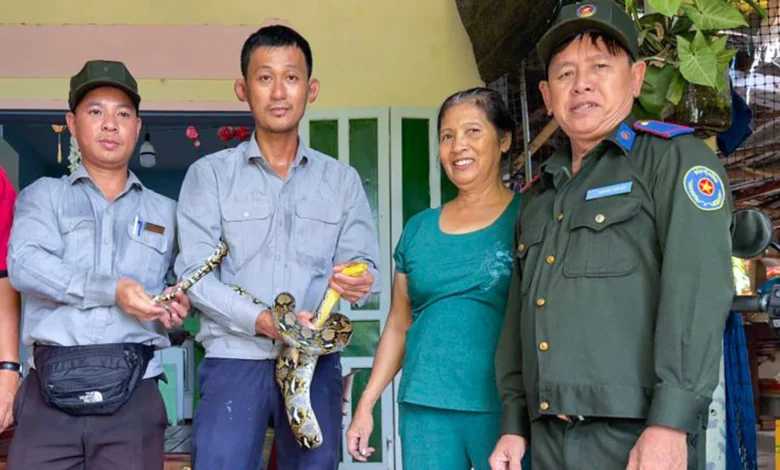
The second incident followed on October 25, in the village of Bai Ong, located in the Tan Hiep commune. Ms. Nguyen Thi Tran discovered a reticulated python, weighing approximately 3 kilograms, entangled in a net behind her residence. Recognizing the danger to both herself and the animal, she promptly notified the local authorities. Specialized teams arrived on-site to safely disentangle the reptile. After a brief period of monitoring to ensure the snake had not suffered trauma from the netting, the authorities successfully released the python back into the dense vegetation of the island, where it could resume its role in the local food web.
Biological Significance and Ecological Roles
The reintroduction of these two species is vital for the continued stability of the Cu Lao Cham ecosystem. Each plays a distinct and irreplaceable role in the environment.
The yellow-headed tortoise, a land-dwelling species, is a crucial component of the island’s forest floor ecology. These tortoises primarily subsist on fallen fruits, vegetation, and occasionally small invertebrates. As they forage, they act as important seed dispersers. By consuming fruit and moving across the landscape, they facilitate the germination and distribution of various plant species, thereby assisting in the regeneration of the forest. In the context of the Cu Lao Cham protected area, the presence of these tortoises is a barometer for the health of the island’s terrestrial habitat.
In contrast, the reticulated python serves as a top-tier predator within its niche. As an apex species in the local forest environment, the python is essential for maintaining the equilibrium of the food chain. By regulating the populations of small mammals and rodents, the python prevents overpopulation of specific prey species, which in turn protects the vegetation and agricultural crops from excessive damage. The return of this individual to its natural habitat ensures that the delicate balance of the island’s trophic structure remains intact.

Legal Framework and Conservation Status
Both the yellow-headed tortoise and the reticulated python are classified under Group IIB of the List of Endangered, Precious, and Rare Forest Animals, as mandated by Circular 85/2025/TT-BNNPTNT issued by the Ministry of Agriculture and Rural Development of Vietnam. This classification signifies that while these species are not yet on the brink of total extinction, they are highly vulnerable to exploitation, habitat loss, and illegal wildlife trafficking.
The legal framework in Vietnam is increasingly stringent regarding the possession of these species. The classification under Group IIB requires that any individual coming into contact with these animals must report them to the authorities rather than attempting to keep or sell them. The voluntary surrender by citizens like Mr. Chung and Ms. Tran serves as an example of successful public compliance with these regulations.
Conservation experts note that public education campaigns in Hoi An and the surrounding areas have played a pivotal role in shifting the local mindset. Rather than viewing wild animals as potential food sources or pets, the community is increasingly viewing them as protected treasures that belong to the natural heritage of the Cu Lao Cham Biosphere Reserve.
Broader Implications for Wildlife Protection
The events of October 26 serve as a microcosm for the broader challenges and successes of conservation in Vietnam. The Cu Lao Cham Marine Protected Area, a UNESCO World Biosphere Reserve, serves as a model for how land and marine conservation can be integrated.
The implications of these successful releases are three-fold:
- Enhanced Community Engagement: The willingness of citizens to reach out to authorities demonstrates that communication channels between the public and the management board are effective. This "bottom-up" approach to conservation is often more sustainable than enforcement-only strategies.
- Resource Optimization: By having a pre-established protocol for rescue and rehabilitation, the management board was able to process these animals within days. This efficiency minimizes the stress placed on the animals and reduces the duration they spend in captivity, which is critical for their survival after release.
- Scientific Monitoring: Each rescue provides data on the distribution and health of wildlife populations in the region. This data is essential for future management decisions and helps authorities identify if there are specific "hotspots" where animals are frequently getting trapped or coming into contact with humans.
Future Outlook
Looking ahead, the management board at Cu Lao Cham intends to continue its outreach programs to further educate the local population on the importance of habitat preservation. While the rescue and release of these two individuals are success stories, they also highlight the ongoing risk that human expansion and agricultural activities pose to wild species.
Conservationists emphasize that the ultimate goal is not just to rescue animals, but to ensure that their natural environment remains undisturbed. The success of the Cu Lao Cham project serves as a reminder that biodiversity is not a luxury but a necessity for environmental resilience. As climate change continues to pose threats to coastal and island ecosystems, maintaining a healthy, functioning population of native flora and fauna is the best defense against ecological degradation.
Through the dedicated efforts of local citizens, law enforcement, and the management board, the Cu Lao Cham archipelago continues to stand as a beacon of hope for wildlife conservation in Southeast Asia. The return of the yellow-headed tortoise and the reticulated python is a testament to the fact that when communities are empowered to act as stewards of their environment, nature has a fighting chance to thrive.
Related posts: