Phu My Hung Real Estate Market Faces Severe Supply Crunch as Apartment Prices Nearing 200 Million VND per Square Meter Spark Intense Buyer Frenzy

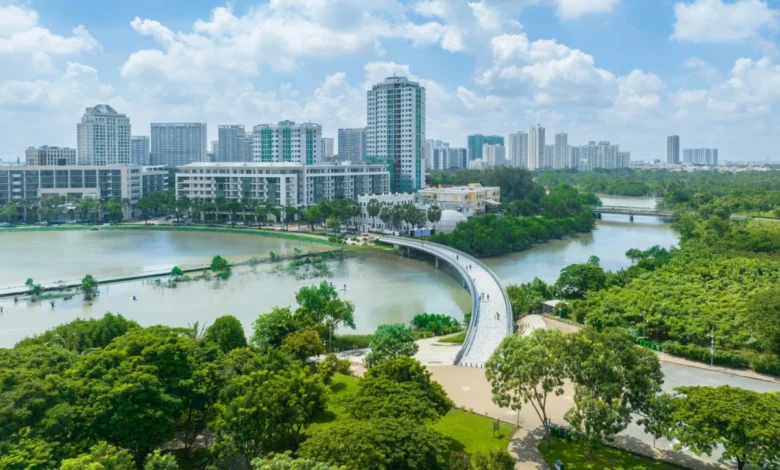
The property landscape within Ho Chi Minh City’s pioneering urban developments has entered a phase of profound scarcity accompanied by unprecedented price discovery. At the heart of this market shift is the Phu My Hung urban area in South Saigon, where new residential supply has dwindled to a trickle while demand continues to surge exponentially. Prospective buyers are now routinely outnumbering available inventory by multiples, forcing developers to resort to specialized lottery mechanisms and priority queue systems just to manage the overwhelming public interest. With asking prices touching the threshold of 200 million VND per square meter, the enclave has solidified its transition from an upscale residential suburb into an ultra-luxury market segment.
Evolution of a Model Urban Center
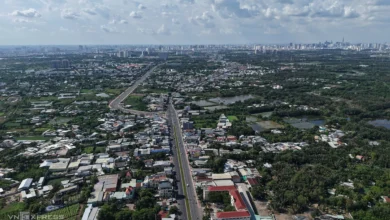
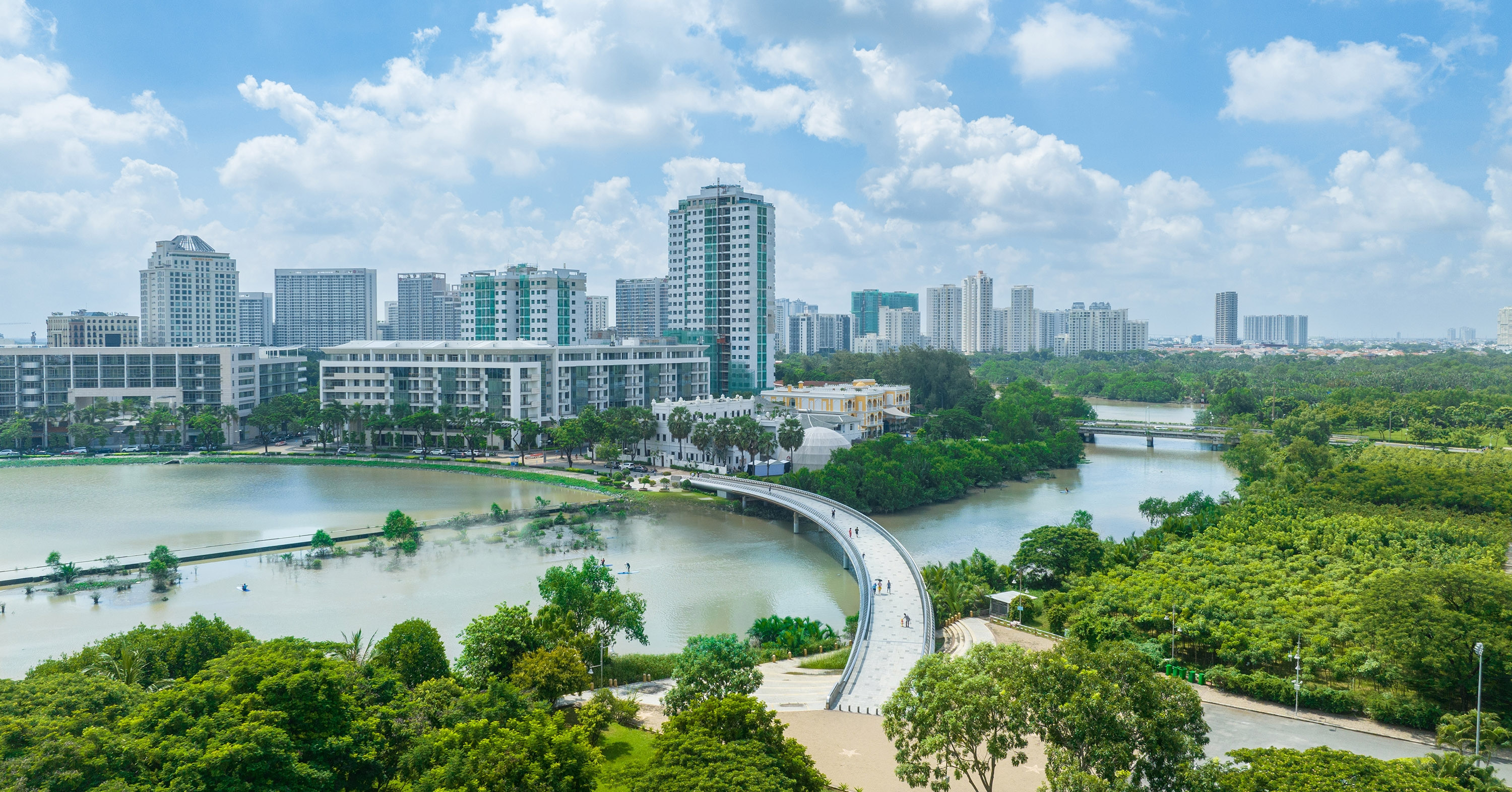
Conceived in the early 1990s as a joint venture between the Ho Chi Minh City People’s Committee and Taiwan’s Central Trading and Development Group, Phu My Hung was master-planned by the renowned American architectural firm Skidmore, Owings & Merrill. Spanning 774 hectares within the broader South Saigon New Urban Area, it was envisioned as Vietnam’s first truly model urban township.
Unlike traditional organic expansions that favored isolated housing projects and fragmented development, Phu My Hung was designed with a holistic integration framework. Residential zones were meticulously woven together with commercial hubs, financial districts, international educational institutions, advanced healthcare facilities, recreational spaces, and comprehensive green infrastructure. Over more than three decades of systematic execution, the township transformed what was once a desolate marshland into a thriving, self-sustaining ecosystem characterized by low building densities, wide boulevards, and pedestrian-friendly environments.
However, this deliberate design philosophy—prioritizing livability, open spaces, and controlled commercial growth over maximum density—has created a natural structural limitation: the land bank designated for primary residential development is rapidly reaching its final exhaustion point.
Shifting Supply Dynamics and the Rise of Boutique Launches
In the formative years of its residential expansion, Phu My Hung frequently introduced large-scale projects comprising hundreds or even thousands of units per phase. These developments provided a steady stream of housing options that accommodated the city’s burgeoning upper-middle class. In recent years, however, the volume of new supply has contracted sharply. Because remaining plots are scattered and strictly regulated by the master plan, newly introduced projects are decidedly boutique in nature, featuring limited unit counts and heavily leaning toward the high-end and ultra-luxury segments.
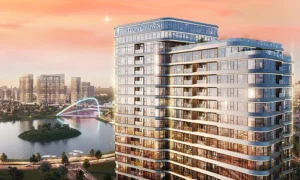
A review of the recent project pipeline illustrates this tightening supply curve. In 2024, the market witnessed the introduction of The Aurora, a boutique apartment development offering just 95 units. During the same year, the developer introduced L’Arcade, a low-rise commercial townhouse project comprising only 37 mixed-use properties combining residential living spaces with street-level retail potential. By late 2025, the release of The Sculptura added a mere 75 apartments and 10 high-end shops to the inventory.
This scarcity has fundamentally altered the dynamics of project absorption. Despite escalating price tags, demand has consistently defied broader macroeconomic headwinds. When projects are officially launched, the volume of applications frequently eclipses available inventory by staggering margins, turning the acquisition process into a competitive arena for affluent buyers and investors.
Historical Precedent and the Lottery System for Priority Selection
The phenomenon of massive oversubscription is not entirely unprecedented in Phu My Hung, but its intensity has heightened alongside dwindling supply. During the 2017-2018 rollout of the Midtown complex—a landmark multi-phase development—market appetite reached fever pitch. Individual components within the complex, such as The Grande (309 apartments), The Symphony (319 apartments and 73 shops), and The Signature (516 apartments), attracted staggering levels of registration. According to developer disclosures at the time, the number of formal applications submitted for these projects reached approximately 1,500, 3,000, and 3,300 reservations respectively, far surpassing the available stock.
A similar frenzy characterized the launch of The Sculptura in late 2025. Although the project offered only 75 apartments, it accumulated over 750 formal expressions of interest. According to sales representatives managing the event, the entire primary inventory was completely transacted within a single hour of opening.
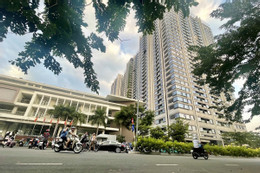
Mr. Huong, a veteran real estate broker operating within the South Saigon corridor, notes that the intrinsic value of Phu My Hung lies in its completed infrastructure, mature amenity ecosystem, and established community. Unlike emerging eastern or western townships where infrastructure is still in development, Phu My Hung offers an immediate, turnkey living environment. Consequently, alongside first-time buyers seeking a foothold in the community, a substantial portion of the applicant pool consists of existing residents looking to acquire additional properties whenever new phases are announced.
To manage the logistics of extreme oversubscription, developers have adopted a distinct distribution model: the priority queue lottery. For projects where applications vastly exceed available inventory, prospective buyers participate in a random draw to establish a strict chronological priority sequence. Upon being called, participants select their preferred units from the remaining inventory in real time. This method ensures procedural transparency while underscoring the stark reality of the supply-demand imbalance.
Price Appreciation and the Transition to Ultra-Luxury
Accompanying the supply contraction is a dramatic upward recalibration of property values. While historical offerings catered broadly to the upper-middle class, contemporary projects are explicitly tailored to high-net-worth individuals, cementing a decisive shift toward ultra-luxury real estate.
Market surveys conducted by VietNamNet reveal the velocity of this price growth. In 2021, the Cardinal Court project was launched with average primary prices hovering around 80 million VND per square meter. By mid-2024, The Aurora debuted with prices ranging from 90 to 132 million VND per square meter, depending on floor level, view orientation, and unit configuration.
In the specialized commercial townhouse segment, the 37 units of L’Arcade were introduced in 2024 with absolute prices ranging from 67 to 102 billion VND per unit, reflecting their large usable floor areas and multi-story mixed-use flexibility. By late 2025, apartment pricing reached new peaks. The Sculptura entered the market with asking prices between 170 and 190 million VND per square meter, while concurrent luxury introductions such as The Regency debuted at approximately 170 million VND per square meter.
To contextualize this long-term appreciation, real estate analysts often compare modern launches against historical benchmarks within the same township. In 2007, apartments at the Sky Garden 3 project were brought to market at an average price of roughly 27 million VND per square meter. Comparing baseline figures, current primary prices at developments like The Regency represent a nearly sixfold increase over a span of less than two decades, while projects such as The Aurora command values three to five times higher than their historical predecessors.
Macroeconomic Context and Market Polarization
The micro-market conditions observed in Phu My Hung mirror broader structural shifts across Ho Chi Minh City’s wider real estate landscape. According to market reports published by Savills Vietnam, city-wide apartment supply has tightened progressively while remaining deeply uneven in its geographic distribution. More than 55% of new supply entering the qualifying sales pipeline in recent quarters has been concentrated in neighboring provinces such as Binh Duong, leaving core urban districts severely under-supplied.
Simultaneously, primary price indices across Ho Chi Minh City have remained stubbornly elevated, exerting acute pressure on consumer affordability. Savills data indicates that approximately 80% of primary apartment units launched across the metropolis crossed the threshold of 100 million VND per square meter, while overall market absorption liquidity adjusted downward as buyers exercised heightened caution. This affordability squeeze is further compounded by macroeconomic factors, including mortgage interest rates remaining between 12% and 15% per annum for floating periods, which have prompted secondary investors facing financial pressures or uncompleted legal frameworks to occasionally offer discounts of up to 10% on older inventory.
These macroeconomic indicators underscore a pronounced bifurcation within the property sector. While the broader mass-market and lower-tier segments grapple with absorption challenges and financing costs, prime urban enclaves featuring fully realized infrastructure, finite land reserves, and established prestige continue to defy broader market corrections.
Broader Implications for South Saigon’s Real Estate Ecosystem
The trajectory of Phu My Hung serves as a bellwether for mature urban development in Vietnam. As core land banks are depleted, developers are increasingly forced to pivot toward infill redevelopment, micro-urban regeneration, or ultra-luxury positioning to maintain profit margins amidst rising land acquisition and construction costs.
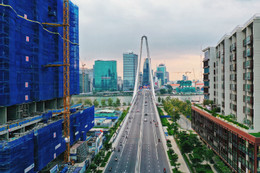
For prospective purchasers, the escalating price points and fierce competition signal that the window for accessible entry into South Saigon’s primary market has effectively closed. As asking prices approach and occasionally exceed the 200 million VND per square meter mark, Phu My Hung is no longer merely a high-end residential suburb; it has evolved into an exclusive asset class reserved for affluent wealth preservation and elite generational living.
Market observers suggest that as long as the regulatory approval process for new land developments remains stringent and infrastructure bottlenecks persist in other parts of the metropolitan area, prime established townships like Phu My Hung will retain their pricing power. However, the widening gap between primary luxury pricing and average median income levels poses long-term questions regarding market sustainability and the future composition of urban communities in Ho Chi Minh City.
Related posts: