General Motors Faces Strategic Reversal as US Automotive Market Embraces Hybrid Vehicles Over Pure Electrification

The global automotive landscape is undergoing a profound and unexpected realignment. Once dismissed by industry giants as a mere transitional stepping stone, gasoline-electric hybrid technology is experiencing a massive resurgence, reshaping the American car market and leaving legacy manufacturers scrambling to adjust their long-term portfolios. For companies like General Motors (GM), which spent the better part of the past decade betting its entire future on a pure battery-electric vehicle (BEV) strategy, the sudden shift in consumer preference has created a strategic vulnerability, while competitors who kept their hybrid options alive are reaping record profits.
This dramatic market pivot comes at a time when automotive trends are fracturing globally. While Europe continues to see steady adoption of fully electric vehicles driven by stringent emissions regulations and dense charging infrastructures, the United States market is telling a strikingly different story. As consumer hesitancy grows, fuel prices fluctuate, and regulatory frameworks evolve, hybrids have transitioned from an eco-friendly niche into the dominant battlefield of the modern American automotive industry.
The Genesis of the All-Electric Bet and the Rejection of Hybrids
To understand General Motors’ current predicament, one must look back to the late 2010s, a period marked by regulatory optimism and a sweeping industry consensus that the internal combustion engine was on the verge of total extinction. Following a wave of tightening emissions standards across major global economies, nearly every major legacy automaker made high-profile commitments to transition exclusively to pure electric vehicle sales by 2030. Massive financial resources were diverted away from traditional research and development, cutting off funding for internal combustion engines and hybrid systems alike.
During this era, hybrid technology—which was first popularized by the late-1990s electrification wave—was largely sidelined by automotive executives who viewed it as an unnecessary complication. Hybrids were criticized for carrying the mechanical complexity of both a traditional gasoline engine and an electric motor, thereby inflating manufacturing costs and straining supply chains.
This sentiment was famously crystallized by GM CEO Mary Barra at the Barclays automotive conference in 2019. Barra explicitly categorized hybrid vehicles as nothing more than a temporary stopgap. She noted that consumers generally showed little long-term enthusiasm for hybrids, reinforcing GM’s strategic imperative to leapfrog directly into pure battery-electric vehicles to protect the environment and future-proof the company. For years, this philosophy dictated corporate policy in Detroit, steering billions of dollars exclusively into electric architectures like the Ultium battery platform.
The Hybrid Resurgence: Toyota Leads the Charge While GM Lags
However, reality proved more nuanced than corporate boardrooms anticipated. Over the subsequent seven years, the North American market demonstrated that hybrid technology was a durable long-term solution rather than a passing phase. Automakers that remained patient with gasoline-electric powertrains are now capturing unprecedented market share, while GM finds itself playing a high-stakes game of catch-up.
Japanese automotive giant Toyota has emerged as the undisputed leader of this paradigm shift. According to comprehensive industry data from Cox Automotive, Toyota accounted for a staggering 49.2% of total hybrid vehicle sales in the United States during the first quarter of the year. The overall scale of the hybrid sector has expanded exponentially, with hybrids climbing from 16% of total industry sales in February to 19% by August, heavily propelled by volatile fuel prices and rising consumer cost-consciousness. Industry analysts now project that hybrid market share could surge to an extraordinary 34% by 2031.
Across the broader industry, showrooms are witnessing a boom driven by hybrid iterations of compact and mid-size SUVs, most notably the Toyota RAV4 Hybrid and the Honda CR-V Hybrid. These vehicles have struck a delicate chord with consumers who desire improved fuel economy and reduced emissions without the range anxiety and infrastructure dependencies associated with pure electric vehicles.
Nissan is another major manufacturer aggressively accelerating its timeline. The company recently announced plans to fast-track the launch of its compact Rogue hybrid by several months, scheduling a formal dealership rollout to meet surging consumer demand for electrified utility vehicles.
"Every single major automaker is aggressively deploying hybrid variants across their core segments," noted Srini Rajagopalan, Vice President of OEM Solutions at J.D. Power. "This is no longer a passing market fad; it is a fundamental restructuring of consumer expectations."
Diverging Global Trends: The US Versus Europe
The resurgence of hybrids in the United States highlights a stark geographical divergence in automotive trends. In Europe, where urban density is higher and government incentives for pure electric vehicles have historically been aggressive, BEVs continue to maintain strong momentum, with roughly one out of every four new vehicles sold featuring a plug-in electric drivetrain.
Conversely, the American market has experienced a volatile policy and consumer environment. Following shifts in federal governance, including alterations to federal tax incentives for electric vehicles, the landscape for pure battery-electric cars has cooled significantly. Data indicates that market share for pure EVs in the US declined from a peak of 14.4% in September 2025 down to 7.1% by May of the following year.
This deceleration caught domestic automakers off-guard, leaving companies that abandoned internal combustion infrastructure with limited flexibility to pivot when consumer demand shifted back toward partial electrification.
General Motors’ Dilemma and Limited Hybrid Lineup in North America
To recapture lost market share and satisfy dealer networks demanding diversified inventory, General Motors has been forced into a strategic recalibration. However, reintroducing hybrid powertrains to a lineup optimized exclusively for pure electric vehicles and traditional gasoline engines is a slow and capital-intensive endeavor.
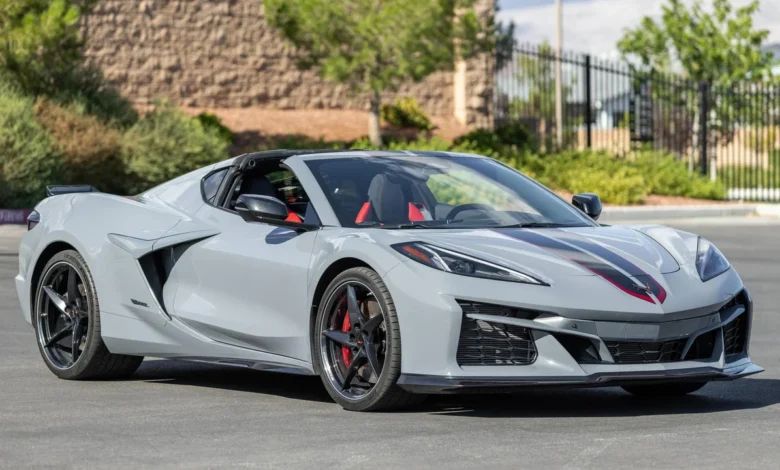
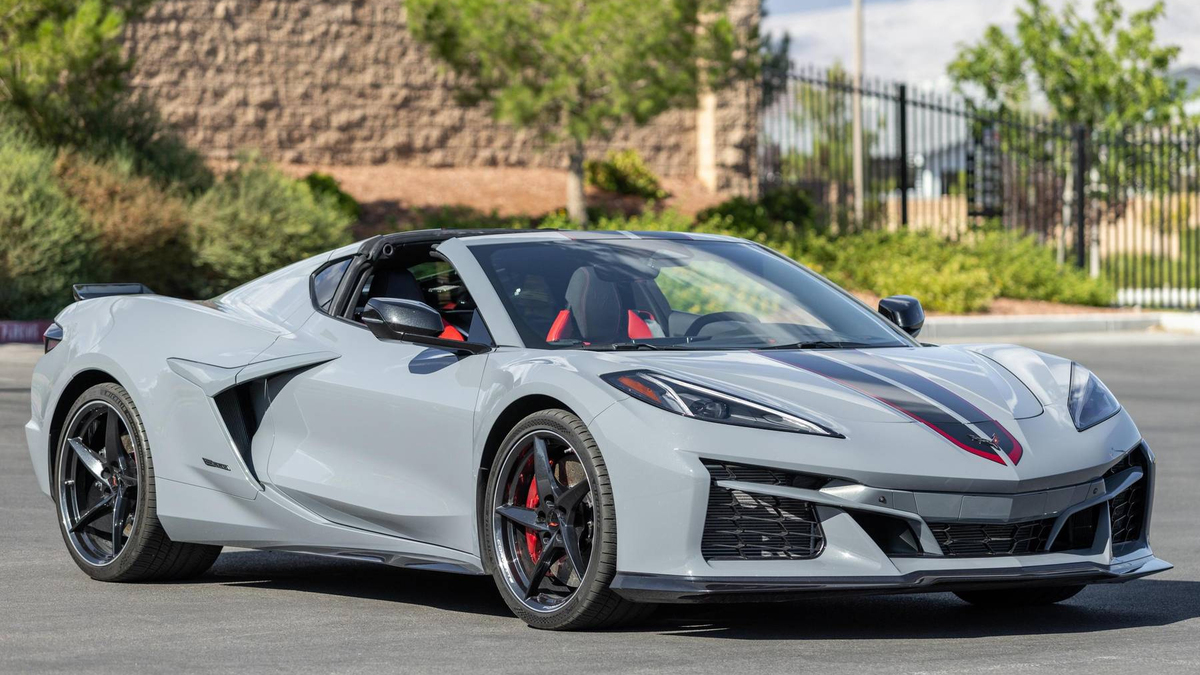
Currently, GM’s hybrid footprint in the North American market remains remarkably sparse. The company’s sole domestic hybrid offerings are high-performance sports cars: the Chevrolet Corvette E-Ray, priced around $111,000, and the ultra-exclusive ZR1X, commanding upwards of $227,000. While GM previously marketed various hybrid sedans and SUVs in past decades, it currently maintains hybrid passenger vehicles almost exclusively in overseas markets, most notably in China.
Industry insiders note that the timeline for GM to introduce more accessible, high-volume hybrid models to North American showrooms remains a significant question mark. While corporate leadership has largely declined to comment publicly on future product roadmaps, automotive supply chain sources suggest that GM dealerships in the United States may have to wait until the late 2020s before a broader portfolio of affordable hybrid vehicles becomes available for retail sale.
Broader Implications for the Automotive Industry
The current shift back toward hybrid technology carries profound lessons for global manufacturing strategy. It demonstrates that while the ultimate destination for the automotive industry remains zero-emission mobility, the journey is nonlinear and heavily dictated by consumer economics, infrastructure readiness, and geopolitical realities.
Automakers that adopted a diversified powertrain strategy—maintaining investments in internal combustion, hybrid, plug-in hybrid, and pure electric architectures simultaneously—have proven far more resilient against market shocks. For General Motors, the ongoing pivot highlights the immense difficulty of reversing corporate-wide directives once they are set in motion. As dealerships and consumers continue to vote with their wallets in favor of hybrid efficiency, Detroit’s automotive giant faces a critical window to close the technology gap and re-establish its dominance in a rapidly evolving marketplace.