Tensions in the Middle East have reached a dangerous new inflection point following explicit threats from senior Iranian officials directed at advanced United States military aircraft deployed in the region. The rhetoric underscores a dramatic deterioration of security dynamics, pulling together intersecting crises ranging from active military engagements and naval blockades to high-stakes diplomacy concerning international nuclear oversight.
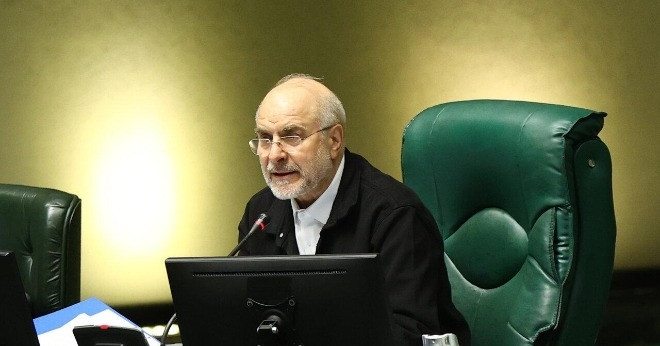
The latest war of words escalated on September 20, when Mehr News Agency published a defiant statement attributed to Iranian Parliament Speaker Mohammad Baqer Ghalibaf. According to the report, Ghalibaf asserted that Tehran’s military apparatus is fully prepared to take direct aim at American F-35 and F-15 fighter jets operating across the Middle East theater.
"The era of hunting down F-35 and F-15 fighter jets has begun. It is time for the US to report losses regarding these types of aircraft," Ghalibaf stated, marking a severe escalation in threats targeting high-value Western military assets.
This public posturing followed a sobering admission by Lieutenant General Dan Caine, Chairman of the U.S. Joint Chiefs of Staff, who acknowledged that American armed forces are currently grappling with an unprecedented and volatile combat environment. General Caine remarked that from this juncture onward, the infrastructure and positioning of U.S. forces will be actively monitored and pursued in real-time by adversaries.
The Broader Military Context: Attrition in the Skies
The threats made by Speaker Ghalibaf do not exist in a vacuum; they arrive against a backdrop of documented matériel losses sustained by the United States and its allies in the region. Recent assessments from intelligence circles indicate that the U.S. military has lost at least four advanced F-15E strike aircraft in the Middle East since the outbreak of widespread hostilities. Each of these tactical jets carries an estimated unit cost of approximately $30 million, representing a significant financial and operational drain.
Compounding these losses, a cutting-edge U.S. F-35 Lightning II joint strike fighter—valued between $80 million and $85 million—was severely damaged or destroyed in March due to what initial reports categorized as friendly fire incidents involving Iranian air defense networks. These incidents have galvanized hardline factions in Tehran, who view the vulnerability of America’s premier stealth aircraft as proof that U.S. air dominance in the region is increasingly contestable.
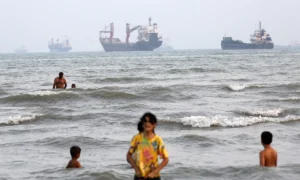
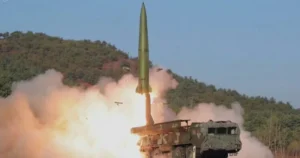
Simultaneously, the theater of conflict has expanded beyond direct U.S.-Iran friction points. Yemen-based Houthi forces, widely backed by Tehran, claimed responsibility for a sophisticated drone and ballistic missile barrage targeting the Saudi capital of Riyadh, as well as crucial energy infrastructure installations along the Red Sea. Furthermore, localized flare-ups have directly challenged maritime freedom of navigation. While U.S. military reports highlighted ongoing disruptions to commercial shipping passing through the strategic Strait of Hormuz, Iranian officials have vehemently dismissed these statements as "factually incorrect."
The Nuclear Dimension: Risks to the NPT and IAEA Scrutiny
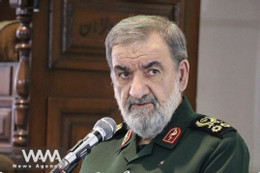
Parallel to the kinetic engagements on the ground and in the air, the diplomatic architecture holding together the international non-proliferation regime is fracturing. On the same day as Ghalibaf’s remarks, Mohsen Rezaei, Secretary of Iran’s Expediency Discernment Council, issued a stark warning that Tehran could ultimately withdraw from the Treaty on the Non-Proliferation of Nuclear Weapons (NPT). Rezaei framed this potential step as a necessary defensive maneuver to counter relentless military and political pressures originating from the United States and Israel.
"We remain committed to the religious decree of the Supreme Leader on martyrdom and have not changed our doctrine, but we cannot guarantee what will happen in the future," Rezaei said, pointing directly to the cumulative impact of U.S. and Israeli actions over preceding months. "The final decision has not been made yet, but it will depend entirely on the behavior of the United States."
This warning arrives as Washington and its European allies—specifically the E3 grouping of Britain, France, and Germany—actively push for a resolution at the International Atomic Energy Agency (IAEA) Board of Governors. The proposed resolution aims to censure Iran and refer its nuclear file directly to the United Nations Security Council, citing persistent non-compliance with IAEA safeguard inspections and verification mechanisms. Predictably, traditional Iranian allies Russia and China have voiced strong opposition to this diplomatic maneuver, threatening to veto or block measures that would isolate Tehran further.
Diplomatic Maneuvers and Behind-the-Scenes Channels
Despite the bellicose rhetoric emanating from various factions, backchannel diplomacy has not entirely stalled. In recent weeks, Iran reportedly transmitted a comprehensive set of conditions to the United States via intermediaries in Qatar. This diplomatic overture aimed at paving the way for renewed talks to halt regional conflicts includes several core demands: a cessation of hostilities across new active fronts, the unfreezing of billions of dollars in Iranian assets held in foreign accounts, and the immediate lifting of the ongoing naval blockade restricting Iranian shipping lanes.
However, mutual distrust continues to sabotage formal negotiations. Earlier in September, Tehran leveled sharp accusations against Washington, alleging that heavy-handed U.S. pressure forced the head of Iran’s nuclear agency to be blocked from attending official IAEA events in Vienna. Iranian officials characterized this diplomatic obstruction as a blatant violation of international law and a demonstration of Washington’s bad faith in managing multilateral forums.
Implications and Future Outlook
The convergence of threats against U.S. stealth assets, the proliferation of proxy attacks across the Arabian Peninsula, and the looming threat of an Iranian exit from the NPT paint a grim picture for regional stability. Analysts suggest that by publicly targeting platforms like the F-35 and F-15, Iranian leadership seeks to deter further unilateral or allied military strikes by raising the political and economic cost of engagement for Washington.
As the IAEA Board of Governors deliberates on censure motions and Western intelligence agencies track the shifting postures of regional proxies, the margin for error narrows dangerously. Whether backchannel efforts mediated through Gulf states can successfully de-escalate the situation, or whether the threats of direct confrontation in the skies over the Middle East materialize into full-scale engagement, remains one of the most critical geopolitical questions facing the international community.
Related posts: