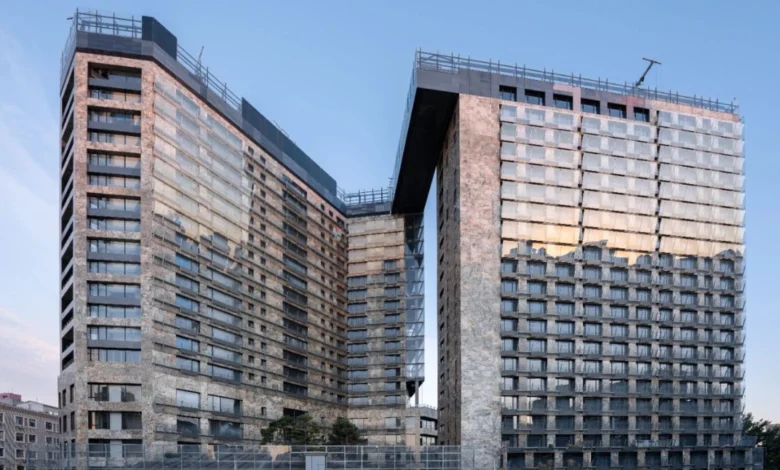
The residential backdrop for the character Loan Niem (Luke)—portrayed by actor Tinh Bach Nhien in the popular drama "Đầu xuân tươi sáng"—has emerged as a focal point for architecture enthusiasts and design critics alike. The filming location, known as the Vanke Metropolitan NAVA project, is situated in the Chaoyang District of Beijing, China. Beyond its cinematic appeal, the building represents a significant collaboration between international architectural visionaries and local urban developers, serving as a masterclass in modern, sustainable, and avant-garde design.
Located in close proximity to the Fourth Ring Road, specifically just 1.5 kilometers from the iconic Bird’s Nest stadium, the project occupies a prime position in Beijing’s northern architectural landscape. The selection of Vanke Metropolitan NAVA as the residence for Loan Niem was a deliberate choice by the production team, intended to mirror the character’s professional dedication to creativity, his refined aesthetic sense, and his pursuit of a high-functioning, minimalist lifestyle.
Architectural Philosophy and Structural Innovation
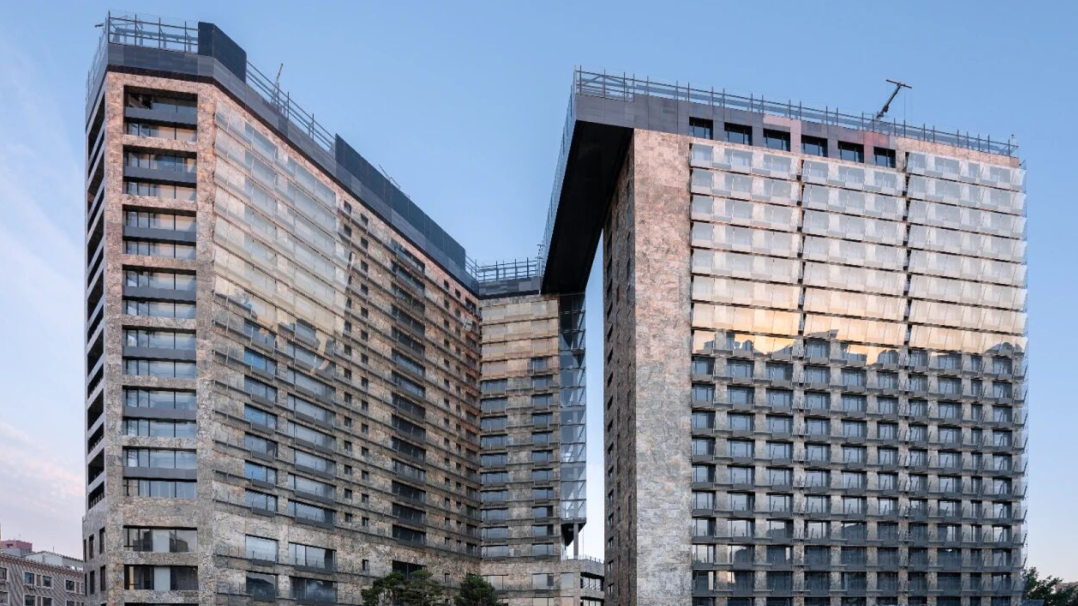
The Vanke Metropolitan NAVA project is the brainchild of Jean Nouvel, a recipient of the prestigious Pritzker Architecture Prize in 2008—the highest honor in the field, often dubbed the "Nobel Prize of Architecture." The building’s design, executed between 2016 and 2022, departs significantly from the conventional, sterile glass-and-steel skyscrapers that dominate modern metropolitan skylines.
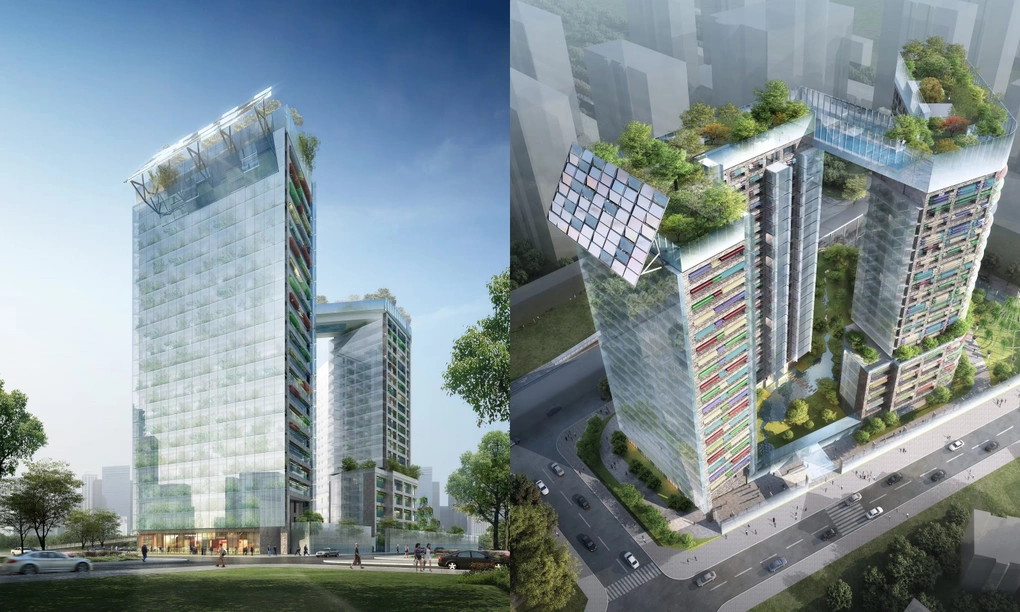
Instead of a uniform facade, the structure features a dynamic, multi-layered exterior. It incorporates a collage of stone panels in varying earth tones—brown, yellow, and blue—interspersed with lush vegetation and horizontal elements that create a "work-in-progress" visual narrative even when viewed from afar. This aesthetic choice is intentional; the building is designed to evolve, with the exterior facade reacting to the changing seasons and the growth of the integrated plant life.
The project is comprised of two primary towers, housing a total usage area of approximately 52,000 square meters. Tower A is dedicated to retail, luxury apartments, and private club facilities, spanning 26,700 square meters. Tower B focuses on residential units, alongside comprehensive health and wellness amenities, including fitness centers and swimming pools, covering 25,150 square meters. The structure stands 20 stories tall and houses 126 exclusive residential units, with individual apartment sizes ranging from 110 to 260 square meters.
Materiality and the "Living" Facade
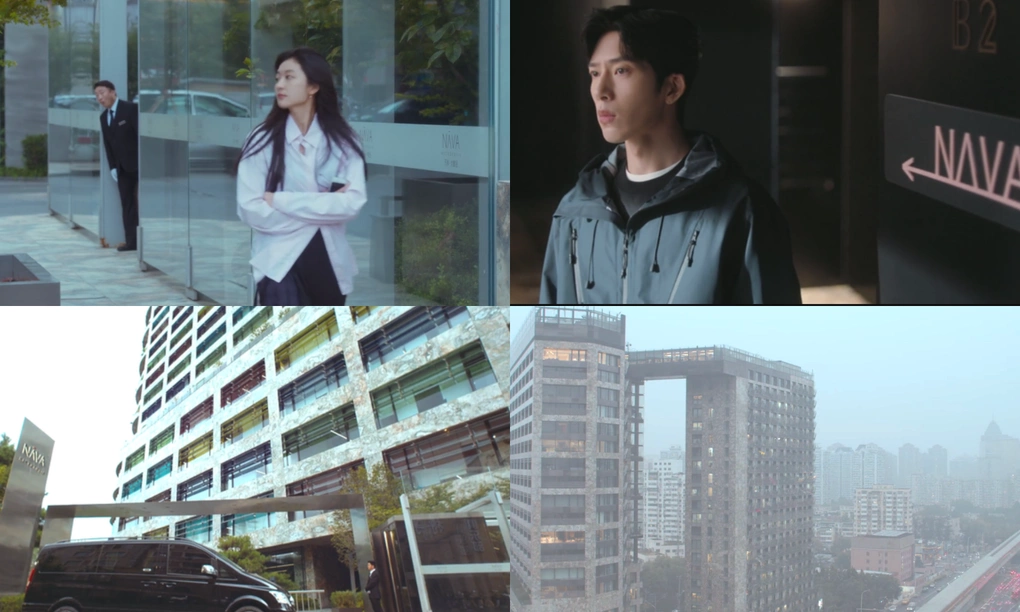
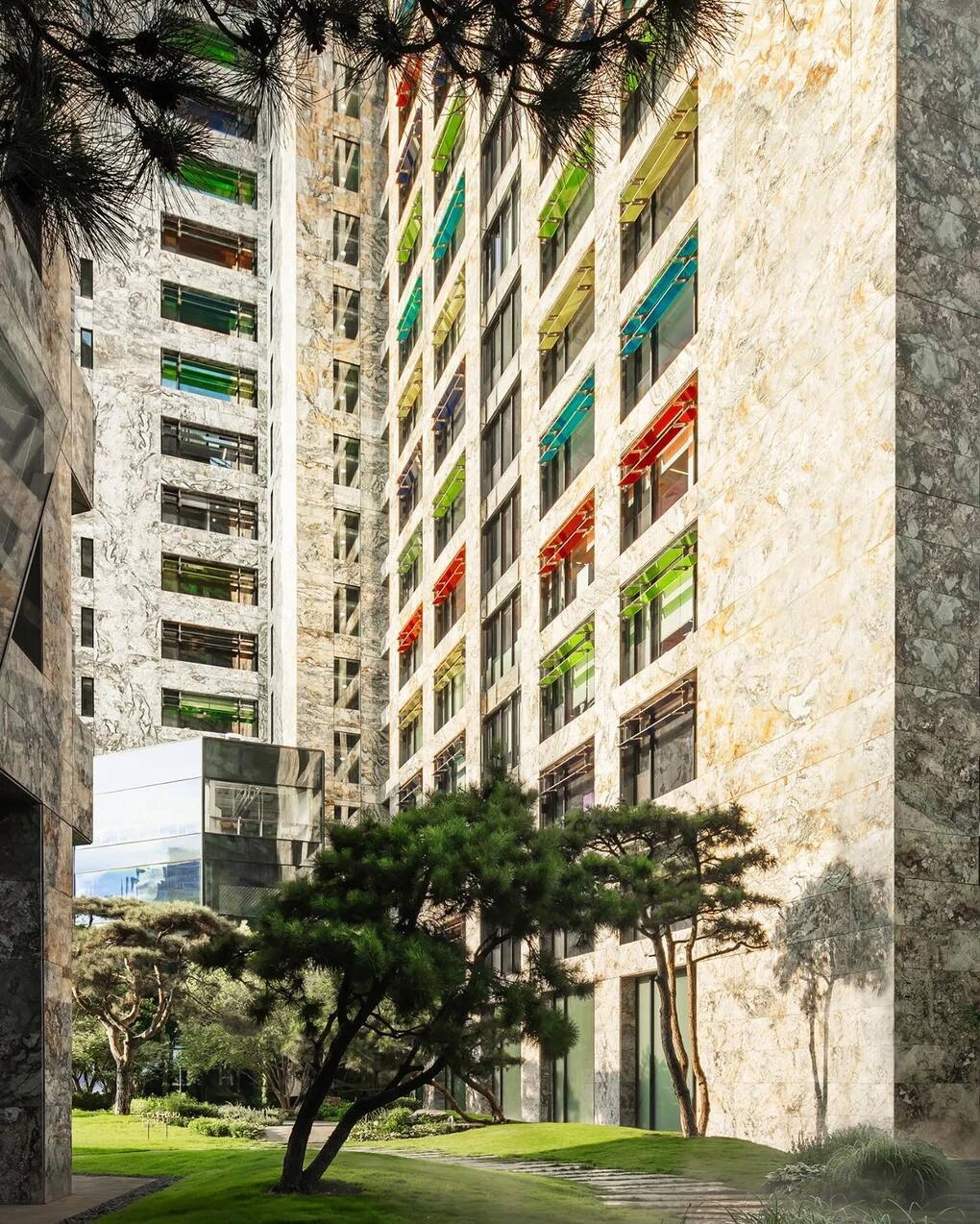
The materiality of the building is a testament to Nouvel’s obsession with texture and light. The facade utilizes "kamarica" granite, imported from Brazil. This specific stone is characterized by its deep blue undertones and complex reddish-brown and yellow veining. When these panels are assembled across a vast surface area, they avoid the monolithic look of traditional glass buildings. Instead, the facade presents a depth reminiscent of geological strata, changing its appearance based on the viewer’s proximity and the angle of the sun.
Furthermore, the building incorporates colored glass louvers—yellow, red, blue, and green—on the western face. This color palette is a sophisticated nod to the traditional decorative motifs found within the Forbidden City. These louvers serve a functional purpose beyond aesthetics: they mitigate the intensity of direct sunlight, filtering the light as it enters the interior living spaces. This creates a shifting, ambient environment within the apartments, where the quality of light evolves throughout the day, providing a cinematic experience for the residents.
Sustainability and Botanical Integration
A defining feature of the NAVA project is its "vertical garden" concept. Vegetation is strategically arranged on the exterior walls, effectively creating a living ecosystem that surrounds the balconies and windows. By extending the landscape from the ground plane to the vertical surfaces, the design ensures that every apartment unit maintains a direct connection to nature, regardless of the floor level.
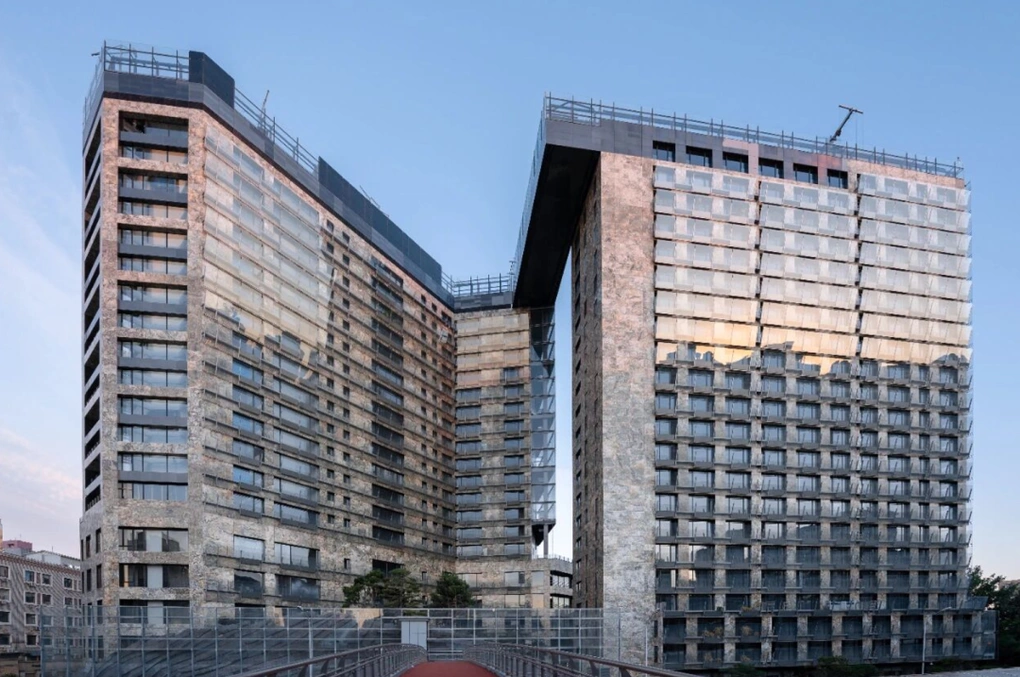
The implementation of such a system in a city like Beijing, which experiences harsh, freezing winters, posed significant technical challenges. The developers conducted extensive testing on the survival rates of various plant species in local conditions before finalizing the green facade design. The maintenance system is equally advanced, featuring automated drip irrigation, soil moisture sensors, and climate-tracking devices that manage water distribution tailored to specific zones of the building.
Beyond their ornamental value, these plants serve a structural purpose. As they grow and fill out, the foliage softens the transition between the raw, industrial materials of stone and glass and the more delicate, human-centric living spaces. This creates a building that feels alive—a structure that is never the same from one month to the next as the flora matures and the colors of the facade shift with the changing climate.
Cinematic Impact and Cultural Relevance
The decision to film in Vanke Metropolitan NAVA has brought unprecedented attention to the intersection of luxury real estate and contemporary drama. For viewers of "Đầu xuân tươi sáng," the building is more than just a set; it is a character in its own right, reflecting the high-stakes, sophisticated, and artistic environment in which the protagonist lives.
Architectural historians note that projects like NAVA reflect a shift in Chinese urban development. As Beijing continues to mature as a global design hub, developers are increasingly moving away from mass-produced, identical high-rise clusters toward "signature architecture." By commissioning Pritzker-winning architects, developers are creating landmarks that do not merely house people but offer a specific lifestyle experience.
For the production team of "Đầu xuân tươi sáng," the building provided the necessary gravitas for the character of Loan Niem. The interior shots, which contrast the muted, minimalist interiors with the vibrant, ever-changing exterior views, underscore the duality of the character—a man who seeks order and minimalism internally while engaging with a complex, colorful, and unpredictable world externally.
Long-term Implications for Urban Design
The success of the NAVA project suggests that there is a growing market for biophilic, high-end residential design in major Chinese cities. The integration of high-performance natural materials and living systems is increasingly viewed as the standard for future developments. While the maintenance costs for such a facade are significant, the value added by the unique design, improved air quality for residents, and the building’s status as a visual landmark provides a compelling business case for high-end developers.
In the broader context of urban planning, Vanke Metropolitan NAVA serves as a bridge between the traditional, imperial history of Beijing and the forward-thinking, sustainable future of the city. By drawing inspiration from the color palettes of the Forbidden City and applying them to a 21st-century residential tower, Jean Nouvel has created a piece of architecture that feels distinctly rooted in its location while simultaneously pushing the boundaries of what a modern, high-rise apartment can be.
As the drama continues to reach wider audiences, the interest in the Vanke Metropolitan NAVA project is expected to grow. It stands as a prime example of how cinematic media can highlight architectural achievement, turning a residential building into a cultural destination. For those who visit, the building remains a testament to the idea that architecture is not just about structure, but about the quality of the light, the texture of the stone, and the persistence of nature in the heart of an urban landscape.