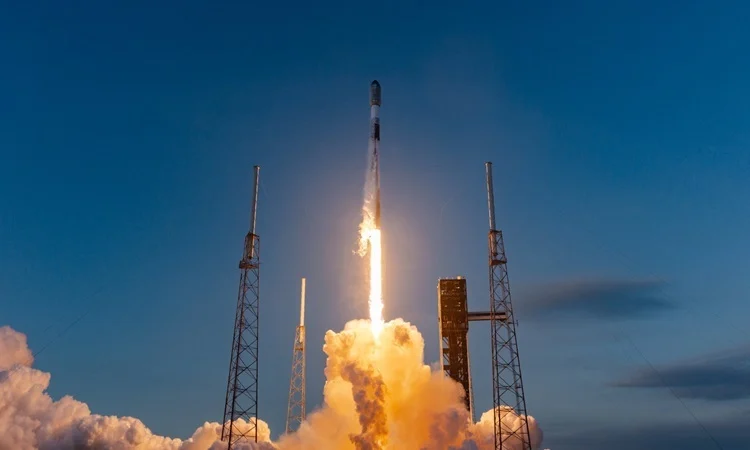
British and Italian researchers have calculated that the average cost of launching one kilogram into orbit has dramatically decreased by 96%, falling from an estimated $87,023 in 1960 to a projected $3,868 in 2025. This remarkable reduction signifies a paradigm shift in space access, driven by technological advancements and evolving market dynamics. The comprehensive study, published on July 14th in the journal PNAS Nexus, analyzed an unprecedented dataset encompassing 4,405 space launches from 1960 to 2025, featuring innovations from 330 different space agencies and companies across the globe, including major players like the United States, Russia, China, India, the European Union, Japan, Australia, Brazil, Israel, Iran, South Korea, and Ukraine. The research team, using 2024 USD as a constant for comparison, has projected a continued downward trend, with the cost per kilogram potentially falling to $1,569 by 2030 and a further reduction to $273 by 2040.
A Revolution in Space Access: From Government Monopoly to Commercial Dominance
The dramatic decline in launch costs is largely attributable to the commercial space industry’s rapid innovation and its ability to scale operations. The research indicates that the cost reduction in the rocket industry has outpaced that of solar panels, a benchmark for cost decline in emerging technologies. To put this into perspective, the cost reduction trajectory of space launches mirrors the historical trend observed with the advent of large cargo ships in the 19th century. When global trade began to expand exponentially, the cost of transporting goods via sailing vessels decreased by approximately 15.5% each time the total cargo capacity doubled. This principle, known as Wright’s Law, posits that as cumulative production doubles, the cost per unit of output decreases by a fixed percentage. This economic principle is clearly at play in the space sector, where increased production and technological refinement have led to a sustained decrease in the per-kilogram cost of reaching orbit.
Key Drivers Behind the Cost Reduction
According to researchers Alessio Terzi of Cambridge University and Francesco Nicoli of Politecnico di Torino, two primary factors have propelled this significant cost reduction over the past six decades. Firstly, the conclusion of the Cold War marked a pivotal moment, compelling nations to shift their focus from geopolitical competition in space to the development of commercially viable space applications. This geopolitical détente allowed for greater international collaboration and a redirection of resources towards civilian and commercial space endeavors.
Secondly, the data gathered by the research team highlights a substantial increase in the utilization of orbital infrastructure following the advent of reusable rocket technology, particularly exemplified by SpaceX’s Falcon 9. This surge in reusable launch systems has unlocked the potential for large-scale space operations, making space more accessible and affordable than ever before.
The Falcon 9 Effect and the Rise of Reusability
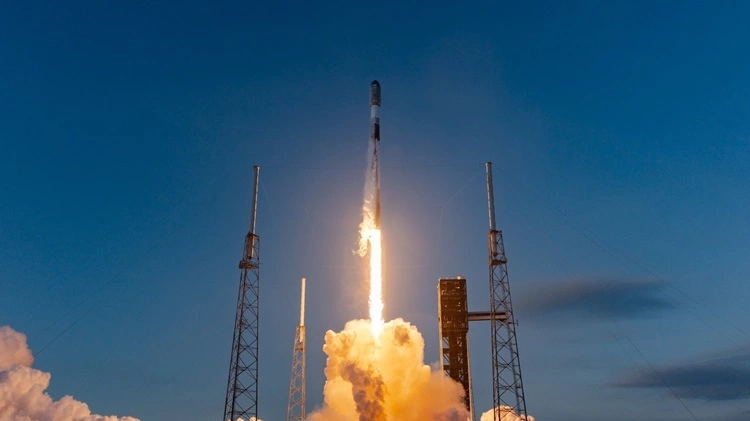
The introduction of reusable rocket technology, most notably by SpaceX with its Falcon 9 launch vehicle, has been a transformative force in reducing launch costs. The Falcon 9 has achieved significant success in its reusability program, with boosters and fairings being recovered and refurbished for subsequent missions. This dramatically lowers the marginal cost of each launch, as the most expensive components of a rocket are no longer discarded after a single use.
The research indicates that reusable rockets have become the most significant factor in driving down the cost of space launches. When reusable rocket stages are factored in, the average cost per kilogram of payload has decreased by an impressive 21.2%, surpassing even the cost reduction rates seen in the solar panel industry. This makes the commercial space sector a leader in technological cost decline.
Comparing Trajectories: Rockets vs. Sailing Ships
A historical comparison further illuminates the magnitude of this achievement. The early 20th century saw a similar revolution in global transportation with the development of large cargo ships. As the global shipping industry matured and economies of scale were realized, the cost of transporting goods by sea decreased significantly. When the total capacity of the global sailing fleet doubled, the cost of shipping experienced a reduction of roughly 15.5%. The current trend in rocket launches, with its more substantial percentage decrease, underscores the accelerated pace of innovation and market forces at play in the modern space industry.
Challenges and Future Considerations in Space Economics
Despite the remarkable cost reductions, the research team identifies at least three key challenges that could potentially impede or alter this downward trend in the future.
Orbital Debris: A Growing Concern
Firstly, the increasing amount of space debris in orbit presents a significant and growing concern. Objects traveling at speeds of approximately 27,000 km/h can cause catastrophic damage to operational spacecraft and satellites. The proliferation of debris not only poses a risk to current space assets but also increases the complexity and cost of future launches, as greater care and maneuverability are required to avoid collisions. The potential for Kessler Syndrome, a scenario where orbital debris becomes so dense that it prevents human spaceflight and satellite use, remains a long-term threat. Mitigating this issue will require concerted international efforts in debris tracking, removal, and responsible space-faring practices.
Market Dominance and Pricing Power
Secondly, the current market landscape sees SpaceX commanding a dominant share of the launch market, estimated at around 75% of all payload capacity. While this dominance has been a key driver of cost reduction, the researchers express concern that a single company wielding such significant market power could potentially exploit its position. This could lead to a situation where the company may be tempted to charge premium prices to potential clients, thereby increasing the average cost of launches for new entrants and hindering further market democratization. Ensuring a competitive market with multiple providers is crucial for sustained affordability.
Geopolitical Dependencies and Strategic Risks
Finally, the researchers caution against governments becoming overly reliant on a single commercial entity for access to space. A heavy dependence on one company for essential space launch capabilities could create strategic vulnerabilities. In the event of unforeseen disruptions, such as technical failures, geopolitical tensions, or business challenges affecting the dominant provider, national space programs and commercial operations could face significant setbacks. This could necessitate a re-evaluation of national space strategies to ensure redundancy and resilience in launch capabilities, potentially leading to increased governmental investment in alternative launch systems or fostering the growth of competing commercial providers. This scenario could, in turn, influence the overall cost trajectory of space access.
The Broader Implications of Affordable Space Access
The significant reduction in the cost of reaching orbit is poised to catalyze a new era of space exploration and commercialization. This downward cost trend is a direct consequence of the transition from the Cold War’s space race, which prioritized national prestige and military applications, to a global focus on developing practical and profitable space-based services.
The implications of this cost reduction are far-reaching:
- Enhanced Scientific Research: Lower launch costs enable more frequent and ambitious scientific missions, allowing for deeper exploration of our solar system, detailed observation of celestial bodies, and advanced Earth observation for climate monitoring and resource management.
- Expansion of the Satellite Industry: The affordability of launching satellites will fuel growth in communication, navigation, remote sensing, and internet constellation services, bringing global connectivity and data services to underserved regions.
- Space Tourism and Private Ventures: The burgeoning space tourism sector, once a niche endeavor, is becoming increasingly accessible as launch costs decrease. This could pave the way for routine suborbital and orbital tourist flights.
- Resource Extraction and In-Situ Manufacturing: In the longer term, the economics of space launches will become more favorable for asteroid mining, lunar resource utilization, and the establishment of manufacturing facilities in orbit, potentially reducing the need to transport all materials from Earth.
- Space-Based Solar Power: The concept of transmitting solar energy from space to Earth, once deemed prohibitively expensive, becomes more feasible with significantly reduced launch costs for the necessary infrastructure.
- Further Innovation: As more players enter the space domain, competition is expected to drive further innovation in rocket technology, satellite design, and space system engineering, potentially leading to even greater cost reductions and new applications.
The trajectory of space launch costs, as detailed by this groundbreaking research, is not merely an economic statistic; it represents a fundamental shift in humanity’s relationship with space. From an era of exclusive government-led endeavors, we are rapidly moving towards a future where space is increasingly accessible to a diverse range of commercial entities and potentially even individuals, promising a future filled with unprecedented opportunities and challenges.
Related posts: