Vietnamese IT Job Market Sees Demand for AI Talent Surge, Salaries to Increase by 10-50%


On October 7, VietnamWorks inTECH, the IT recruitment brand of Navigos Group, released a comprehensive report titled "Reality of IT Human Resources and Recruitment in the AI Wave: 2024-2025." The report, based on surveys conducted in July and August with 1,500 employees and nearly 500 businesses across Vietnam, offers critical insights into the evolving landscape of IT talent acquisition and the growing influence of artificial intelligence on the sector.
Current IT Job Market Dynamics
The first half of 2024 presented a relatively stable IT job market in Vietnam, with the unemployment rate for IT professionals hovering at 32%. However, forward-looking trends indicate a significant shift towards increased activity, with over 65% of IT professionals currently seeking new opportunities or planning to do so within the next six to twelve months. This surge in job-seeking behavior is driven by several key factors that have become paramount for IT professionals in their career pursuits.
Evolving Candidate Priorities
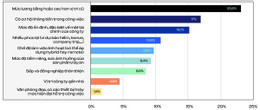
The report highlights three primary drivers influencing IT professionals’ decisions when seeking new employment. Firstly, and most significantly, is the demand for higher salaries. This has become a more pronounced concern compared to previous years. Secondly, candidates are prioritizing career advancement opportunities, seeking roles that offer clear pathways for professional growth and development. Lastly, and of particular importance in the current technological climate, is the financial stability and health of the employing company. This emphasis on corporate solvency reflects a broader economic awareness among the workforce.

Furthermore, the report reveals a willingness among IT professionals to take on more responsibilities to secure new employment quickly. This suggests a proactive approach to career progression and a desire to adapt to evolving job market demands. This willingness to embrace increased workloads has seen a 10% increase compared to the previous year’s survey findings, underscoring the escalating competition within the IT recruitment sphere. Experts from Navigos Group attribute this heightened competition to the dynamic nature of the IT industry, where staying ahead requires constant adaptation and skill enhancement.
The Growing Influence of Social Media in Recruitment
Social media platforms are increasingly becoming crucial tools for IT professionals to explore job opportunities. Notably, Threads, despite its recent emergence, has captured the attention of 4.4% of surveyed IT professionals for job seeking purposes. Concurrently, 2.4% of businesses reported actively recruiting candidates through this platform, signaling its nascent but growing importance in the recruitment ecosystem. This trend indicates a diversification of recruitment channels beyond traditional job boards and professional networking sites.
Key Positions in Demand and the Emerging AI Talent Gap
The survey results point towards a significant shift in recruitment priorities for businesses. Product management roles, including product management, product owner, and project manager positions, are now at the forefront of hiring needs, accounting for 25.6% of all job advertisements. This indicates a growing emphasis on strategic development and effective project execution within Vietnamese IT companies.
A substantial portion of businesses reported that candidates often fail to meet the specific requirements for these in-demand roles. This mismatch highlights a potential talent gap, where the available pool of candidates may not possess the precise skill sets or experience required by employers.

Looking ahead to 2025, the recruitment landscape is projected to diversify further, with a notable surge in demand for roles spanning technical development to management, including cybersecurity. A significant concentration of these opportunities is expected to be in areas related to Artificial Intelligence (AI) and data science. Specifically, "Backend/Frontend Developer" roles are anticipated to lead in recruitment volume, accounting for 22.5% of vacancies, followed by "Product Owner/Product Manager/Project Manager" at 15.7%.
Crucially, the Navigos Group survey indicates that a majority of businesses are prepared to offer higher salaries for AI-focused positions compared to other IT roles. This willingness to invest more in AI talent signifies the strategic importance companies place on leveraging artificial intelligence for growth and innovation.
Salary Expectations for AI Professionals
The financial implications of the AI boom are becoming increasingly evident. Approximately 43.7% of businesses reported that they are willing to pay 10-20% more for AI specialists. An even more significant portion, 18.4%, indicated a readiness to offer salaries that are 20-50% higher for AI talent. This substantial salary premium reflects the high demand and specialized skill set required for professionals in this rapidly expanding field.
The Profound Impact of AI on the IT Workforce
Phan Thanh Hien, Product and Technology Director at Navigos Group, commented on the transformative impact of the AI wave, particularly Generative AI. He noted that Generative AI is creating numerous opportunities for businesses seeking to enhance productivity and for companies offering AI-based solutions.
For IT professionals, AI is expected to significantly boost productivity across a wide range of roles, especially in programming, quality assurance, and product design. Those who can effectively harness the power of AI will likely experience a substantial increase in their output compared to those who rely on traditional methods. This could lead to a scenario where individuals who fail to adapt to AI may face obsolescence in certain roles.
The very nature of IT roles is poised for transformation under the influence of AI. This necessitates a significant shift in the skill sets required for virtually all positions within the IT sector. For instance, junior programmers might increasingly leverage AI for code generation, allowing them to focus more on solution design, testing, and debugging. Similarly, quality assurance professionals could utilize AI to automate test case generation, thereby saving time and improving efficiency.
"In essence, AI will drive the automation process, and the role of humans in inspection and decision-making will remain critically important," stated Phan Thanh Hien.
Navigos Group experts also identified adaptability and the willingness to embrace AI as the greatest challenges for both IT professionals and the broader IT industry. As AI becomes an established trend, the ability to integrate it into daily workflows will be paramount.
Generative AI presents numerous opportunities, but it also demands a fundamental change in how professionals and businesses operate. Instead of viewing AI as a competitor, professionals are urged to learn how to leverage it to enhance their productivity, improve customer experiences, and achieve faster, more effective results.
"To overcome this challenge, IT professionals and businesses must develop flexible thinking and be ready to embrace new knowledge. Consequently, professionals need to equip themselves with AI application skills, enabling them to automate certain tasks, reduce repetitive work, and focus on more creative responsibilities. For businesses, there is a need to invest in training and foster a culture that encourages the adoption of new technologies, creating an environment for employees to access and utilize AI effectively," advised Phan Thanh Hien.
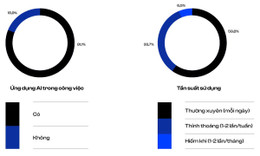
This sentiment is echoed in the report’s findings, which suggest that over 80% of IT professionals are using AI to assist with their work, with nearly 60% employing AI tools on a daily basis. This widespread adoption underscores the transformative power of AI in reshaping the IT landscape.
The evolving demands of the IT job market, particularly the increasing integration of AI, highlight the need for continuous learning and skill development. As AI continues to permeate various facets of the tech industry, professionals who proactively adapt and acquire relevant AI competencies will be best positioned to thrive in the future of work. Businesses, in turn, must foster environments that support this adaptation, ensuring their workforce is equipped to navigate and capitalize on the advancements brought about by artificial intelligence.