The Evolution of Destruction: Ranking the Five Most Powerful Versions of Godzilla in Cinematic History

Throughout the nearly seven-decade legacy of cinema history, the King of the Monsters has undergone numerous stylistic transformations, scaling in size, evolving in origin, and exponentially multiplying in destructive capabilities. From the rubber-suit iterations of the mid-20th century to the towering, photorealistic digital behemoths of modern Hollywood and Japanese revivals, Godzilla’s representation has shifted from a radioactive metaphor for nuclear devastation to a planetary ecosystem regulator and, in some cases, an extinction-level threat to humanity itself. As the cinematic monster verse continues to expand with cross-over epics and psychological thrillers, examining the historical evolution of Godzilla’s power levels reveals a fascinating trajectory of escalating scale, technological innovation, and thematic storytelling.
The MonsterVerse Iteration: Nature’s Balance Keeper
At the foundational tier of contemporary cinematic power sits the iteration crafted by Legendary Pictures within the MonsterVerse franchise. Unlike many of its Toho predecessors, which frequently positioned the creature as an unmitigated menace or a purely malevolent force, the MonsterVerse Godzilla is designed as an ancient alpha predator tasked with maintaining the delicate equilibrium of Earth’s biosphere. This version’s staggering scale and physical might are demonstrated through high-stakes conflicts against rival Titans, each possessing civilization-ending capabilities.
In 2019’s Godzilla: King of the Monsters, this iteration confronted King Ghidorah, an extraterrestrial apex predator featuring three independent neural centers and the physiological capacity to generate catastrophic planetary storms. Following a near-fatal defeat in the deep ocean, humanity intervened by detonating a nuclear warhead to accelerate the creature’s metabolic recovery, inadvertently propelling Godzilla into a temporary, highly volatile evolutionary state known as Burning Godzilla. In this form, the creature radiated thermal energy capable of melting steel structures merely by proximity, ultimately utilizing a series of devastating atomic pulses to disintegrate Ghidorah and restore environmental dominance. This depiction established the character not merely as a destructive monster, but as a biological anchor for the planet’s survival against cosmic anomalies.
Burning Godzilla: The Nuclear Meltdown
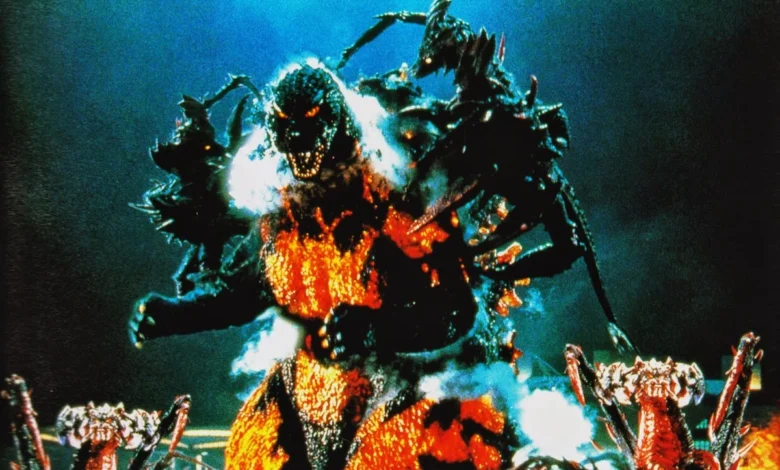
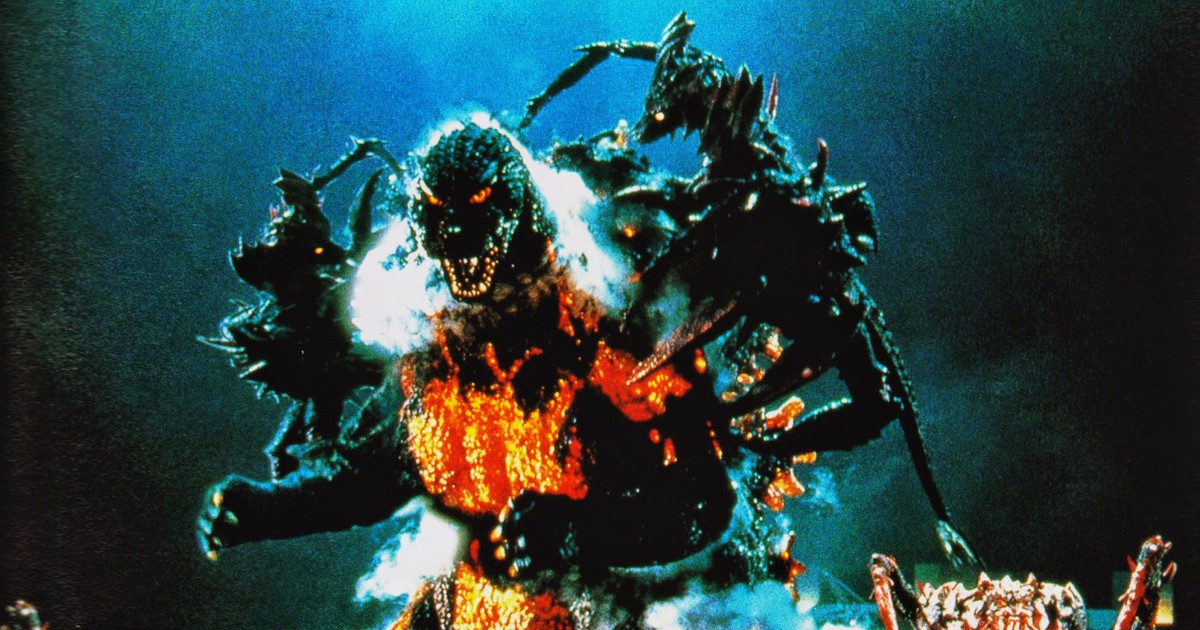
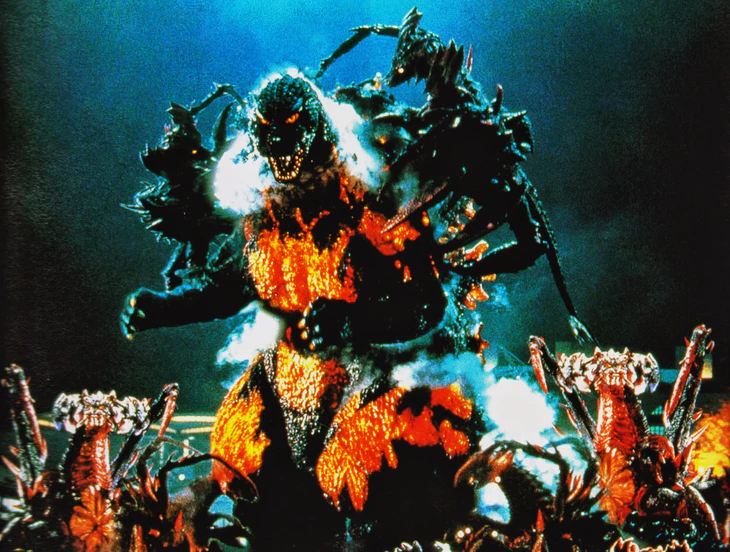
While the Burning Godzilla state featured in the MonsterVerse draws direct inspiration from its 1995 predecessor, the original Heisei-era iteration from Godzilla vs. Destoroyah remains one of the most tragic and scientifically perilous depictions in the franchise’s history. In this iconic film, Godzilla’s internal anatomy begins malfunctioning like an uncontrolled nuclear reactor, driven by the intense accumulation and destabilization of high-grade atomic energy within its core.
The primary conflict of Burning Godzilla stems not just from external combat, but from an existential clock: the creature’s internal temperature continuously escalated, threatening to trigger a thermonuclear meltdown of global proportions. Data within the film’s narrative suggested that if Godzilla’s core breached entirely, the resulting explosion would have ignited the Earth’s atmosphere, effectively sterilizing all life on the planet. Despite fighting in a state of progressive cellular degeneration, this version successfully defeated the parasitic micro-oxygen horror Destoroyah. However, the victory came at the ultimate cost, as Godzilla suffered a complete structural meltdown, marking a poignant, emotionally resonant end to the Heisei era of Toho filmmaking.

Godzilla Final Wars: The Millennium Era’s Unstoppable Force
Released in 2004 to commemorate the 50th anniversary of the franchise, Godzilla: Final Wars served as an explosive, action-heavy finale to the Millennium era. Directed by Ryuhei Kitamura, the film placed the iconic monster at the center of a global war orchestrated by a hostile extraterrestrial race known as the Xiliens, who unleashed a coordinated roster of historical antagonists to subjugate humanity.
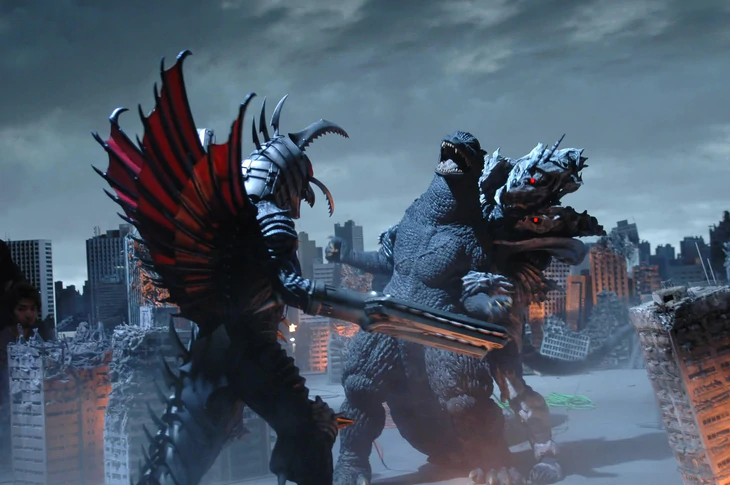
What distinguishes the Final Wars iteration is its peerless combat efficiency and overwhelming physical dominance. Rather than struggling against adversarial monsters, this version systematically dismantled a vast rogue’s gallery—including Rodan, Anguirus, King Caesar, Ebirah, Hedorah, Kumonga, Kamacuras, and Gigan—with effortless speed and martial arts-inspired aggression. The narrative framing positioned Godzilla as Earth’s ultimate deterrent, released from long-term imprisonment in polar ice to decisively neutralize an alien invasion. The sheer velocity and lack of prolonged struggle in these battles highlighted a power ceiling that prioritized absolute cinematic catharsis over prolonged tactical attrition.
Godzilla Minus One: The Post-War Nuclear Nightmare
Directed by Takashi Yamazaki, 2023’s Godzilla Minus One redefined the character by returning to its post-war historical roots while introducing terrifying modern advancements in destructive capability and regenerative biology. Set in a devastated post-World War II Japan, the film portrays a nation struggling to rebuild its societal fabric while confronting an unprecedented biological catastrophe born from nuclear weapons testing in the Pacific.
This iteration of Godzilla possesses an unprecedented cellular regeneration factor. Even when subjected to heavy conventional ordinance, naval depth charges, and localized explosions, the creature heals at an exponential rate, continuously adapting its physical defense mechanisms. The defining terror of the Minus One version, however, lies in its reimagined atomic breath. Rather than a continuous plasma beam, this Godzilla charges its dorsal plates in a distinct mechanical sequence, emitting a terrifying clicking sound as energy concentrates. Upon release, it generates a concentrated column of atomic energy followed by a devastating secondary shockwave that flattens massive urban areas like Tokyo’s Ginza district, turning concrete infrastructure into dust and leaving lingering, high-radiation fallout zones that defy conventional medical treatment.
Godzilla Earth: The Ecological Sovereign
Standing at the pinnacle of cinematic power is Godzilla Earth, the colossal apex entity featured in Toho’s animated trilogy released via Netflix. This iteration represents the most radical and absolute reinterpretation of the mythological creature in history, transitioning from a mere giant animal to a dominant floral-biological super-organism that successfully usurped humanity and fundamentally altered the Earth’s entire biosphere.
Chronologically, the narrative established that Godzilla emerged in the late 20th century, systematically defeating humanity’s combined military might and forcing the evacuation of the surviving population into deep space after decades of failed resistance. When human descendants returned to Earth thousands of years later, they discovered a transformed planet entirely governed by Godzilla’s ecological dominance. Standing at an unprecedented height of approximately 300 meters—dwarfing every live-action counterpart—Godzilla Earth’s physical body is protected by a metallic biological armor capable of absorbing, refracting, and redirecting kinetic and energy-based attacks. Furthermore, this version possesses the unique ability to generate localized electromagnetic pulses and an oscillating plasma breath capable of shearing through planetary crusts and eliminating targets from orbital distances.
The trajectory of Godzilla across cinematic history mirrors the evolution of human anxieties, transitioning from simple Cold War fears of atomic weapons into complex meditations on ecological collapse, technological hubris, and existential survival. As studios continue to innovate through advanced visual effects and diverse storytelling mediums, the King of the Monsters remains an enduring cinematic titan whose capacity for destruction continues to know no bounds.