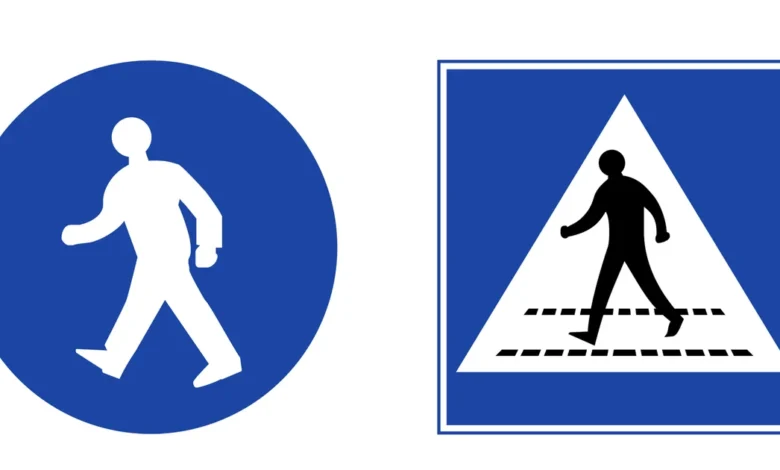
For many road users, the sight of a blue background featuring a pedestrian silhouette is a common occurrence on the streets. However, these visual cues are not merely decorative; they serve as critical regulatory and informative tools that dictate the flow of traffic and ensure the safety of vulnerable road users. Despite their visual similarities, the distinction between traffic signs R.305 and I.423 is fundamental to legal compliance and accident prevention. According to the National Technical Regulation on Road Signs and Signals (QCVN 41:2024/BGTVT), these two signs belong to entirely different categories, each carrying specific legal obligations for motorists. Misinterpreting these signs does not only risk a traffic violation—resulting in administrative fines—but also increases the likelihood of severe pedestrian accidents.
Regulatory Context and the Evolution of QCVN 41
The management of road signs in Vietnam has undergone significant updates to align with international standards and evolving urban mobility needs. The QCVN 41:2024/BGTVT regulation represents the latest iteration of these standards, designed to provide clarity on complex traffic environments. Historically, the confusion between regulatory signs and information signs has been a point of contention for both drivers and local enforcement agencies.
Regulatory signs, such as the R-series, impose mandatory requirements or prohibitions. Information signs, such as the I-series, provide guidance or alerts regarding the road environment. The distinction between the circular R.305 and the square I.423 is a classic example of why drivers must be literate in the specific visual language of traffic control. As urban centers become more densely populated, the enforcement of these standards has intensified, with traffic authorities focusing on high-risk zones where pedestrian crossings and dedicated lanes often overlap.
Sign R.305: The Mandate for Pedestrian-Only Access
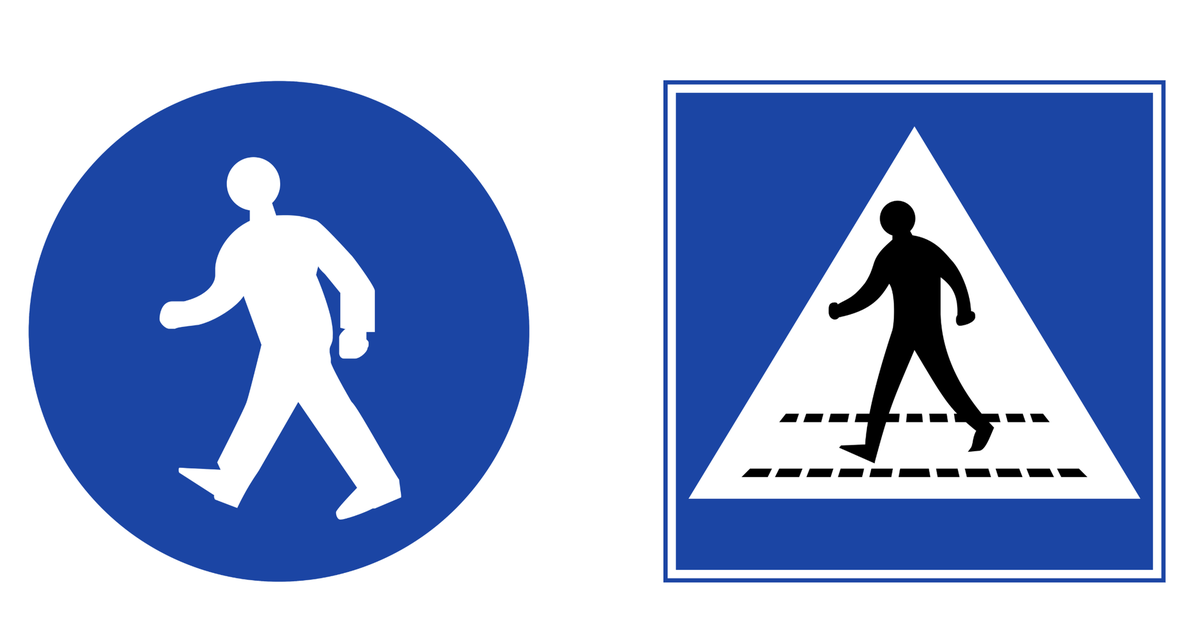
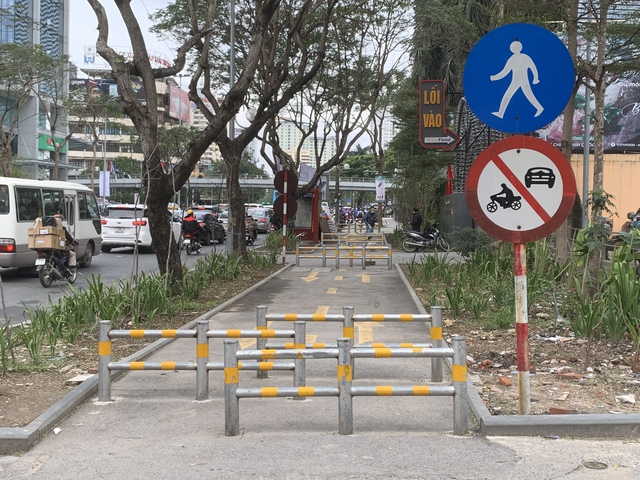
Sign R.305, officially designated as "Road Reserved for Pedestrians," belongs to the group of command signs. Visually, it is characterized by a circular shape with a blue background and a white silhouette of a pedestrian. When a driver encounters this sign, it carries a strict legal mandate: the designated area is exclusively for the use of pedestrians.
The implications for motorists are absolute. Under the provisions of QCVN 41, motorized vehicles and non-motorized vehicles (such as bicycles, unless specifically exempted) are prohibited from entering or traveling along a path marked by this sign. This is not a suggestion but a requirement of law. The primary objective is to create a "safe harbor" for pedestrians, shielding them from the dangers of vehicular traffic.
However, there are nuances to this regulation that drivers often overlook. While the general prohibition applies to standard motorized traffic, the regulation provides specific exemptions. For instance, the prohibition does not necessarily apply to emergency vehicles—such as ambulances or fire engines—performing their duties, nor does it necessarily exclude specialized mobility aids like wheelchairs or specific types of pedal-cycles, depending on local municipal bylaws. Furthermore, the sign does not prevent a vehicle from crossing such a path at a perpendicular intersection, provided the driver exercises extreme caution and yields the right of way to any pedestrians present. What is strictly forbidden is operating a vehicle longitudinally along the path defined by the sign.
Sign I.423: Informing the Approach to Pedestrian Crossings
In stark contrast to the restrictive nature of R.305, sign I.423 (including variations I.423a and I.423b) is classified as an information sign. These signs are rectangular, featuring a blue background and a white square containing a black pedestrian silhouette, often accompanied by visual markers representing the painted stripes of a crosswalk.
The function of I.423 is to alert drivers to the existence of a designated pedestrian crossing point. It serves as a warning and an advisory tool rather than a restrictive command. When a driver passes an I.423 sign, they are being notified that they are approaching a zone where pedestrians are permitted to cross the road. The legal burden here shifts to the driver’s duty of care. According to the 2024 Law on Road Traffic Order and Safety, motorists are required to slow down, increase vigilance, and yield the right of way to any pedestrian who is already in the process of crossing or is visibly preparing to do so.
Unlike the R.305, the I.423 sign does not create a "no-go zone" for vehicles. Traffic is permitted to flow through the area; however, the presence of the sign signifies a high-pedestrian-traffic environment where the pedestrian holds the priority. The sign is frequently used in conjunction with road markings (zebra crossings) to enhance visibility. In scenarios where a crosswalk is already marked with clear paint or where a warning sign (such as W.224) has already been placed, the installation of I.423 may be deemed redundant, but its presence serves as a critical reinforcement of safety protocols.
Comparative Analysis of Legal Implications
The primary danger for drivers lies in the misapplication of the rules governing these two signs. Failure to adhere to the restrictions of R.305 can lead to immediate penalties for unauthorized entry into a restricted zone. Conversely, failing to yield at an I.423 zone is a common precursor to traffic accidents.
Data from local traffic safety bureaus indicates that a significant percentage of pedestrian-related accidents occur in zones where drivers misinterpret "informative" signage as "permissive" speed zones. The legal responsibility for a driver at an I.423 sign is rooted in Article 12 of the Law on Road Traffic Order and Safety 2024, which mandates that drivers must reduce speed or come to a complete stop at any location featuring pedestrian markings or signs.
To summarize the differences for the average road user:
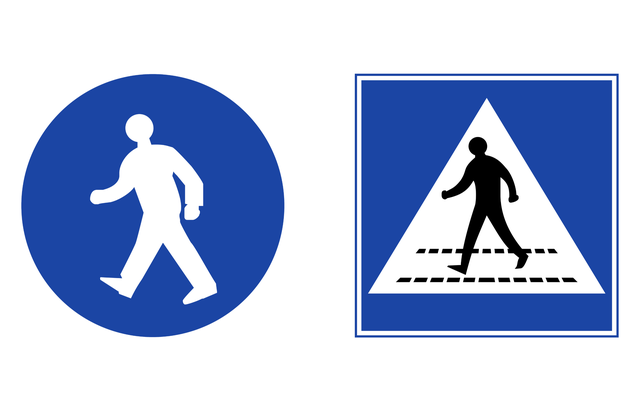
- Category: R.305 is a Command Sign; I.423 is an Information Sign.
- Shape: R.305 is circular; I.423 is rectangular.
- Primary Purpose: R.305 restricts access to vehicles; I.423 facilitates safer passage for pedestrians at crossings.
- Driver Duty: At R.305, the duty is to avoid the area; at I.423, the duty is to yield to pedestrians.
Broader Implications for Urban Safety
The strict adherence to these signs is part of a broader "Vision Zero" philosophy, which aims to eliminate traffic fatalities by creating environments that prioritize human safety over vehicle throughput. The clarity provided by the QCVN 41:2024/BGTVT is a step toward minimizing the cognitive load on drivers. By standardizing these signs, the government aims to reduce the "decision-making time" for motorists, allowing for more reflexive and safe driving behaviors.
Furthermore, the technological integration of these signs—often paired with intelligent transport systems (ITS) and high-visibility road paint—is essential. As urban density increases, the physical space for both cars and pedestrians shrinks. The reliance on clear, unambiguous signage becomes the primary method for preventing the catastrophic failure of traffic flow that leads to injuries.
Official Responses and Public Awareness
Traffic authorities have frequently emphasized that the burden of knowledge rests with the driver. Public awareness campaigns, often supported by the Ministry of Transport, have been launched to highlight these specific differences. Enforcement agencies suggest that the most effective way to avoid fines and, more importantly, accidents, is to treat every "pedestrian-related" sign with an inherent assumption of caution.
The transition to the 2024 regulations has been accompanied by a push for better infrastructure maintenance. This includes ensuring that signs are not obstructed by vegetation, are retro-reflective for night-time visibility, and are placed at appropriate distances from the crossing points. For the average motorist, the takeaway is clear: when you see a blue sign with a pedestrian, slow down and prepare to yield. Whether the sign is circular or square, the ultimate goal of the traffic control system is the same: the preservation of life in a shared, increasingly busy, urban landscape.
As the country moves forward with the implementation of the 2024 traffic laws, the consistency in applying and respecting these signs will be the key metric for evaluating the success of national traffic safety initiatives. Education remains the first line of defense against the confusion that leads to dangerous driving, and understanding the specific, distinct roles of R.305 and I.423 is a foundational skill for every responsible driver.
Related posts: