Ho Chi Minh City Surges 81 Spots to Rank 205 Globally in Oxford Economics Global Cities Index 2026 and Enters Top 5 Cities to Watch in Asia-Pacific

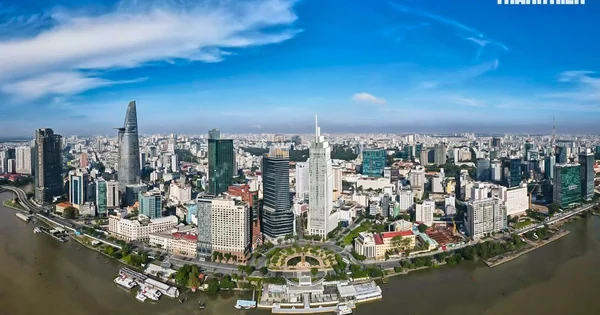
Ho Chi Minh City has achieved a milestone on the global urban stage, jumping 81 positions to rank 205th out of the world’s 1,000 largest cities in the Global Cities Index 2026, published by Oxford Economics. This significant leap from its 286th position in the 2025 edition highlights the southern metropolis’s rapidly expanding economic influence, robust demographic advantages, and rising stature as a critical engine of growth within Southeast Asia and the broader Asia-Pacific region.
Alongside regional peers such as Kuala Lumpur, Bengaluru, Shenzhen, and Tashkent, Ho Chi Minh City has been officially designated as one of the top five "Cities to Watch" in Asia-Pacific. This exclusive grouping recognizes urban centers exhibiting exceptional momentum, dynamic growth trajectories, and immense potential to reshape their national and regional economic landscapes over the coming decade.
Decoding the Index: Methodology and Performance Metrics
The Oxford Economics Global Cities Index evaluates urban centers across 1,000 jurisdictions using a comprehensive framework comprising 27 individual indicators divided into five core categories. These pillars reflect different facets of modern urban prosperity: Economics (weighted at 30%), Human Capital (25%), Quality of Life (25%), Environment (10%), and Governance (10%).
Ho Chi Minh City’s overall score of 205 is underpinned by a diverse performance across these categories. The city demonstrated exceptional strength in Human Capital, ranking 71st globally, driven by its youthful, increasingly skilled demographic, and robust labor force participation. Economically, the city secured a strong 142nd position, backed by a substantial 2025 Gross Domestic Product (GDP) of $128 billion, a per capita GDP of $9,000, and a population base of approximately 14.2 million residents.
However, the index also highlights structural challenges that temper the city’s meteoric economic rise. While Human Capital and Economics represent major competitive advantages, Ho Chi Minh City recorded lower rankings in Quality of Life (342nd), Environment (555th), and Governance (625th). These figures underscore the growing pains typical of rapidly expanding megacities, where physical infrastructure, environmental sustainability, and administrative frameworks struggle to keep pace with demographic and economic expansion.
A Tale of Divergent Trajectories: Pillars of Progress and Areas for Improvement
A comparative analysis of the city’s performance between the 2025 and 2026 indices reveals a narrative of targeted improvements offset by persistent urban bottlenecks. Ho Chi Minh City recorded remarkable upward momentum across four key pillars compared to the previous year. Governance experienced the most dramatic surge, climbing 194 places, reflecting concerted administrative reforms and improved municipal management. Human Capital improved by 106 positions, while the Economics pillar advanced by 69 places.
Conversely, the Quality of Life pillar dropped by 17 places, and the Environment pillar fell sharply by 100 spots. Recognizing these vulnerabilities, municipal authorities have designated environmental management and quality-of-life enhancements as top strategic priorities for the 2026–2030 development phase. Addressing issues such as urban traffic congestion, public green spaces, waste management, and air quality will be critical for sustaining the city’s long-term competitiveness.
Domestically, Ho Chi Minh City has cemented its position as Vietnam’s leading urban powerhouse. While it previously trailed capital city Hanoi in the 2025 rankings, the 2026 index marks a definitive shift as Ho Chi Minh City pulls ahead. It now comfortably outranks other major Vietnamese urban centers, including Hanoi (ranked 243rd), Da Nang (375th), and Hai Phong (667th).
Within the broader Association of Southeast Asian Nations (ASEAN) bloc, Ho Chi Minh City now ranks sixth, following regional hubs such as Singapore (29th), Kuala Lumpur (65th), Bangkok (122nd), and Jakarta (140th), while sitting ahead of Manila (174th). On a pan-Asian scale, it stands behind Seoul (38th) and Shenzhen (93rd), but outperforms major economic heavyweights such as Shanghai (216th), Delhi (268th), and Mumbai (330th).
A revealing benchmark can be drawn by comparing Ho Chi Minh City with Kuala Lumpur. The data indicates that the performance gap between the two regional cities lies less in economic growth velocity and more in urban quality metrics. While Ho Chi Minh City boasts competitive economic indicators, Kuala Lumpur maintains an advantage in Quality of Life (ranking 283rd compared to Ho Chi Minh City’s 342nd) and Environment (318th compared to 555th), pointing to the exact areas where Vietnamese urban planners must concentrate future investments.
Economic Momentum and Long-Term Projections
The Oxford Economics report singles out three primary strengths driving Ho Chi Minh City’s ascent: rapid GDP growth, relatively high average household incomes, and overall macroeconomic stability. Bolstered by these fundamentals, Oxford Economics forecasts that Ho Chi Minh City will rank among the top 50 fastest-growing cities globally over the next five years.

Looking further ahead to the middle of the century, the economic outlook is even more ambitious. Oxford Economics projects that by 2050, the absolute size of Ho Chi Minh City’s GDP will approach that of Berlin. Furthermore, the city’s per capita income—currently sitting outside the global top 500—is projected to surpass the European average by 2045, reflecting a profound convergence of emerging market dynamism with advanced economy living standards.
Strategic Implications and Future Outlook
The inclusion of Ho Chi Minh City in the top 5 "Cities to Watch" in Asia-Pacific carries significant implications for foreign direct investment (FDI), urban planning, and national policy. As Vietnam’s commercial capital transitions from a traditional manufacturing hub to a knowledge-based, service-oriented economy, its ability to attract global talent and capital will heavily depend on how effectively it addresses its environmental and infrastructural deficits.
Urban economists and municipal leaders view the 2026 index as both an endorsement of past economic reforms and a pragmatic roadmap for future governance. By aligning infrastructure spending with environmental sustainability and administrative transparency, Ho Chi Minh City aims to bridge the gap between its stellar economic output and its livability indices.
As the city enters the 2026–2030 strategic planning cycle, the mandate is clear. Sustaining its position among the world’s premier urban centers will require targeted interventions to green its economy, upgrade public services, and streamline governance, ensuring that economic growth translates into tangible, long-term improvements in the daily lives of its 14 million residents.
Related posts: