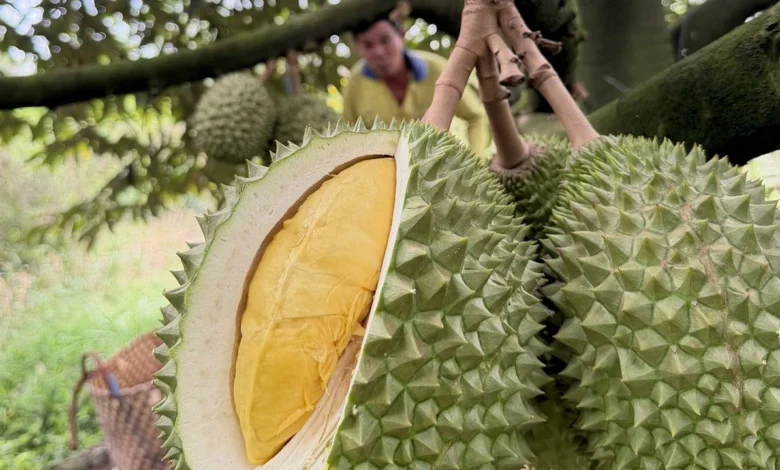
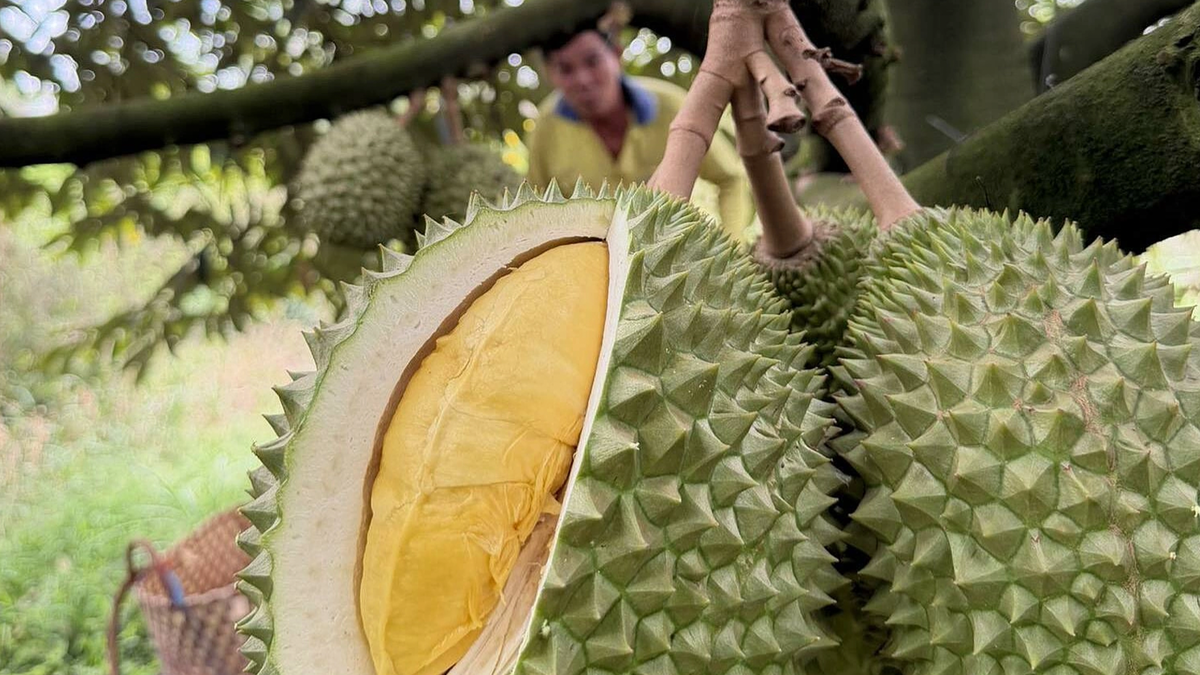
Vietnam’s durian industry has reached a critical juncture, with recent customs data revealing that nearly 96% of the country’s total durian export turnover is currently directed toward the Chinese market. In the first nine months of the year, Vietnam recorded $3.45 billion in durian export revenue—a notable 25% increase compared to the same period last year. Of this figure, exports to China accounted for approximately $3.3 billion, representing a 27.6% surge. This heavy reliance on a single destination has raised alarms among trade experts regarding market vulnerability and the urgent need for structural diversification.
A Chronology of Rapid Growth
The meteoric rise of Vietnamese durian exports is a relatively recent phenomenon, primarily catalyzed by the signing of a protocol between the Ministry of Agriculture and Rural Development (MARD) of Vietnam and the General Administration of Customs of China (GACC) in July 2022. This agreement officially opened the Chinese market to fresh Vietnamese durian, allowing for legitimate, large-scale exports that bypassed informal "cross-border" channels.
- 2022: The signing of the phytosanitary protocol marks the official opening of the Chinese market.
- 2023: Exports skyrocket, with durian becoming a "billion-dollar" export commodity, significantly boosting the income of farmers in the Central Highlands and the Mekong Delta.
- 2024 (First 9 Months): Export turnover reaches $3.45 billion, with the dependence ratio on China climbing to 96%, surpassing the 93.6% recorded during the same period in 2023.
Despite the explosive growth, the industry faces a structural imbalance. While China consumes the vast majority of fresh, whole durian, other markets—including Papua New Guinea ($37.68 million), Hong Kong ($36.7 million), and the United States ($20.5 million)—remain significantly smaller, acting primarily as importers of frozen or processed durian products.
The Risks of Market Concentration
According to Mr. Dang Phuc Nguyen, General Secretary of the Vietnam Fruit and Vegetable Association (Vinafruit), the current concentration is a "double-edged sword." Chinese consumers have a deep-seated preference for fresh durian, which drives high demand and lucrative prices for Vietnamese growers. However, this dependence creates an existential risk should China tighten its quality control measures, increase import tariffs, or experience shifts in consumer sentiment.
The perishability of the fruit adds another layer of complexity. Durian is a high-value commodity, yet it is notoriously difficult to store without advanced cold chain infrastructure. If logistical bottlenecks occur at border crossings, the resulting pile-up in packing houses across the Mekong Delta and the Central Highlands could lead to massive spoilage and, consequently, a desperate "fire sale" of inventory, further depressing market prices.
Technical Challenges and Quality Control
The year 2024 has presented specific challenges for producers. In the Mekong Delta, soil salinity intrusion has affected yields, while the Central Highlands have grappled with erratic weather patterns characterized by alternating heavy rain and intense heat. These environmental factors have directly impacted both the volume and quality of the fruit.
To mitigate these risks, industry leaders are calling for a multi-pronged approach to quality assurance. Mr. Nguyen emphasizes that the priority must be on controlling the "Cadmium residue" levels, ensuring strict adherence to pesticide safety standards, and improving the traceability of every shipment. Local agricultural departments are now under pressure to increase their capacity for laboratory testing and to tighten oversight of growing area codes and packing facility licenses. Failure to meet these standards risks not only the rejection of individual shipments but the potential suspension of export rights for entire regions.
Strategic Shifts and Long-term Sustainability
To move beyond this reliance, the Vietnamese durian sector is looking toward long-term structural investments and market expansion. The proposed roadmap includes three primary pillars:
1. Investment in Cold Chain and Deep Processing
Industry analysts argue that the current reliance on fresh exports is unsustainable. There is a concerted effort to shift investment toward deep processing facilities. By producing frozen durian meat, durian-based ice cream, pastries, and powders, firms can extend the shelf life of the fruit from a few days to several months. This enables shipping to more distant markets in Europe and North America, where logistics currently favor non-fresh products.
2. Leveraging Free Trade Agreements (FTAs)
Vietnam’s participation in various FTAs, such as the Comprehensive and Progressive Agreement for Trans-Pacific Partnership (CPTPP), the EU-Vietnam Free Trade Agreement (EVFTA), and the Regional Comprehensive Economic Partnership (RCEP), provides a framework for growth. Experts recommend that exporters focus on the high-end segments within these markets, specifically targeting supermarkets and the Asian diaspora. Achieving certification standards like GlobalG.A.P. or organic certification will be essential for penetrating these premium, regulated markets.
3. Strengthening Industry Linkages
A recurring issue in the Vietnamese agricultural sector is the fragmentation between stakeholders. Strengthening the link between the state, research institutions, businesses, and farmers is vital. Businesses are encouraged to sign long-term "off-take" contracts with cooperatives. By planning harvests collectively and investing in on-site cold storage, producers can better manage supply, reducing the pressure to sell during peak harvest seasons when market gluts are common.
Economic Implications and Future Outlook
The economic stakes are significant. With total export revenue projected to reach between $4.5 billion and $4.7 billion by the end of the year—a 20% increase over the previous year—the durian industry is a major pillar of Vietnam’s agricultural economy.
However, the "96% phenomenon" is a signal that the industry must transition from a volume-driven growth model to a quality- and market-diversification-driven model. The current dependence on the Chinese market, while highly profitable, leaves the industry exposed to geopolitical and regulatory volatility.
For the average farmer, the message is clear: adherence to sustainable farming practices is no longer just a technical requirement—it is a business necessity. For the government and exporters, the task ahead is to modernize infrastructure and navigate the complexities of international trade to ensure that the "King of Fruits" remains a reliable engine of economic prosperity for Vietnam. As the sector moves into the final quarter of the year, the focus will remain on maintaining steady, high-quality supply chains while slowly building the brand presence in markets that offer a hedge against the current, singular reliance on China.
Related posts: