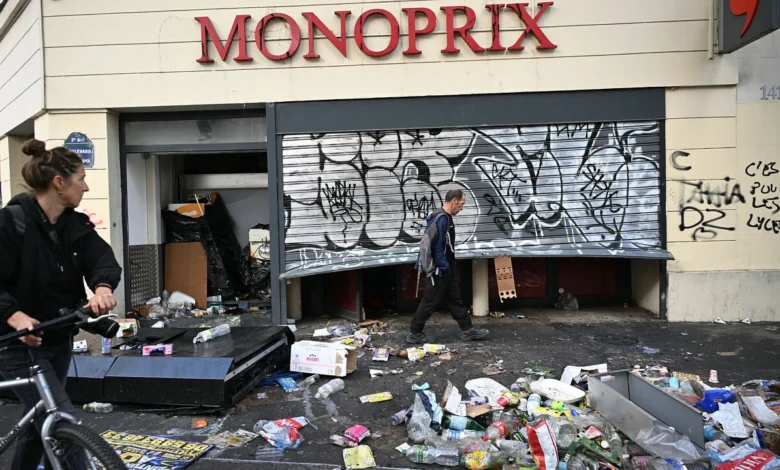
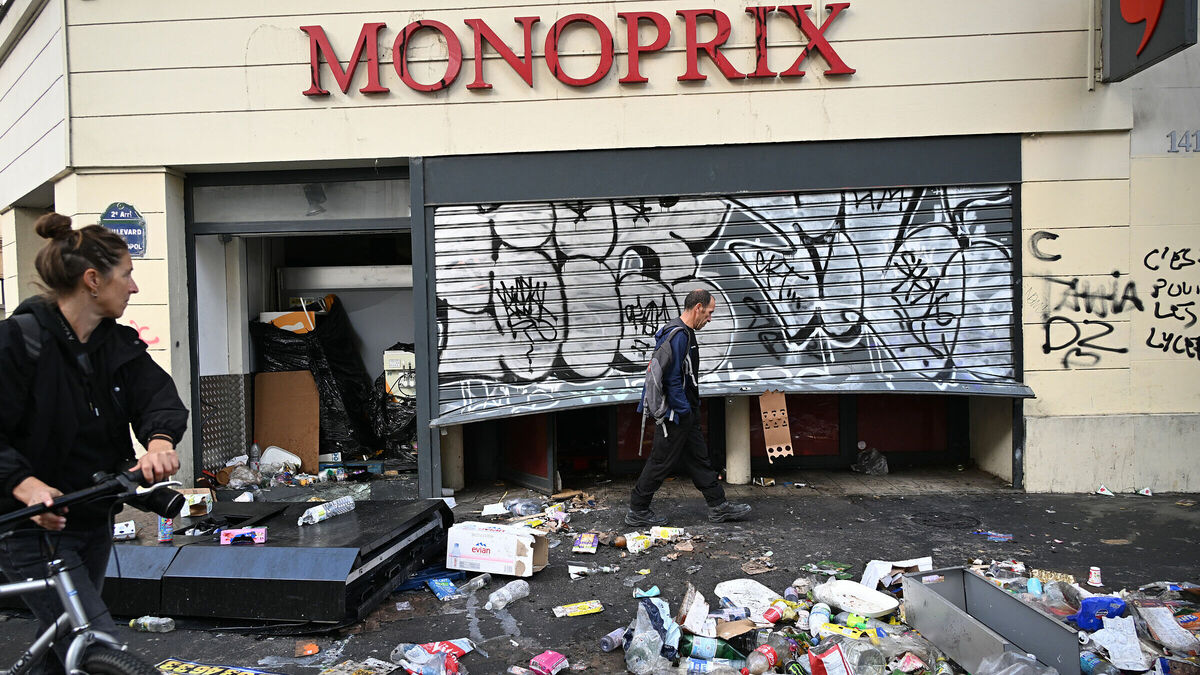
The French retail sector is currently grappling with an unprecedented wave of destruction and financial loss as civil unrest sweeps across the nation, forcing thousands of businesses to shutter their doors and fortify their storefronts. What began as widespread public demonstrations against economic hardship and political instability has rapidly evolved into a systematic campaign of looting and property damage that has left the retail heart of Paris and other major cities reeling.
According to estimates from industry leaders and the retail federation, over 3,000 businesses were targeted, looted, or severely damaged during a single weekend of chaos. The scale of the destruction is staggering, with high-end boutiques on iconic streets such as Rue Saint-Honoré and the Champs-Élysées—including luxury titans like Hermès, Louis Vuitton, Dior, and Saint Laurent—suffering direct assaults.
A Chronology of Escalation
The unrest, which intensified mid-October, saw a rapid shift from peaceful protest to violent confrontation. On Sunday, October 18, the situation reached a breaking point when looters targeted high-end establishments mere steps away from the Ministry of Justice.
By October 20, the impact had permeated the corporate level. Carrefour, the retail giant, issued a stark warning regarding its 2026 financial outlook, attributing the revision to the severe losses sustained from the riots. The announcement triggered a 15% decline in the company’s share price, effectively wiping out roughly 1.7 billion euros in market capitalization. Alexandre Bompard, CEO of Carrefour, confirmed that approximately 50 of their locations were attacked in the first day of unrest alone, with profit impact projected between 80 million and 200 million euros.
Economic Impact and Financial Exposure
The financial toll of this unrest extends far beyond broken glass and stolen inventory. Morningstar DBRS has estimated that total losses—encompassing both damaged goods and physical infrastructure—could reach 1.2 billion euros (approximately 1.3 billion USD), provided the volatility does not escalate further.
The French Retail and Distribution Federation has reported direct damages amounting to hundreds of millions of euros. Small business owners, who operate with tighter margins than global conglomerates, are facing an existential crisis. Solenn Amiel, who manages a hair salon in the 11th arrondissement and chairs the Village Popincourt merchant association, noted that the cost of security measures currently outweighs their daily revenue. “We are at a point where we have to choose between bankruptcy due to security costs or risking everything by staying open,” she explained.
Security Measures and the "Peacekeeper" Strategy
In response to the deteriorating environment, the Paris Police Prefecture issued formal recommendations on October 22, advising businesses to increase security personnel, audit alarm systems, and adjust operating hours.
Large luxury groups, such as Hermès, have implemented "increased security plans" for their remaining 22 boutiques, hiring private security teams to stand guard. However, for many smaller retailers, such measures are unaffordable. Some have turned to private firms like Union Access Security. Interestingly, these firms are increasingly deploying "peacekeeper" models—personnel who are unarmed and instructed to prioritize de-escalation.
“Our goal is a visible presence that does not provoke or challenge the looters,” a representative for the firm stated. “They act as a deterrent and focus on dialogue, but we are limited by the high cost of these services, which often exceed 20 euros per hour per guard.”
Government Response and Crackdown on Secondary Markets
By October 23, French Interior Minister Laurent Nuñez announced the deployment of 70,000 police officers, supported by specialized units, to prevent further rioting. President Emmanuel Macron has taken a hardline stance, warning that those involved in looting will face severe consequences. The penalties for handling or trafficking stolen goods include up to five years in prison and fines of up to 375,000 euros.
The government is also targeting the digital facilitation of this chaos. Minister of Commerce Serge Papin and Minister of Small Business Anne Le Hénanff have held virtual meetings with leadership from Vinted, Amazon, eBay, Meta, and TikTok to demand the immediate removal of listings advertising stolen goods.
Vinted and the classifieds platform Leboncoin have publicly committed to working with law enforcement to adjust their monitoring algorithms. These platforms are now under intense pressure to detect and suppress suspicious activity related to high-value goods appearing on the secondary market at suspiciously low prices.
The Broader Implications for the French Retail Landscape
The current situation poses significant long-term questions for the French retail sector. The image of boarded-up luxury storefronts in the heart of Paris—the global capital of fashion—serves as a cautionary tale regarding the intersection of social unrest and commercial viability.
- Supply Chain and Operational Costs: Beyond immediate physical damage, retailers are seeing a sharp rise in insurance premiums. Analysts predict that if this instability persists, insurers may classify certain areas of Paris as high-risk, leading to prohibitive insurance costs that could permanently reshape the retail map of the city.
- Shift in Consumer Behavior: The uncertainty of whether stores will be open on weekends is already driving a shift in consumer habits. Foot traffic in central districts is plummeting, forcing a move toward online retail, which ironically places more pressure on the government to police digital marketplaces.
- Institutional Trust: The retail sector’s demand for government intervention highlights a growing rift between the business community and the state. Retailers are calling for not just policing, but also for economic support packages to help cover the costs of the destruction, arguing that their survival is essential to the national economy.
Analysis of the Crisis
The crisis is not merely a failure of law enforcement but a reflection of deep-seated socioeconomic grievances. However, the targeting of retailers—ranging from global luxury brands to small, independent shops—suggests that retail outlets have become symbolic battlegrounds.
While the luxury sector has the capital to fortify and recover, the middle-market and independent retailers lack the resources to withstand prolonged instability. The "boarded-up storefront" aesthetic, while protective in the short term, creates a chilling effect on tourism and consumer confidence. As France heads toward the next cycle of protests, the focus will remain on whether the government can provide sufficient security to restore the "business as usual" status that is critical for the country’s economic health.
Ultimately, the resolution of this crisis will require a multi-pronged approach: effective police containment of violent actors, aggressive regulation of the secondary goods market to render looting unprofitable, and a dialogue-driven approach to addressing the underlying social frustrations that fueled the initial protests. Until such stability is reached, the French retail sector remains in a state of high-alert, waiting to see if the shutters can finally be raised for good.
Related posts: