Vietnam’s Rooftop Solar Boom: Households and Businesses Embrace Green Energy Amidst Supportive Policies

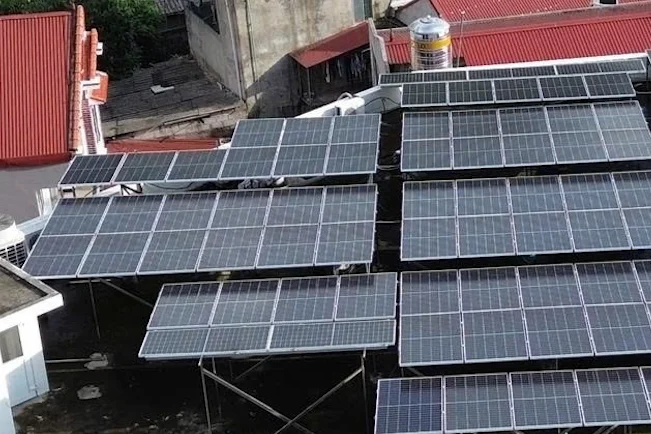
Nguyen Cong Toan, a resident of Bac Ninh, shared with VietNamNet his profound satisfaction with his household’s 15 kWp rooftop solar system, complemented by a 32 kWh Battery Energy Storage System (BESS). He reported that his family’s monthly electricity bills have plummeted to remarkably low levels, now only a few hundred thousand dong. This dramatic reduction in expenses is a testament to the transformative power of self-generated renewable energy, turning what was once a significant household expenditure into a negligible sum.
"Not only have our electricity bills drastically decreased, but my family has also begun selling surplus electricity back to the grid," Toan stated, highlighting an additional layer of economic benefit. He further elaborated that in just the first 22 days of July 2026, his household had already sold 204 kWh of excess power, demonstrating the system’s robust generation capacity and the potential for homeowners to become active participants in the energy market.
Toan’s family, like many in Vietnam, relies heavily on electrical appliances for daily living. He explained that during the scorching summer months, without the integrated rooftop solar and BESS, their electricity bill could easily skyrocket to 6-7 million dong per month. This stark contrast underscores the critical role his renewable energy system plays in ensuring affordability and energy independence, especially during periods of high demand and peak tariffs.
The initial investment for Toan’s solar and BESS setup was approximately 250 million dong. Since its installation, his family has enjoyed an uninterrupted power supply, day and night, eliminating worries about power outages. The ability to store excess energy and sell it back to the grid provides both financial returns and a sense of self-sufficiency. "In summer, with abundant sunlight, we use electricity freely, and the BESS is always fully charged," Toan noted. "Even in winter, on clear days, the solar panels maintain good generation efficiency." However, he acknowledged that on overcast, rainy days, generation efficiency drops, requiring his family to draw power from the national grid. This practical observation highlights the importance of grid connectivity and storage solutions for optimal performance.
Corporate Adoption of Rooftop Solar for Green Production
The embrace of rooftop solar extends beyond individual households to the industrial sector, driven by both economic incentives and the growing demand for sustainable practices. Vu Xuan Thoan, Deputy Director of Song Cong Diesel Co., Ltd., confirmed that his company had invested in a self-production, self-consumption rooftop solar system with an approximate capacity of 4 MW, operational since March 2026. This significant corporate investment underscores a broader trend towards greening industrial operations in Vietnam.
With this substantial system, Song Cong Diesel anticipates saving "hundreds of billions of dong" in electricity costs annually. Beyond the immediate financial benefits, the investment strategically positions the company to meet the increasingly stringent green production requirements from international clients in markets such as Germany, Italy, and Japan. "We have to plan and register how much electricity we will save and how we will use renewable energy," Thoan explained. "Therefore, a major objective in investing in rooftop solar is tied to both economic benefits and customer demands."
These international market pressures are a significant driver for Vietnamese manufacturers. Many developed nations are implementing carbon border adjustment mechanisms and demanding supply chain transparency regarding environmental impact. Adopting rooftop solar allows companies like Song Cong Diesel to reduce their carbon footprint, demonstrate commitment to sustainability, and maintain competitiveness in global trade. This strategic alignment with international environmental standards is becoming indispensable for businesses aiming to thrive in the modern global economy.
Rapid Growth and Over-Performance in Northern Vietnam
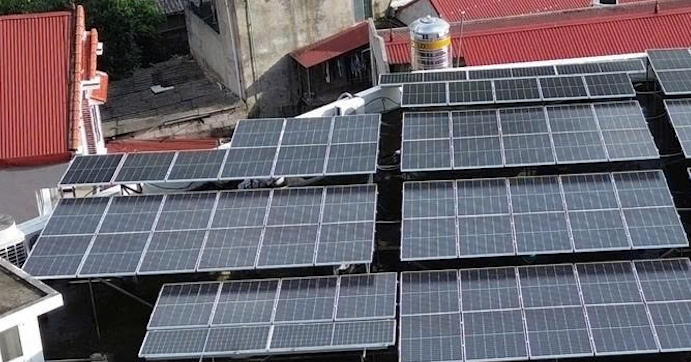
The General Corporation of Northern Electricity (EVNNPC) reported impressive growth in rooftop solar adoption across the 17 northern provinces and cities under its management (excluding Hanoi) during the first six months of 2026. The region saw 8,500 new customers install self-production, self-consumption rooftop solar systems, bringing the total installed capacity to 394.5 MW. This figure represents an astounding 167% achievement against the customer target and 116% against the capacity target set for the period.
Cumulatively, as of June 30, 2026, the EVNNPC service area boasts 10,099 rooftop solar customers with a total capacity of 718.3 MW. Among these, 98 customers are actively selling their surplus electricity back to the grid, illustrating the growing engagement of prosumers in Vietnam’s energy ecosystem. These statistics highlight a burgeoning trend and significant momentum in decentralized renewable energy generation, surpassing initial expectations and demonstrating a strong appetite for solar power among both residential and commercial users. The over-performance indicates that the market is responding enthusiastically to the opportunities presented by rooftop solar, signaling a robust and expanding sector.
According to EVNNPC, over a year after the implementation of Decree 58/2025, the development of self-production, self-consumption rooftop solar in its operational area has yielded numerous positive results. The consistent surpassing of customer and capacity targets in the first half of the year confirms a strong and sustained upward trend in investment in such systems. This growth is not merely quantitative but also reflects a qualitative shift in energy consumption patterns, with more entities taking active control of their energy sources.
Strengthening the Policy Framework for Rooftop Solar
The Vietnamese government has been actively developing and refining policies to support the growth of rooftop solar. From the user’s perspective, energy expert Ha Dang Son emphasized the clear benefits of rooftop solar. The peak efficiency of solar power generation during the hottest parts of the day perfectly aligns with the highest electricity demand for cooling, creating a synergistic balance between supply and consumption. This inherent characteristic of solar power helps alleviate pressure on the national grid during peak hours, when the system is most strained.
Furthermore, installing solar panels on rooftops offers an additional advantage: a cooling effect. The panels reduce the temperature of the roof surface by approximately 2-3 degrees Celsius, which in turn decreases the need for air conditioning, leading to further energy savings. This dual benefit of generating electricity and reducing cooling loads makes rooftop solar a highly attractive investment for both households and businesses, particularly in Vietnam’s tropical climate.
From an economic standpoint, the benefits for households and businesses are undeniable. If the Ministry of Industry and Trade’s incentive mechanisms are further strengthened, focusing on self-production and self-consumption, users could significantly reduce their electricity costs by minimizing their consumption during high-tariff periods. For businesses, rooftop solar holds strategic importance as many export markets, especially in Europe, increasingly demand the use of green energy in production chains. This is no longer just an environmental concern but a critical factor for market access and competitiveness.
Looking ahead, the development of rooftop solar, particularly when integrated with energy storage solutions, is poised to significantly enhance the nation’s overall electricity supply security. By decentralizing power generation and reducing reliance on large-scale centralized plants, rooftop solar contributes to a more resilient and distributed energy infrastructure, less vulnerable to localized disruptions.
New Regulations on Surplus Power Sales
A recent and crucial development in Vietnam’s renewable energy policy landscape is the government’s promulgation of Decree 243/2026/NĐ-CP, which explicitly defines the mechanism for selling surplus electricity. This decree clarifies that surplus electricity generated by rooftop solar systems, including power from BESS charged by solar, can be sold back to the grid through mutual agreement between the two parties. This provision provides a clear legal framework and financial incentive for prosumers.
The decree specifies that surplus electricity is measured at the output of the inverter. From June 26, 2026, until December 31, 2030, the amount of surplus electricity that can be sold back to the grid, while subject to mutual agreement, cannot exceed 50% of the total electricity generated at the output of the rooftop solar source. This cap is designed to prioritize self-consumption and manage potential grid integration challenges, ensuring that the primary goal remains to offset internal demand.
However, there are specific conditions for these transactions. The local grid must have the capacity to accept the power, and the purchase and sale of surplus electricity must comply with grid safety operation conditions and power system operation methods as stipulated by regulations. These conditions are vital to maintain the stability and reliability of the national electricity grid, preventing overloading or technical issues arising from uncontrolled injections of distributed power.
Significantly, the decree offers a more flexible approach for remote, border, and island areas that are not yet connected to the national grid. In these regions, there is no limit on the amount of surplus electricity that can be sold. The entire amount of electricity fed into the purchasing party’s grid, measured at the point of connection, will be compensated. This exception aims to accelerate electrification and promote energy independence in underserved areas, recognizing their unique challenges and the vital role of decentralized generation in bringing power to these communities. Once these areas are connected to the national grid, the general regulations, including the 50% limit or a higher proportion permitted for specific periods, will apply. This tiered approach demonstrates a pragmatic policy design, balancing national grid stability with localized development needs.
Broader Implications for Vietnam’s Energy Future
Vietnam’s rapid embrace of rooftop solar, driven by a combination of economic advantages, environmental consciousness, and supportive government policies, marks a significant step in its energy transition journey. The country, heavily reliant on coal power, has ambitious goals to achieve net-zero emissions by 2050, as pledged at COP26. Rooftop solar, as a form of distributed generation, plays a crucial role in meeting these targets.
Beyond emissions reduction, the widespread adoption of rooftop solar contributes to energy security by diversifying the energy mix and reducing dependence on imported fossil fuels. It also helps in decentralizing power generation, making the grid more resilient to extreme weather events and geopolitical disruptions. The cooling effect of solar panels, as highlighted by expert Ha Dang Son, offers a localized climate adaptation benefit, contributing to urban heat island mitigation.
However, the rapid growth also presents challenges. The initial investment cost, though offset by long-term savings, can be a barrier for some households and small businesses. Furthermore, integrating a large number of distributed energy resources into the national grid requires sophisticated management systems, grid modernization, and robust regulatory frameworks to ensure stability and reliability. The 50% limit on surplus sales, while pragmatic, might also limit the full economic potential for prosumers in grid-connected areas, leading to discussions about future adjustments as grid infrastructure evolves.
Despite these challenges, the trajectory is clear. Vietnam is committed to a green energy future, and rooftop solar is at the forefront of this transformation. The positive experiences of individuals like Nguyen Cong Toan and companies like Song Cong Diesel, coupled with proactive government policies and the demonstrable over-performance against deployment targets, paint a promising picture. As technology advances and costs continue to fall, rooftop solar is set to become an even more integral part of Vietnam’s energy landscape, contributing to a sustainable, secure, and economically vibrant future. The lessons learned from this rapid expansion, particularly in grid integration and policy adaptation, will be invaluable as Vietnam navigates its ambitious journey towards a cleaner energy economy.
Related posts: