Successful Third Kidney Transplant at Nhan Dan 115 Hospital Marks a Major Medical Milestone in Vietnam

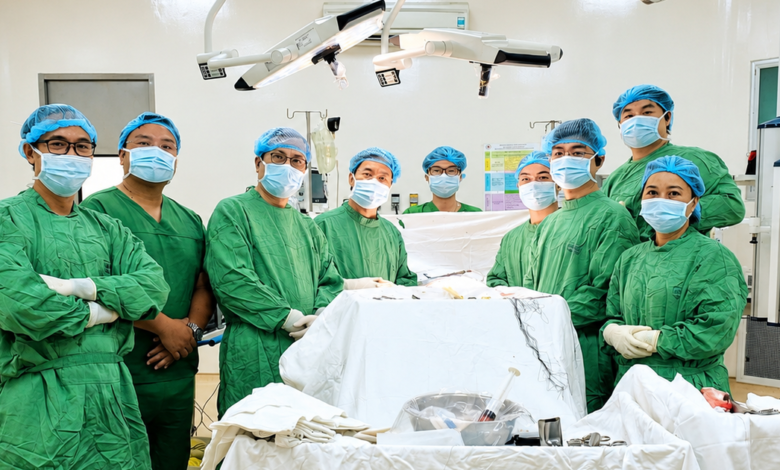
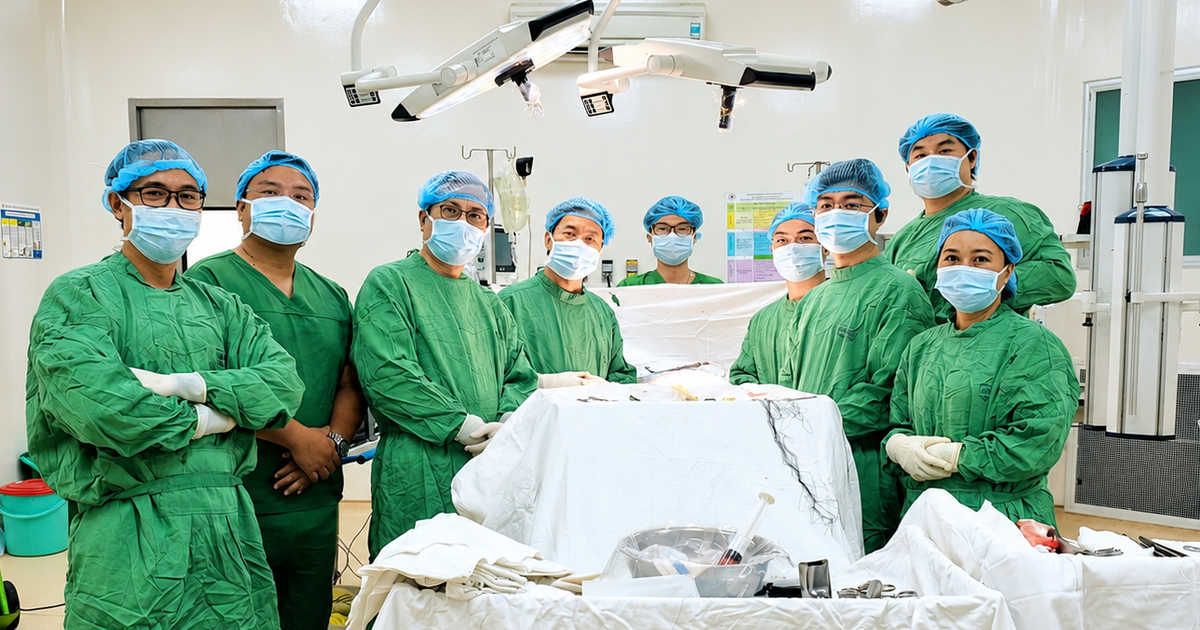
Medical history was made in Ho Chi Minh City as a specialized surgical team at Nhan Dan 115 Hospital successfully performed a third kidney transplant on a 57-year-old male patient, marking only the second time such a complex procedure has been achieved in Vietnam. On July 25, Dr. Cao Hoai Tuan Anh, Deputy Director of Nhan Dan 115 Hospital, confirmed the success of the operation, which involved overcoming extreme immunological and physiological hurdles that typically render a third transplant nearly impossible.
The patient, identified as Mr. N.V.M., a resident of Ca Mau Province, had spent decades battling end-stage renal disease. Having already undergone two previous kidney transplants, both of which eventually failed, Mr. M. had returned to a grueling life of hemodialysis. For the past two years, he was tethered to a machine three times a day, a cycle that left him unable to work and placed an immense emotional and financial burden on his family. As the primary breadwinner, his decline in health had a cascading effect on his household, with his wife forced to pause her own life to become his full-time caregiver during his frequent hospitalizations.
The path to this third life-saving surgery began when Mr. M.’s wife made the profound decision to donate one of her own kidneys to her husband. This act of altruism provided the medical team at Nhan Dan 115 Hospital with a viable organ, but the technical challenges ahead were daunting.
The Immense Challenges of Re-Transplantation
According to Distinguished Physician Truong Hoang Minh, Head of the Kidney Urology and Andrology Center at Nhan Dan 115 Hospital, a third kidney transplant is significantly more dangerous than a first or second. The primary concern was Mr. M.’s highly sensitized immune system. Having been exposed to foreign tissue during his previous two transplants, his body had developed high levels of Human Leukocyte Antigen (HLA) antibodies. This "immunological memory" meant his body was primed to recognize and aggressively attack any new donor organ, posing an extreme risk of hyperacute or acute rejection.
Beyond the immunological barriers, the surgical landscape was equally treacherous. Mr. M. had a complex surgical history, including a prior major abdominal surgery for trauma that left a large scar from his sternum to his pubic bone. Additionally, the two previous kidney transplants had occupied the standard "pockets" in the iliac fossae (the lower sides of the abdomen), leaving behind extensive scar tissue and adhesions.
Further complicating the matter, pre-operative CT scans revealed severe vascular issues. Mr. M. suffered from extensive calcification of the thoracic and abdominal aorta, as well as the iliac arteries. This calcification meant the blood vessels were hardened and brittle, making it exceptionally difficult for surgeons to find a suitable site to suture the new kidney’s blood vessels to the patient’s circulatory system.
A Meticulous Pre-Operative Strategy
To mitigate these risks, the medical board at Nhan Dan 115 Hospital convened multiple consultations to draft a comprehensive treatment protocol. The strategy was two-pronged: intensive immunological preparation and a highly adaptable surgical plan.
Before the surgery could take place, Mr. M. underwent four rounds of plasmapheresis (plasma exchange). This process involves removing the patient’s plasma—which contains the dangerous HLA antibodies—and replacing it with healthy donor plasma or a substitute. This was essential to "quiet" his immune system enough to accept the new graft. Additionally, the team utilized Anti-Thymocyte Globulin (ATG), a potent immunosuppressant, to provide a "induction" phase of therapy, further lowering the risk of immediate rejection.
On the surgical side, the team opted for a laparoscopic approach to harvest the left kidney from the donor (his wife). This minimally invasive technique ensured a faster recovery for her. For Mr. M., the surgery required a delicate balance of removing the old, non-functional second graft on the right side to create space for the third kidney.
The Surgical Triumph and Recovery
The operation was a test of precision and endurance. Because the standard transplant sites were occupied or scarred, the surgeons had to place the new kidney higher than usual in the abdomen. This necessitated a longer ureter (the tube that carries urine to the bladder), which increased the risk of ischemia (lack of blood flow) to that specific tissue. In some phases of the operation, the team had to consider the possibility of connecting the kidney directly to the abdominal aorta and vena cava if the iliac vessels proved too calcified to use.
Despite these hurdles, the surgery was a resounding success. Upon unclamping the blood vessels, the team witnessed the most rewarding sight in transplant surgery: the new kidney immediately began producing urine, which "jetted out" in a steady stream.
The post-operative recovery has been remarkably smooth. Within 24 hours, Mr. M. was conscious, alert, and able to eat and drink normally. His kidney function markers improved rapidly, signaling that the graft had successfully integrated into his body. His wife, the donor, also recovered well, a testament to the hospital’s advanced laparoscopic capabilities.
Historical Context and the State of Transplantation in Vietnam
This case is only the second recorded instance of a successful third kidney transplant in Vietnam. The first occurred in January 2017, when a 71-year-old Japanese patient underwent the procedure. The success at Nhan Dan 115 Hospital demonstrates that Vietnamese surgical and immunological expertise has reached a level comparable to developed nations with long histories of organ transplantation.
The history of organ transplantation in Vietnam began in 1992 with the first kidney transplant at Military Medical Hospital 103. In the three decades since, the field has expanded rapidly. However, the demand continues to far outpace the supply. Medical statistics suggest that there are currently between 40,000 and 50,000 people in Vietnam suffering from end-stage renal disease who require replacement therapy (dialysis or transplant).
Despite this high demand, only about 1,000 to 1,500 kidney transplants are performed annually across the country. This means only a small fraction of patients—estimated by some experts at roughly 20% to 25% of those actively seeking a transplant—ever receive a donor organ.
Barriers to Organ Donation in Vietnam
The primary obstacle to increasing transplant rates remains the severe shortage of donor organs. In Vietnam, organ donation faces significant cultural and religious barriers. Traditional beliefs regarding "physical integrity" after death often discourage families from consenting to organ donation from deceased or brain-dead relatives.
Currently, the vast majority of kidney transplants in Vietnam come from living donors, usually family members like in the case of Mr. M. and his wife. While living donation is a vital resource, the medical community is actively working to promote donation from brain-dead and heart-dead donors to alleviate the burden on families and provide a wider pool of organs for those who do not have a compatible living relative.
Analysis of Implications
The success of this third transplant at Nhan Dan 115 Hospital carries several significant implications for the future of Vietnamese healthcare:
- Advancement in Immunological Management: The successful use of plasma exchange and ATG induction in a highly sensitized patient proves that Vietnamese hospitals can now manage "high-risk" transplants that were previously considered untreatable in the country.
- Surgical Innovation: Overcoming the challenges of vascular calcification and extensive abdominal scarring highlights the technical maturity of Vietnamese surgeons. These techniques can be applied to other complex vascular and abdominal surgeries.
- Improved Quality of Life Statistics: While the long-term survival rate for a third transplant is statistically lower than for a first (estimated at 75-85% after one year and 55-70% after five years), it remains significantly higher than the survival rate and quality of life associated with long-term hemodialysis. For patients like Mr. M., the transplant represents a return to dignity and productivity.
- Inspiration for Organ Donation: Publicizing such success stories serves to highlight the life-changing impact of organ donation, potentially encouraging more citizens to register as donors.
As Mr. M. prepares to return to his home in Ca Mau, his story stands as a beacon of hope for thousands of others on dialysis waiting lists. It also serves as a reminder of the critical need for a more robust organ donation infrastructure in Vietnam. The medical team at Nhan Dan 115 Hospital has proven that the science is ready; now, the challenge remains to bridge the gap between medical capability and organ availability.