Ani Choying Drolma: The Healing Power of Sacred Chants and the Inner Seed of Compassion


Renowned Nepalese Buddhist nun and globally celebrated spiritual vocalist Ani Choying Drolma has returned to Vietnam for a series of highly anticipated public engagements, leading up to her landmark Sound Healing Concerts in Ho Chi Minh City and Hanoi. Rather than boasting a traditional academic background in vocal performance, Drolma’s journey into music is deeply intertwined with her life of monastic devotion. For the revered Buddhist practitioner, every utterance of a sacred mantra functions as an active form of meditation, where the state of the practitioner’s mind holds far greater significance than technical singing proficiency.
The backdrop of her current return carries profound emotional weight. Drolma arrives in Vietnam shortly after her homeland of Nepal suffered a devastating series of natural disasters. While visibly more subdued and carrying the heavy grief of her compatriots lost in recent tragedies, the revered nun continues to offer her voice as a vessel of solace, peace, and resilience. Her upcoming performances, anchored by the central theme "The Inner Seed" (The Inner Seed), seek to awaken the dormant seeds of compassion and mindfulness in audiences worldwide.
From Monastery Walls to Global Stages: A Natural Musical Awakening
Ani Choying Drolma’s entry into music was neither meticulously planned nor guided by classical conservatory training. Instead, it blossomed organically within the quiet, contemplative confines of a Nepalese monastery. As a young nun immersed in daily spiritual routines, she was naturally exposed to ritualistic bells, gongs, and chanting. Over time, these sacred sounds became second nature to her.
"I am not someone who studied vocal music or professional singing in the traditional sense," Drolma reflects. For her, the essence of chanting a mantra does not lie in theatrical execution, but in the internal state of the practitioner. She frequently employs a vivid metaphor: the mantra is like a vehicle, and the practitioner is the driver. While different drivers may use the same vehicle, the quality of the journey depends entirely on the driver’s level of awareness, intention, and destination.

This philosophy explains why Drolma draws a sharp distinction between ordinary "singing" and sacred "chanting." While conventional singing is often designed for performance and entertainment, sacred chanting is an internal spiritual practice. "Every time I chant, it is also a time of deep meditation," she explains. Before uttering a single syllable, the practitioner must cultivate a pure intention, steady concentration, and an altruistic desire to generate inner peace and extend goodwill to all sentient beings.
The Inner Seed: Cultivating Universal Compassion
The core theme of the Sound Healing Concert 2026, titled "The Inner Seed" (The Inner Seed), is built entirely upon this foundational philosophy. Drolma asserts that every human being possesses an innate seed of goodness, characterized by boundless compassion and a natural propensity for meditative awareness. The practice of mindfulness and sacred chanting does not manufacture these virtues out of nothing; rather, it helps individuals recognize, acknowledge, and nurture what is already inherently present within them.
"We all have those seeds within us. We all possess a meditative nature. Kindness is already within us," she notes.
Consequently, true meditation is not strictly confined to the rigid posture of sitting cross-legged in a silent room. Whether walking, working, or confronting emotional turbulence, individuals can maintain a state of clear awareness and observe the inner workings of their minds. Mantras serve as an anchor, focusing the restless intellect. However, Drolma emphasizes that this spiritual practice must transcend the temporary ambiance of a concert hall and integrate seamlessly into daily life.
"When people sit in silence alongside the sound of sacred chanting, they can instantly feel a sense of inner peace. So why not maintain that feeling of peace in everyday life?" she challenges her audiences.
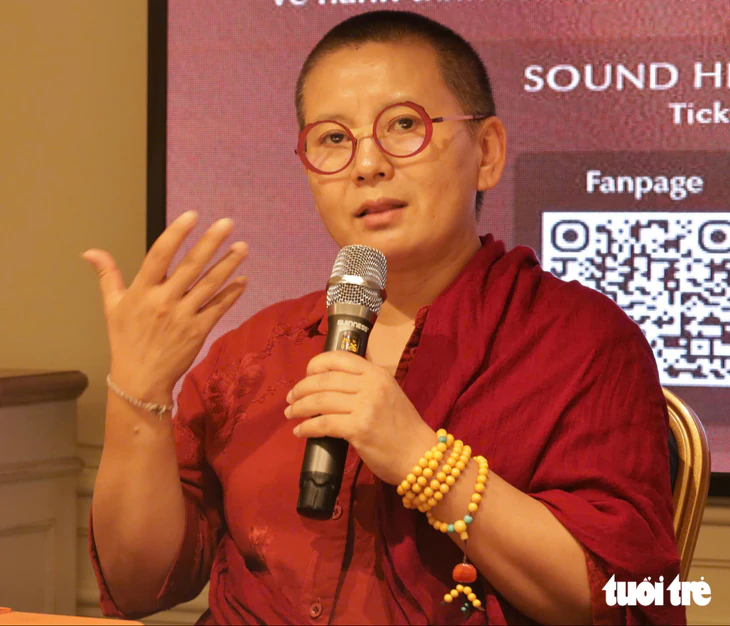
Acknowledging the immutable law of impermanence is another cornerstone of her teachings. Drolma reminds listeners that hardships are fleeting and will eventually transform, just as pleasant circumstances are transient. Recognizing this reality can alleviate anxiety, foster deep appreciation for the present moment, and cultivate profound gratitude for the people surrounding us.
Concert Details and Chronology of the 2026 Tour
The journey of Ani Choying Drolma to Vietnam is part of a continuing cultural and spiritual bridge that began with her highly successful performances in 2025. Her return for the Sound Healing Concert 2026 marks a significant milestone in the country’s growing appreciation for therapeutic and meditative arts.
The concert tour is structured meticulously to guide audiences through a transformative sonic experience. Abandoning traditional linear concert formats, the 2026 production utilizes a narrative arc that blends the deep resonance of Nepalese mantras with contemporary sound-healing techniques, including Tibetan singing bowls and harmonic frequencies.
The schedule for the key public events includes:
- September 10, 2026: Pre-concert press and public interaction event in Ho Chi Minh City, featuring discussions on the philosophy of mantra practice and humanitarian efforts.
- September 12, 2026: Sound Healing Concert at the GEM Center in Ho Chi Minh City.
- September 19, 2026: Sound Healing Concert at the iconic Hanoi Opera House.
Implications and Broader Impact of Sound Healing
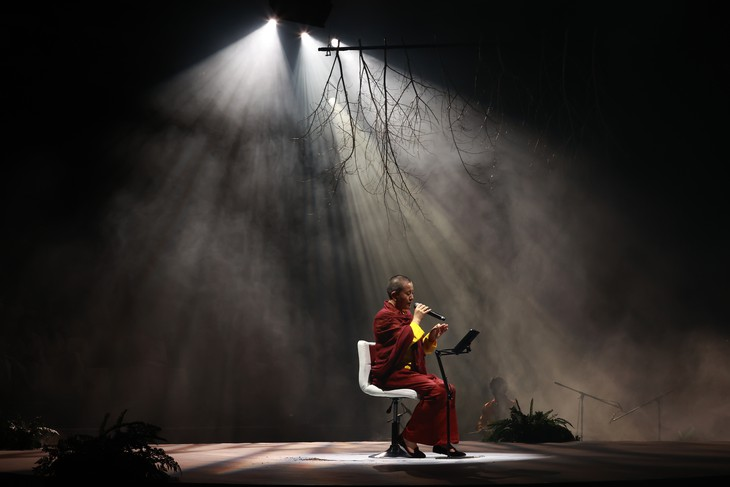
In recent years, sound healing and meditative music have transitioned from niche spiritual practices into globally recognized modalities for mental wellness. Experts in psychology and holistic health note that vibrational frequencies, particularly repetitive sacred chants, can stimulate the parasympathetic nervous system, lower cortisol levels, and induce states of deep relaxation akin to advanced meditation.
By bringing her authentic monastic tradition to mainstream venues like the GEM Center and the Hanoi Opera House, Ani Choying Drolma bridges ancient Himalayan wisdom with modern urban life. In societies grappling with high stress, rapid technological saturation, and post-crisis trauma—such as the recent natural calamities affecting South Asia—her performances offer more than just auditory pleasure. They provide a psychological sanctuary.
Furthermore, Drolma’s art serves a vital philanthropic purpose. Much of the proceeds from her global artistic endeavors are channeled back into her foundation, which supports the education of young nuns, healthcare initiatives, and social welfare projects in Nepal and beyond. Her music is thus not only a vehicle for internal healing but also an instrument of tangible social transformation.
As audiences in Ho Chi Minh City and Hanoi gather to experience the profound vibrations of her voice, they participate in an ancient tradition of shared human empathy. Through the simple, resonant utterance of sacred syllables, Ani Choying Drolma reminds humanity of its shared capacity for resilience, healing, and boundless compassion.