Business Performance Landscape in the First Half of 2026 A Deep Dive into Sectoral Divergence and Market Resilience

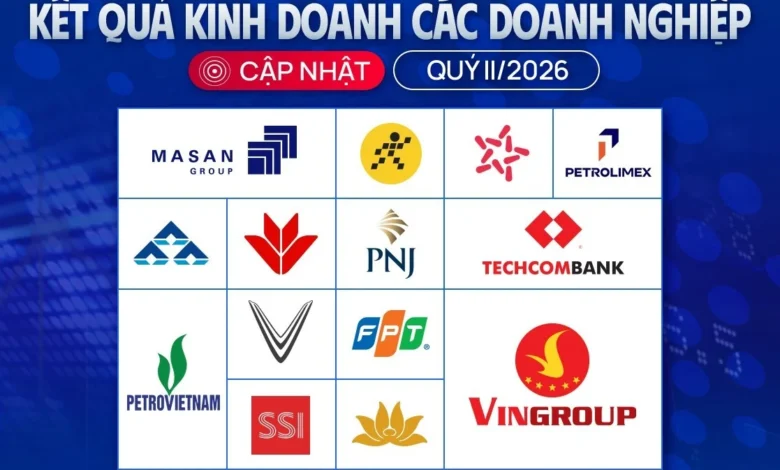
As the third quarter of 2026 commences, the Vietnamese corporate landscape is presenting a complex and multifaceted portrait of economic health. Following the mid-July deadline for the disclosure of second-quarter (Q2) and first-half (H1) financial results, a clear trend of "sectoral divergence" has emerged. While over 100 major enterprises have officially released their financial statements or preliminary estimates, the data reveals a stark contrast between industries thriving under favorable market conditions and those grappling with persistent headwinds, rising operational costs, and shifting consumer behavior. This divergence is most visible in the energy sector—specifically thermal power—which has reported substantial profit surges, standing in sharp contrast to the manufacturing and retail sectors where many firms are reporting narrowed margins or significant losses.
The Mid-Year Financial Reporting Milestone
The release of the H1 2026 financial reports marks a critical juncture for investors, policymakers, and industry analysts. By July 20, 2026, the market received a deluge of data that provided the first comprehensive look at how Vietnamese enterprises are navigating the complexities of the mid-decade economy. The reporting season has highlighted a "K-shaped" recovery within the corporate sector: the upper arm represents industries that have successfully leveraged technology, high demand, or favorable commodity pricing, while the lower arm consists of businesses still struggling with the legacy of global supply chain disruptions and volatile input costs.
Preliminary data indicates that the collective revenue of listed companies has seen a moderate year-on-year increase. However, the net profit figures tell a different story. The divergence is no longer just between large-cap and small-cap stocks, but rather a fundamental split based on sectoral efficiency and market positioning. For many analysts, these results are a litmus test for the resilience of the Vietnamese economy as it aims for sustainable growth in the latter half of the decade.
The Energy Sector: Thermal Power Takes the Lead
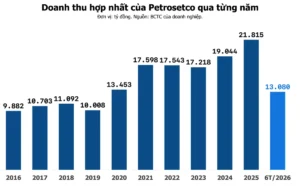
One of the most striking revelations from the July 20 updates is the robust performance of the thermal power group. Several key players in the utilities sector have reported "massive" profits, a trend driven by several converging factors. Throughout the first half of 2026, Vietnam experienced a significant surge in industrial electricity demand, coupled with weather patterns that limited the output of hydroelectric plants. This shift forced the national grid to rely more heavily on thermal power sources, including both coal-fired and gas-fired plants.
Supporting data suggests that thermal power generators saw a double-digit increase in output compared to the same period in 2025. Furthermore, the stabilization of global coal and natural gas prices—following years of volatility—allowed these companies to manage their input costs more effectively. The improved "dark spread" (the difference between the price of electricity and the cost of fuel) has translated directly into bottom-line growth. Experts note that the successful implementation of the Power Development Plan VIII (PDP8) has also begun to provide a more stable regulatory framework for these traditional energy providers, even as the country transitions toward greener alternatives.
In contrast to the thermal power boom, renewable energy firms have shown more tempered results. While their capacity continues to grow, grid integration challenges and the phase-out of early-stage feed-in tariffs have meant that their profit growth has not yet matched the aggressive trajectory seen in the thermal sector during this specific six-month window.
Manufacturing and Exports: Navigating Global Headwinds
The manufacturing sector, long the engine of Vietnam’s GDP growth, presented a more nuanced performance in H1 2026. Export-oriented industries such as textiles, footwear, and electronics reported a recovery in order volumes from major markets like the United States and the European Union. However, this increase in volume has not always equated to higher profits.
Many manufacturing firms are currently caught in a "margin squeeze." While demand is returning, the cost of raw materials, logistics, and labor has continued to climb. The H1 reports show that several large-scale exporters recorded record revenues but saw their net profits decline by 10% to 15% due to these rising overheads. Additionally, the increasing requirements for green manufacturing and ESG (Environmental, Social, and Governance) compliance have necessitated significant capital expenditure, which has weighed heavily on short-term earnings.
Smaller enterprises in the manufacturing supply chain have been hit even harder. Many reported losses in Q2 2026, citing an inability to pass on increased costs to their larger partners or final consumers. This has led to a wave of consolidation within the industry, as more resilient firms acquire smaller competitors to gain scale and efficiency.
The Consumer and Retail Landscape: A Tale of Two Tiers
The retail and consumer goods sector is perhaps the most visible indicator of the current "sectoral divergence." On one hand, luxury goods and high-end services have maintained steady growth, catering to a burgeoning middle and upper class. On the other hand, mass-market retail and essential goods have faced significant pressure.
Consumer sentiment in the first half of 2026 remained cautious. While inflation has been kept within the government’s target range, the "feeling" of inflation—particularly in food and fuel—has led households to prioritize savings over discretionary spending. Major retail chains reported a shift in consumer behavior toward private-label brands and discount-oriented shopping. Consequently, while revenue for these retailers remained flat or saw modest growth, the high cost of maintaining extensive physical footprints and the necessity of aggressive promotions have eroded profitability.
The e-commerce sector continues to be a bright spot, with digital platforms reporting continued growth in transaction volumes. However, the path to profitability remains elusive for many players in this space due to the high costs of customer acquisition and last-mile delivery in a highly competitive market.
Financial Services and Real Estate: Stability Amidst Transition
The financial sector, particularly banking, has shown remarkable stability in H1 2026. Banks have benefited from improved credit growth as the government encourages lending to support economic recovery. However, the reports also indicate a cautious approach to risk management. Non-performing loan (NPL) ratios, while manageable, are being closely monitored as some sectors continue to struggle.
The real estate market remains in a state of transition. While the "freezing" period of previous years has thawed, the recovery is uneven. Developers focusing on affordable housing and industrial real estate have reported positive results, whereas those tied to the high-end residential and luxury resort segments are still facing liquidity challenges. The Q2 reports show that several major developers are still carrying significant debt loads, and their ability to launch new projects remains contingent on regulatory approvals and market absorption rates.
Analysis of Implications: What This Means for H2 2026
The divergence observed in the H1 2026 results has several implications for the remainder of the year. First, the strong performance of the energy sector suggests that the industrial base is active, but it also highlights the urgent need for continued investment in energy infrastructure to prevent bottlenecks. The reliance on thermal power, while profitable for companies now, underscores the challenges Vietnam faces in meeting its long-term climate commitments.
Second, the "margin squeeze" in manufacturing indicates that "growth at any cost" is no longer a viable strategy. Companies will likely focus on operational efficiency, automation, and supply chain optimization in the coming months. We can expect to see more investment in technology aimed at reducing waste and energy consumption.
Third, the government’s role in fiscal and monetary policy will be crucial. With some sectors lagging, there may be calls for targeted support or further interest rate adjustments to stimulate demand. However, the central bank must balance this against the need to maintain currency stability and control inflation.
Official Responses and Market Reaction
Market analysts have reacted to the H1 disclosures with a mix of optimism and caution. Financial experts suggest that the current polarization is a natural result of an economy maturing and reacting to global shifts. "What we are seeing is a flight to quality," noted one senior economist at a leading brokerage firm. "Investors are no longer looking at the market as a whole but are cherry-picking companies with strong cash flows and the ability to navigate cost pressures."
Government representatives have acknowledged the challenges faced by certain sectors. In recent statements, officials from the Ministry of Planning and Investment emphasized the importance of administrative reform and the acceleration of public investment to support the broader economy. There is a concerted effort to ensure that the "lower arm" of the K-shaped recovery—the struggling SMEs—is not left behind, with various tax incentive programs and credit support packages being discussed for the latter half of the year.
Conclusion: A Road Map for the Future
As Vietnam moves into the second half of 2026, the corporate sector stands at a crossroads. The H1 results have stripped away the veneer of a uniform recovery, revealing the structural strengths and weaknesses of the national economy. The success of the thermal power group provides a temporary boost to the energy sector’s coffers, but the broader challenges of cost management in manufacturing and the cautiousness of the retail consumer cannot be ignored.
The coming months will likely see a continued emphasis on "resilience" and "transformation." For businesses, the focus will be on adapting to a higher-cost environment through innovation. For the government, the challenge will be to foster an environment where the benefits of growth are more evenly distributed across sectors. While the H1 2026 reports show a divided landscape, they also provide the data necessary for stakeholders to make informed decisions that will shape the trajectory of the Vietnamese economy into 2027 and beyond.