The Vietnamese automotive landscape is undergoing a profound transformation as the nation pivots toward sustainable mobility, necessitating a clear understanding of the various electrified powertrains now entering the market. As consumers transition away from traditional internal combustion engines (ICE), the terminology surrounding hybrid and electric vehicles—ranging from Mild Hybrids (MHEV) to Battery Electric Vehicles (BEV)—has become essential knowledge for buyers and policymakers alike. This classification system, now standardized within the Vietnamese market as of mid-2026, distinguishes vehicles based on their level of electrification, charging requirements, and the specific role of the internal combustion engine in providing propulsion.
The Technical Spectrum: Understanding Electrification Levels
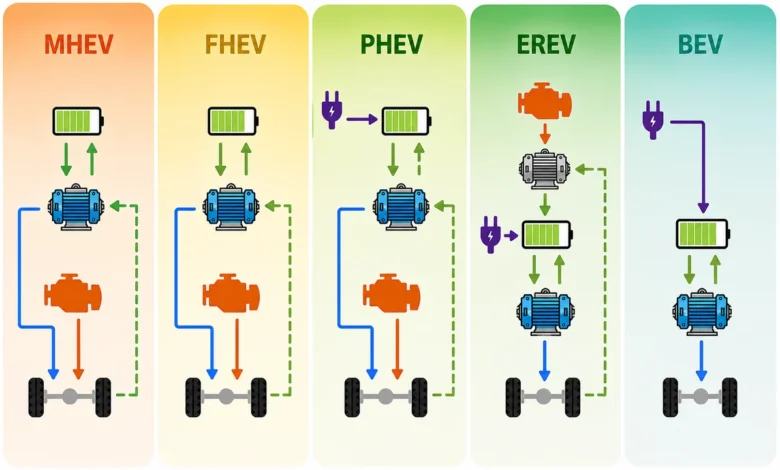
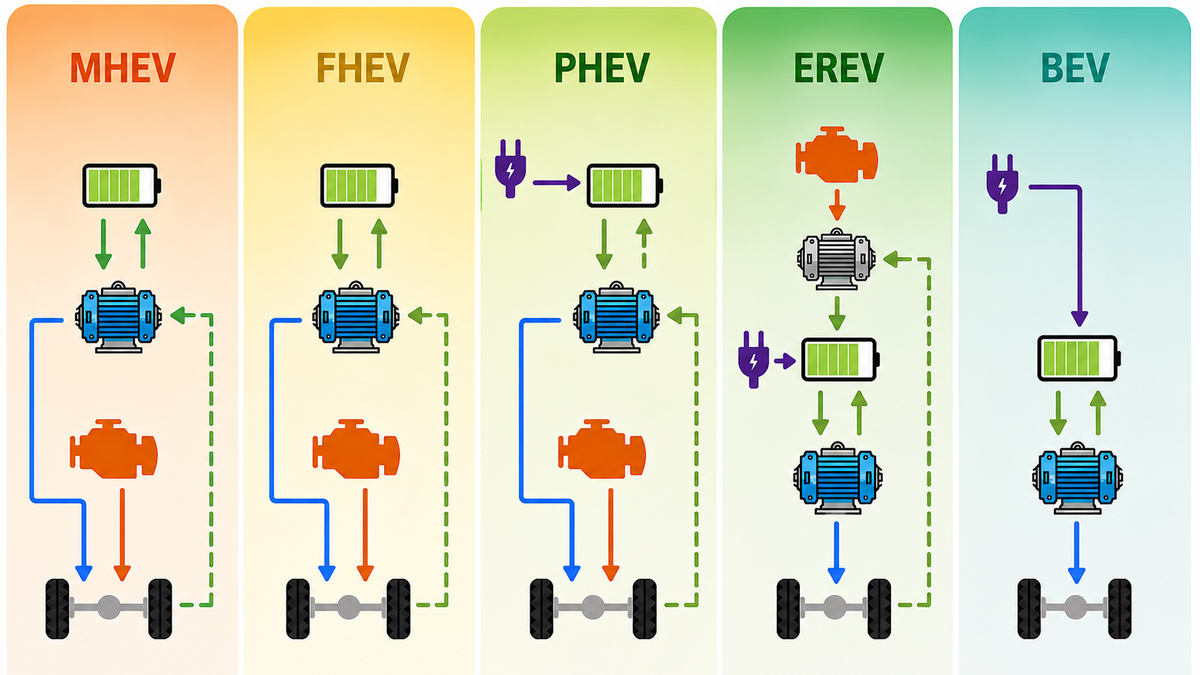
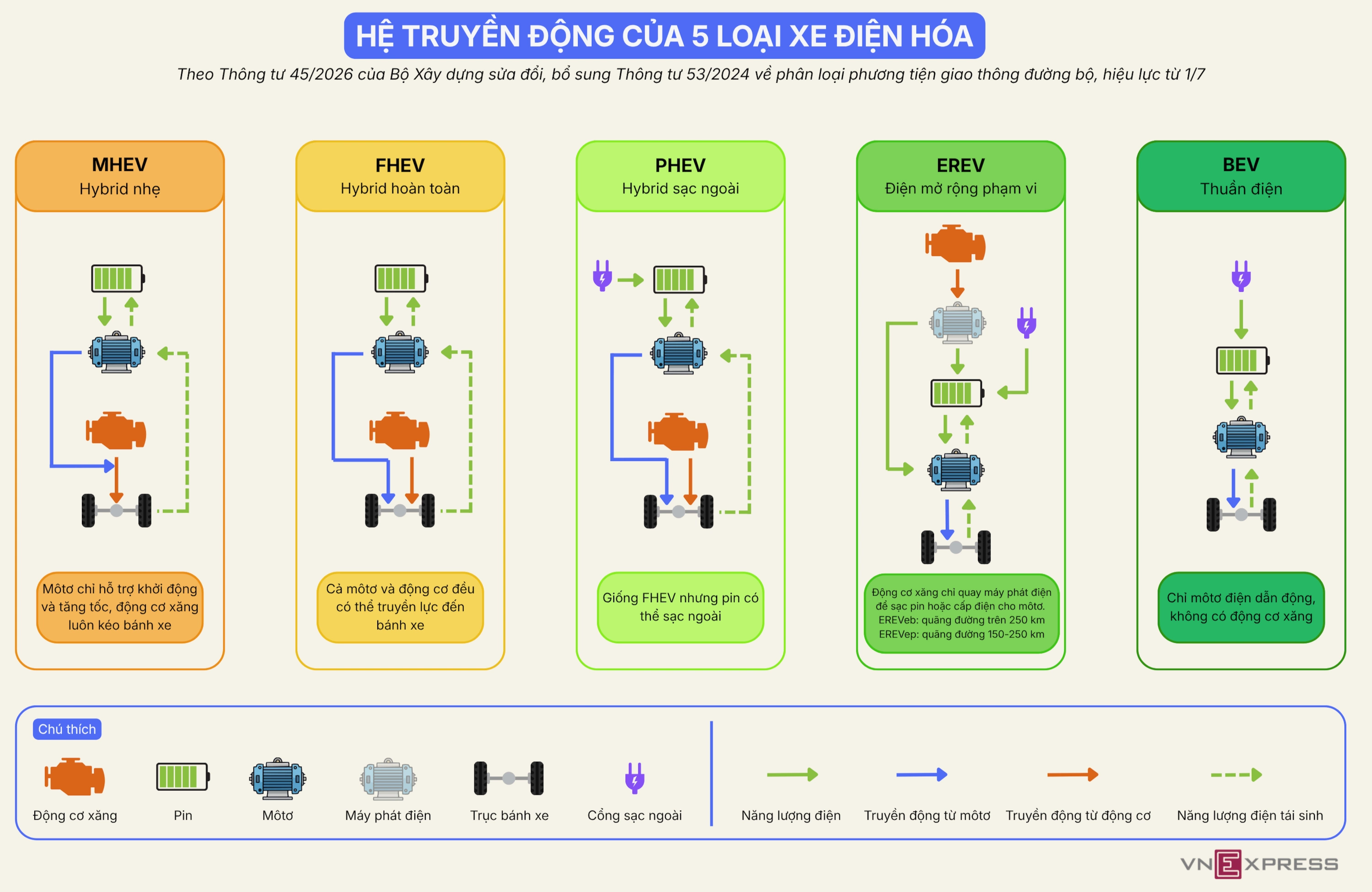
The classification of green vehicles in Vietnam is primarily divided into five distinct categories, each offering a different balance between fuel efficiency, carbon emissions, and operational convenience. At the entry level of electrification is the Mild Hybrid Electric Vehicle (MHEV). In an MHEV system, a small electric motor, often integrated as a starter-generator, provides a modest boost to the internal combustion engine during acceleration. Crucially, an MHEV cannot propel the vehicle using electricity alone. Its primary function is to optimize fuel consumption and reduce emissions by allowing the engine to shut off more frequently during coasting or idling. In Vietnam, this technology has seen widespread adoption in luxury segments, such as those offered by Mercedes-Benz and Audi, as well as in more accessible models like the Suzuki Ertiga Hybrid.
Moving up the ladder of electrification is the Full Hybrid Electric Vehicle (FHEV), commonly referred to in Vietnam as a "self-charging hybrid." Unlike the MHEV, an FHEV features a more powerful electric motor and a larger battery pack, enabling the vehicle to operate in pure electric mode for short distances and at lower speeds. The system automatically manages the interplay between the gasoline engine and the electric motor, recharging the battery through regenerative braking and the engine itself. This category has gained significant traction in the Vietnamese market due to its lack of reliance on external charging infrastructure, making it an ideal choice for urban environments like Hanoi and Ho Chi Minh City. Toyota has been a pioneer in this segment within Vietnam, with models such as the Corolla Cross Hybrid and Camry Hybrid leading the sales charts.
The third category is the Plug-in Hybrid Electric Vehicle (PHEV). This type represents a significant bridge between traditional hybrids and fully electric cars. A PHEV possesses a much larger battery than an FHEV, which must be charged via an external power source. This allows for a substantial all-electric range—typically between 40 and 80 kilometers—which is often sufficient for daily commuting without using a single drop of gasoline. When the battery is depleted, the vehicle functions as a standard hybrid. In Vietnam, the PHEV segment is currently dominated by European luxury brands such as Volvo and BMW, catering to consumers who want the benefits of an EV for city driving while maintaining the long-distance flexibility of a gasoline engine.
The fourth, and perhaps most distinct hybrid category, is the Extended Range Electric Vehicle (EREV). In an EREV, the wheels are driven exclusively by one or more electric motors. The internal combustion engine on board does not have a mechanical connection to the wheels; instead, it serves solely as a portable generator to recharge the battery when it runs low. This configuration provides the smooth, high-torque driving experience of an electric car while eliminating "range anxiety." Nissan’s e-Power technology is a prominent example of this philosophy currently gaining attention in the Southeast Asian market.
Finally, the Battery Electric Vehicle (BEV) represents the pinnacle of the transition. BEVs dispense with the internal combustion engine entirely, relying solely on large battery packs and electric motors. These vehicles produce zero tailpipe emissions and require a robust network of charging stations. Vietnam has seen a rapid surge in BEV adoption, driven largely by the domestic manufacturer VinFast, which has aggressively expanded its charging network across all 63 provinces, alongside the entry of global players like BYD and Tesla.
Chronology of Electrification in the Vietnamese Market
The journey toward this diverse classification began in earnest around 2020. Prior to this, the Vietnamese market was almost exclusively dominated by gasoline and diesel vehicles, with hybrids viewed as a niche luxury.
In 2020, the introduction of the Toyota Corolla Cross Hybrid marked the first time a mass-market hybrid vehicle was made available to Vietnamese consumers at a competitive price point. This event served as a catalyst, proving that there was significant demand for fuel-efficient, "self-charging" technology.
By 2022, the Vietnamese government took a decisive step by implementing Decree 10/2022/ND-CP, which granted a 0% registration fee for battery electric vehicles for a period of three years. This policy, combined with a significant reduction in Special Consumption Tax (SCT) for EVs, created a massive price advantage for BEVs compared to their ICE counterparts.
Throughout 2024 and 2025, the market saw an influx of diverse hybrid technologies. Manufacturers realized that while BEVs were the future, the transition required intermediary steps. This period saw the launch of several PHEV and MHEV models from both Asian and European manufacturers, filling the gaps for consumers who were not yet ready to commit to a purely electric lifestyle due to infrastructure or lifestyle constraints.
By July 2026, the classification of these five vehicle types has become a standard part of the consumer lexicon, supported by clear government labeling and tax structures that vary based on the degree of electrification and emission levels.
Supporting Data and Market Trends
Recent data from the Vietnam Automobile Manufacturers Association (VAMA) and independent market analysts highlight the rapid shift in consumer preferences. In the first half of 2026, sales of electrified vehicles (including all five categories) accounted for approximately 18% of total new vehicle registrations in Vietnam, a significant increase from just 3% in 2021.
FHEVs remain the most popular choice for the general public, capturing nearly 50% of the electrified vehicle market share. This is attributed to the "convenience factor," as owners do not need to change their driving habits or rely on public charging stations. However, BEVs are the fastest-growing segment, with a year-on-year growth rate exceeding 120%, bolstered by the expanding national charging grid and the proliferation of affordable models from both domestic and international brands.
Economic data also suggests that the total cost of ownership (TCO) for hybrids and EVs in Vietnam is becoming increasingly favorable. While the initial purchase price of a hybrid may be 10-15% higher than a comparable gasoline model, the savings on fuel (ranging from 30% to 50% for FHEVs) and reduced maintenance costs (for BEVs) allow owners to recoup the difference within three to five years of operation.
Official Responses and Regulatory Environment
The Ministry of Industry and Trade (MoIT) and the Ministry of Transport have been vocal about their commitment to the "Green Energy Transformation Program." Government officials have emphasized that the clear classification of MHEV, FHEV, PHEV, EREV, and BEV is crucial for drafting future legislation.
"We are working toward a roadmap where internal combustion engines are phased out in favor of sustainable alternatives," a representative from the Ministry of Transport stated in a recent policy briefing. "By categorizing these vehicles accurately, we can apply targeted incentives. For instance, while BEVs enjoy the highest tax breaks, we also recognize the role of PHEVs and FHEVs in reducing the nation’s overall carbon footprint during this transitional decade."
Industry experts from the Vietnam Association of Supporting Industries (VASI) have also noted that this classification helps local manufacturers and parts suppliers align their production with global trends. The rise of EREVs and PHEVs, in particular, offers opportunities for local firms to participate in the supply chain for both traditional engine components (used as generators) and advanced electric powertrains.
Broader Impact and Implications for the Future
The clear distinction between these hybrid and electric types has significant implications for Vietnam’s urban planning and environmental goals. As the country strives to meet its "Net Zero" emissions pledge by 2050, the automotive sector is a primary focus.
The adoption of MHEVs and FHEVs provides immediate relief for urban air quality and reduces the national demand for imported petroleum. Meanwhile, the growth of PHEVs and BEVs is driving a massive investment in the national power grid and smart city infrastructure. Real estate developers in major cities are now increasingly required to include charging ports in new residential and commercial projects to accommodate the rising number of plug-in vehicles.
Furthermore, the Vietnamese consumer mindset is evolving. Environmental consciousness is no longer the sole driver of EV and hybrid sales; rather, it is the combination of advanced technology, superior driving performance (instant torque), and long-term economic savings. The classification system helps demystify the technology, allowing buyers to choose a vehicle that specifically fits their access to charging—whether they live in a high-rise apartment with no charging access (favoring FHEV/MHEV) or a private home with a garage (favoring PHEV/BEV).
In conclusion, the detailed classification of hybrid and electric vehicles in Vietnam reflects a maturing market that is no longer satisfied with a "one-size-fits-all" approach to green mobility. By understanding the nuances between MHEV, FHEV, PHEV, EREV, and BEV, Vietnam is positioning itself as a regional leader in the adoption of sustainable transportation, balancing immediate practicalities with long-term environmental imperatives. As infrastructure continues to expand and technology costs decline, the lines between these categories may blur, but their role in bridging the gap to a fully electric future remains indispensable.