White House Strongly Denies Viral Fake Image of President Donald Trump Kissing Aide Natalie Harp

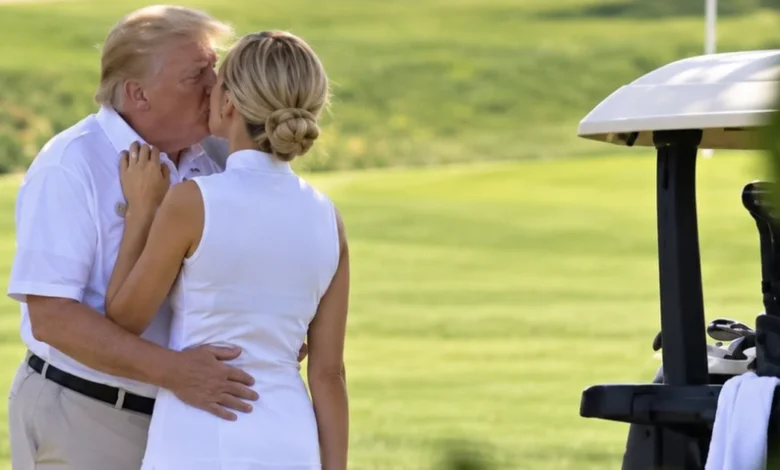
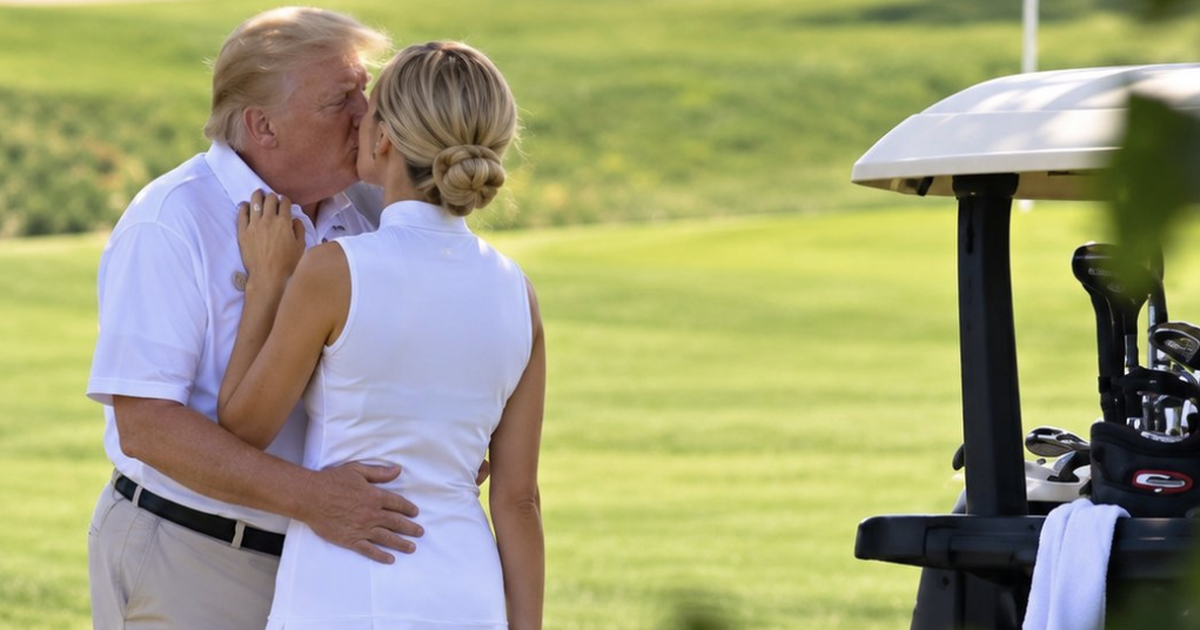
The digital ecosystem has once again become a battleground for manipulated media, with a fabricated photograph depicting U.S. President Donald Trump kissing his aide Natalie Harp circulating rapidly across multiple social media platforms. The image, which has generated millions of impressions, intense online speculation, and sharp partisan debates regarding its authenticity, has been formally and unequivocally denounced by the White House as a deliberate forgery.
As artificial intelligence technologies become increasingly sophisticated and accessible to the general public, the boundaries between reality and digital fabrication continue to blur. This latest incident highlights the growing challenge political figures and institutions face in combating deepfakes and manipulated imagery designed to mislead the electorate, damage reputations, or provoke targeted outrage.
Origins of the Viral Photograph and Context of the Controversy
The controversy surrounding the fabricated image emerged against the backdrop of heightened public scrutiny regarding Natalie Harp and her professional relationship with President Donald Trump. Harp, a loyal and high-profile advisor who frequently manages digital strategy and messaging within the administration, had recently drawn considerable media attention following an administration disclosure related to holiday distributions. Specifically, reports had surfaced indicating that President Trump had gifted $45,000 in cash to Harp alongside two other female White House aides during the Christmas season.
While holiday bonuses and monetary gifts to longtime staffers are not entirely unprecedented in executive administrations, the substantial sum and the specific beneficiaries ignited widespread commentary across traditional news outlets and digital commentary channels. Critics and political opponents seized upon the financial disclosure to question the professional boundaries within the West Wing, while supporters defended the president’s generosity toward a dedicated aide.
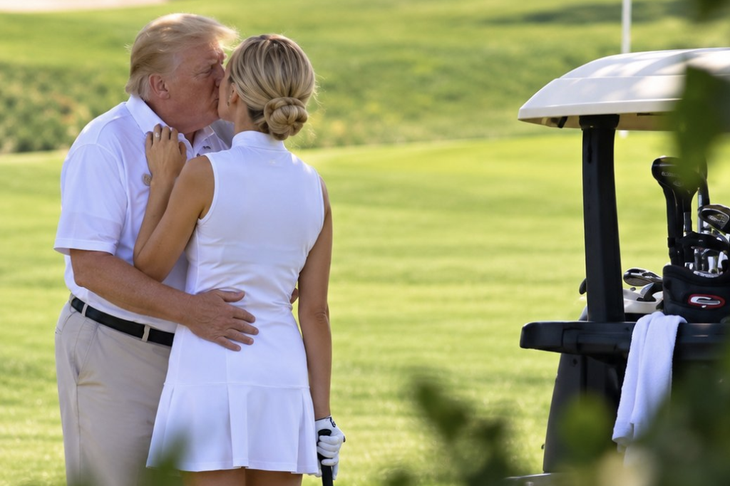
It was within this charged information environment that the fabricated photograph surfaced. Posted initially by pseudonymous or fringe accounts on platforms such as X (formerly Twitter), the image purported to show President Trump and Natalie Harp in an intimate embrace, culminating in a kiss. The visual immediately struck a chord within partisan digital circles, rapidly migrating from fringe forums to mainstream visibility as users debated whether the photo was a genuine captured moment or a digital construction.
Official White House Rebuttal and Expert Analysis
Faced with the exponential spread of the misleading visual, administration officials moved quickly to set the record straight. Speaking directly to the prominent news magazine Newsweek, a designated White House spokesperson issued a definitive statement condemning the image’s circulation.
"This is clearly a fake photograph," the spokesperson told Newsweek, addressing the allegations head-on. "Naturally, this stunt originates from the Democratic camp; they have nothing better to do than to launch and amplify fabricated imagery."
Additional administration officials echoed this sentiment when questioned by independent fact-checking organizations, including Snopes. Government representatives reiterated that no such interaction ever occurred, emphasizing that the visual record of the president’s schedule and public appearances contains no corroborating events.
Independent digital forensics experts and fact-checking organizations swiftly applied advanced detection methodologies to analyze the viral file. According to Snopes, analysis utilizing specialized AI-detection tools developed by OpenAI identified distinct digital markers within high-resolution iterations of the image. These markers closely align with watermarks and algorithmic signatures characteristically generated by the company’s proprietary artificial intelligence image generation and editing suites.
Dr. Hany Farid, a pioneer in digital forensics and co-founder of the deepfake detection firm GetReal, weighed in on the technical anomalies present within the file.
"While there may not be glaring, obvious visual anomalies upon a casual glance, the overall low texture fidelity and compressed resolution remain a classic warning sign of synthetic manipulation," Dr. Farid observed.
Furthermore, forensic analysis of the subjects’ anatomy revealed classic artifacts of early-generation or unrefined AI rendering. The individual identified as Harp appeared to be holding a golf club with a hand possessing six distinct fingers—a notorious and persistent glitch in generative models that struggle with human skeletal and muscular geometry. Although the photograph was captured from behind, making facial verification of the female subject difficult through visual features alone, the digital anomalies combined with anatomical errors sealed its status as a forgery.
The Verification Vacuum and Absence of Credible Documentation
In the modern journalistic landscape, the verification of breaking visual media relies heavily on the cross-referencing of assets across established wire services, accredited photojournalists, and official institutional archives. In the case of the Trump-Harp fabrication, standard journalistic safeguards functioned precisely as intended.
As of the latest reports, no reputable news organization, international wire service, or White House-credentialed photojournalist has claimed ownership of, or verified the authenticity of, the image. Comprehensive checks across the exhaustive archival databases of major international news agencies—including the Associated Press (AP), Agence France-Presse (AFP), Reuters, and Getty Images—revealed zero matching or analogous photographs from any official event, public outing, or private fundraiser.
Moreover, the official White House photography archive, which meticulously documents the daily activities, meetings, and public engagements of the president, contains no records corresponding to the setting or context depicted in the viral post. Because modern executive administrations maintain rigorous visual logs, the complete absence of corroborating angles or primary-source documentation served as conclusive proof for investigators that the image was entirely manufactured.
Broader Implications for Political Discourse and Digital Integrity
The rapid proliferation and viral traction of the Trump-Harp deepfake underscore a deeply concerning trajectory in contemporary political communication. As generative artificial intelligence transitions from experimental technology to a ubiquitous consumer tool, the barrier to creating convincing, malicious falsehoods has plummeted to near zero.
Political analysts and cybersecurity experts warn that the primary objective of such fabrications is not always to fool discerning audiences indefinitely, but rather to poison the information well. Even after an image is thoroughly debunked by fact-checkers and officially denied by government entities, a significant percentage of social media users exposed to the initial post will retain a lingering skepticism or believe the core narrative, operating under the psychological framework of "where there’s smoke, there’s fire."
This phenomenon places an unprecedented burden on newsrooms, fact-checking organizations, and communications teams. Defending against synthetic media requires a continuous, resource-intensive cycle of detection, technical analysis, and public rebuttal, often running at a distinct disadvantage against the speed with which misinformation travels across algorithmic feeds optimized for engagement rather than truth.
For the White House, managing the fallout from AI-generated disinformation has become a routine component of daily press operations. As upcoming electoral cycles approach and political polarization intensifies, campaigns and administrative offices alike are expected to face an even greater volume of sophisticated synthetic media.
Ultimately, the definitive debunking of the Trump-Harp image by the White House, supported by rigorous forensic analysis from independent experts, serves as a vital reminder of the critical importance of media literacy and institutional verification. In an era where seeing is no longer believing, the reliance on transparent sourcing, multi-agency confirmation, and technological forensics remains the last best defense against the erosion of shared factual reality.