The Japanese semiconductor industry, once the undisputed global titan during the late 20th century, is currently orchestrating a sophisticated multi-phase resurgence strategy aimed at restoring its technological supremacy. Having dominated the global market from the 1970s through the 1990s, Japan saw its market share wane significantly due to the rapid rise of South Korean competitors and the inherent cyclical volatility of the chip sector. Today, Tokyo is committing massive fiscal resources and fostering international partnerships to reclaim its position as a central pillar of the global semiconductor supply chain.
The Historical Context of the "Silicon Island"
To understand Japan’s current trajectory, one must look at the Kyushu region, famously dubbed "Silicon Island." During the 1980s, Kyushu was the heart of the world’s semiconductor manufacturing, housing high-tech fabrication plants for industry giants. In 2000, the production value of semiconductors in Kyushu alone reached a historic peak of 1.3924 trillion yen.
However, the turn of the millennium marked a challenging period. The rise of South Korean firms like Samsung and SK Hynix, combined with the extreme volatility of the memory chip market, led to a sharp decline in Japan’s market dominance. As manufacturing shifted toward lower-cost regions and specialized demand grew, Japanese firms struggled to pivot, leading to a long period of stagnation. The industry hit a low point, but the strategic necessity of chip sovereignty—highlighted by global supply chain disruptions during the pandemic—has galvanized a renewed national effort to rebuild.
The Strategic Roadmap: A Three-Phase Resurgence
The Japanese government has launched an ambitious revitalization strategy designed to triple domestic semiconductor-related revenue from approximately 5 trillion yen in 2020 to 15 trillion yen by 2030. This strategy is segmented into three distinct, actionable phases:
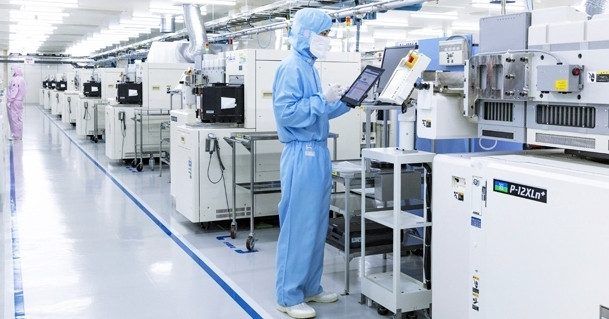
- Phase One: Strengthening Foundational Production (2021–2025): The initial focus is on securing the domestic supply chain for advanced semiconductors, particularly those required for Artificial Intelligence (AI) and the Internet of Things (IoT). Since 2021, the government has allocated over 4 trillion yen to modernize manufacturing infrastructure and support domestic R&D.
- Phase Two: International Technological Integration (2025–2027): This stage emphasizes deepening collaborative research with the United States and other global partners to develop next-generation semiconductor technologies, including 2nm chips and advanced packaging techniques.
- Phase Three: Global Scaling and Future-Proofing (2028 and beyond): The final phase aims to operationalize these advanced technologies through global partnerships, ensuring that Japanese-made chips are integrated into the future global digital economy.
The results of these early investments are already manifesting. By 2023, the production value in Kyushu reached 1.1534 trillion yen, crossing the 1 trillion yen threshold for the first time in 16 years. Government projections suggest that annual funding for the semiconductor sector will scale to 10 trillion yen by 2030 to maintain this momentum.
The Critical Human Capital Challenge
While financial capital is flowing into the sector, the most significant bottleneck for Japan’s semiconductor revival is a critical shortage of specialized human capital. According to Mr. Ataguchi, a representative of the Kyushu Bureau of Economy, Trade and Industry (METI), there is currently a "talent drought" that threatens to impede long-term growth.
Surveys indicate that over the next decade, the industry will require an influx of investment for equipment and human resources totaling 6.2 trillion yen. However, domestic interest among Japanese university students in semiconductor engineering remains low, exacerbated by a lack of industry awareness and insufficient hands-on laboratory facilities.
Projections from the Ministry of Economy, Trade and Industry suggest that between now and 2032, the Kyushu region alone will face a deficit of approximately 1,000 skilled professionals per year. The vacancies are most acute in production engineering, facility operations, and high-level Research and Development (R&D). For R&D roles specifically, the requirement is for professionals with advanced programming skills, materials science expertise, and practical, large-scale manufacturing experience.
Seeking Global Partnerships: The Vietnam Connection
Recognizing that domestic talent pools cannot meet the aggressive growth targets, Japan has turned its attention to international cooperation, with Vietnam emerging as a key strategic partner. Recent delegations of Japanese business leaders have visited Vietnam to explore potential collaborations in workforce training and research exchanges.

Ishikawa Isamu, Deputy Ambassador of Japan to Vietnam, emphasized that the semiconductor industry in Kyushu is entering a period of robust expansion. "Kyushu currently accounts for more than half of Japan’s total integrated circuit production value," he noted. "Collaborating on human resource development between Vietnam and Japan is a win-win scenario. Vietnam possesses a high-quality pool of technical talent, while Japan provides the advanced industry ecosystem necessary to translate that talent into global competitive advantage."
The Japanese government is encouraging a shift toward diversifying the talent pipeline. The goal is to create educational frameworks where Vietnamese students can receive specialized training in electronics, micro-circuitry, chemistry, and materials science that aligns with the specific needs of Japanese semiconductor firms.
Economic and Strategic Implications
The resurgence of the Japanese semiconductor industry is not merely an economic goal; it is a matter of national security and industrial autonomy. By rebuilding its "Silicon Island" capabilities, Japan aims to reduce its reliance on volatile foreign supply chains and position itself as a reliable partner in the global race for AI and high-performance computing.
The transition from a period of decline to one of reinvestment has several broad implications:
- Supply Chain Resilience: For global technology companies, a revitalized Japan offers a stable, high-tech manufacturing alternative that adheres to stringent quality standards and geopolitical alignment with Western interests.
- Technological Standardization: Through its partnership with the U.S. and other nations, Japan is positioning itself to influence the standardization of next-generation chips, ensuring interoperability in global AI infrastructure.
- Regional Economic Revitalization: The massive capital injection into regions like Kyushu is revitalizing local economies, creating thousands of high-paying technical jobs, and encouraging a new generation of students to enter STEM fields.
Analysis and Future Outlook
The success of Japan’s ambitious 2030 target depends largely on its ability to solve the human capital equation. While the government has proven its ability to provide the fiscal backing for infrastructure, the "soft" infrastructure—education, training, and the international mobility of talent—will be the deciding factor.

The initiative to recruit and train talent from countries like Vietnam represents a pragmatic shift in Japanese industrial policy. Moving away from a "domestic-only" mindset toward a model of collaborative, internationalized manufacturing is a necessary evolution in an era of globalized technology supply chains.
If Japan maintains its current pace of investment and succeeds in integrating international talent into its manufacturing and R&D pipelines, the country could realistically regain a significant portion of its lost market share. The 1.15 trillion yen production value achieved in Kyushu in 2023 is not just a statistical recovery; it is a proof of concept that Japan’s semiconductor ecosystem remains fundamentally robust. As the world moves toward an increasingly digitized future, Japan’s "Silicon Island" strategy serves as a blueprint for how a mature, advanced economy can pivot to regain its footing in a critical, high-stakes global industry.