Tragic House Fire in Hai Phong Claims Life of Toddler and Severely Injures Parents Due to Carbon Monoxide Poisoning

A devastating residential fire that broke out in a two-story home in Hai Phong has left a 16-month-old infant dead and critically injured four other members of the same family. The incident, which preliminary investigations suggest was triggered by an electric bicycle left charging on the ground floor, underscores the mounting and often silent dangers associated with modern household energy storage devices. While the physical flames caused localized property damage, the primary catalyst for the catastrophic loss of life and severe systemic injuries was the invisible threat generated during the combustion process: carbon monoxide (CO) gas.
Chronology of the Incident: From Silence to Emergency Response
The tragedy unfolded on the morning of October 18, cutting deep into a quiet residential neighborhood in Hai Phong. According to accounts provided by surviving family members and local authorities, the sequence of events began at approximately 9:00 AM. A concerned daughter, unable to establish telephone contact with her parents despite repeated attempts, grew increasingly anxious and decided to visit the family home to check on their welfare.
Upon arriving at the residence, the daughter noticed thick, dark smoke billowing from the lower level of the two-story building. Alarmed, she immediately raised the alarm, drawing the attention of nearby neighbors and local emergency response teams. Bystanders and firefighters rushed to the scene, forcefully breaching the front door to gain entry into the smoke-filled structure.
An initial inspection of the ground floor revealed a scene of localized devastation: an electric scooter and an electric bicycle had been thoroughly charred, suggesting the fire had originated in or around the charging apparatus. Moving further into the house, rescuers discovered the grim toll of the smoke inhalation. The 47-year-old father was found collapsed in the stairwell area. The 45-year-old mother was discovered lying near the top of the stairs on the second floor; while conscious, she was barely able to speak and suffered from severe respiratory distress. Two young children—a 16-month-old baby girl and a 3-year-old toddler—were found unconscious, while an older 15-year-old daughter was still able to walk.
Immediate Emergency Response and Medical Escalation
All five victims were swiftly evacuated and transported to a local medical facility for emergency stabilization. Despite the rapid intervention of local medical staff, the 16-month-old infant succumbed to her injuries, unable to overcome the profound physiological trauma inflicted by the toxic environment.
While the other children and family members received ongoing local treatment, the condition of the parents deteriorated rapidly due to systemic poisoning and pulmonary damage. Recognizing the critical nature of their injuries, medical professionals authorized an emergency transfer for the couple to the Poison Control Center at Bach Mai Hospital in Hanoi. Both patients arrived at the national specialized center in critical condition, exhibiting severe impairment of consciousness and acute respiratory failure.

Clinical Findings and Intensive Medical Intervention
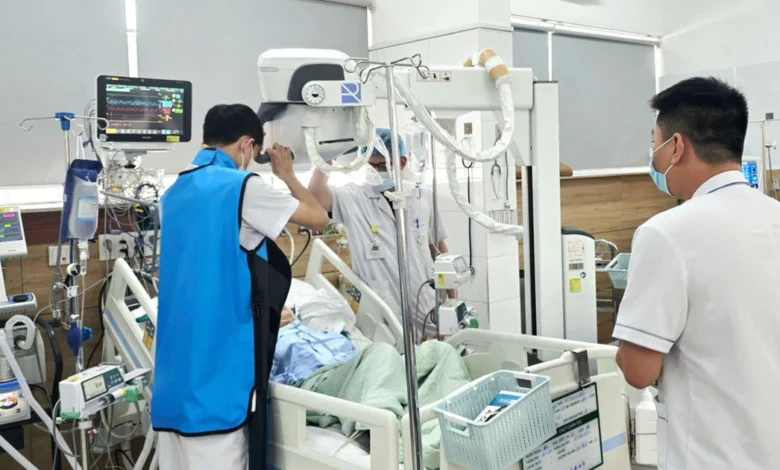
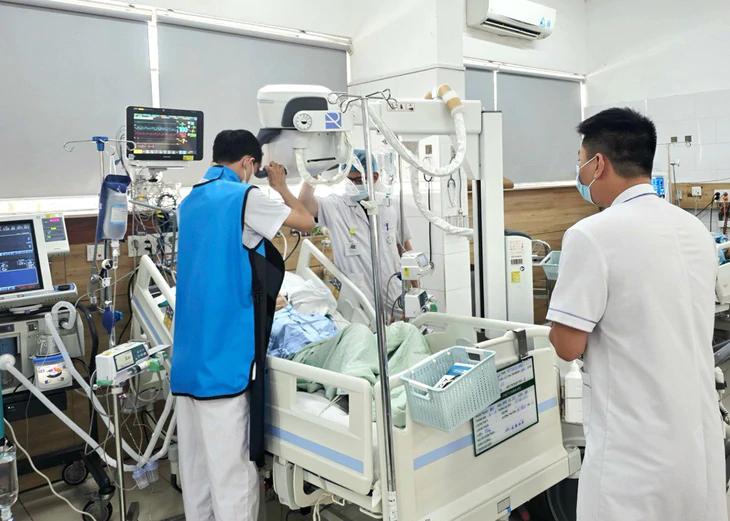
Upon admission to Bach Mai Hospital’s Poison Control Center, the severity of the parents’ condition necessitated aggressive medical intervention. Both patients required immediate endotracheal intubation and mechanical ventilation to secure their airways. Clinical evaluations revealed that they were coughing violently and expelling significant amounts of carbon soot and debris trapped within their respiratory tracts.
Dr. Nguyen Quang Minh of the Poison Control Center detailed the extensive diagnostic assessments performed upon the couple’s arrival. Comprehensive clinical examinations and imaging results confirmed that both patients had suffered multi-organ trauma, including acute brain injury, severe chemical burns to the respiratory tract, acute pneumonia, and functional damage to both the heart muscle and the microvascular system.
"These are exceptionally severe injuries that carry a high risk of long-term complications and permanent sequelae," Dr. Minh stated during a clinical briefing. "Both patients have been placed under intensive, round-the-clock care, with continuous monitoring of organ function as their clinical trajectories evolve."
Medical progress reports indicated that treatment regimens required sustained vigilance. By October 26, approximately a week after the initial incident, the wife showed signs of neurological improvement, regaining consciousness and successfully having her endotracheal tube removed. The husband also demonstrated gradual clinical progress, though clearance procedures through his breathing tube continued to yield substantial amounts of soot, highlighting the profound extent of particulate inhalation.
The Hidden Killer: Carbon Monoxide in Residential Fires
The Hai Phong fire places renewed clinical and public safety focus on carbon monoxide (CO), a hazardous byproduct of incomplete combustion that frequently claims more lives in structural fires than the flames themselves. Dr. Nguyen Trung Nguyen, Director of the Poison Control Center at Bach Mai Hospital, explains that CO is a colorless, odorless, and tasteless gas generated whenever carbon-containing materials burn inefficiently, particularly within oxygen-depleted indoor environments.
Because CO cannot be detected by human senses, victims rarely perceive its presence before it compromises their motor functions and cognitive capacity. Once inhaled, carbon monoxide molecules bind rapidly and tenaciously to hemoglobin within red blood cells. This binding affinity significantly impairs the blood’s capacity to transport oxygen throughout the body, while simultaneously inhibiting cellular respiration and inflicting direct toxic damage on the brain, heart, and other vital organs.
In low-level exposures, victims may experience non-specific symptoms such as mild headaches, dizziness, and nausea. These early warning signs are frequently misdiagnosed or mistaken for common ailments, such as influenza, viral infections, or mild food poisoning. However, when individuals are exposed to high concentrations of CO, the body’s physiological defenses are quickly overwhelmed. The gas infiltrates the bloodstream with extreme rapidity, leading swiftly to disorientation, loss of consciousness, respiratory arrest, and in many cases, fatality before victims can escape the hazard zone.
Long-Term Neurological and Psychiatric Implications
Medical literature and clinical observations emphasize that surviving acute carbon monoxide poisoning is only the first hurdle in a patient’s recovery. According to Dr. Nguyen, approximately 50% of CO poisoning victims—even those who present with initially mild symptoms—may develop delayed neurological and psychiatric complications. These can manifest weeks or months later as memory deficits, cognitive impairments, movement disorders, intellectual deterioration, or conditions resembling Parkinson’s syndrome.
"Emergency management of CO poisoning extends far beyond immediate life-saving resuscitation," Dr. Nguyen emphasized. "Clinicians must remain vigilant in diagnosing and treating systemic organ damage while deploying every available intervention to minimize the likelihood of long-term disability."
Broader Safety Implications and Preventive Measures
The devastating incident in Hai Phong serves as a stark reminder of the hidden hazards present in contemporary residential environments, particularly regarding the unregulated or unsupervised charging of electric vehicles and lithium-ion battery devices. As micro-mobility solutions such as electric bicycles and scooters become ubiquitous in urban and suburban households, safety experts stress the urgent need for heightened vigilance regarding electrical safety.
To mitigate the risk of catastrophic fires, public safety agencies and medical professionals recommend several critical precautions:
- Never charge electric vehicles, batteries, or large electronic devices overnight or while unattended by responsible occupants.
- Utilize certified, manufacturer-approved chargers and batteries that match the voltage and specifications of the equipment.
- Position charging stations well away from flammable materials, exit routes, and primary escape corridors within the home.
- Equip residences with functional smoke detectors, fire extinguishers, and clearly defined evacuation plans practiced by all household members.
- In the event of a fire, prioritize immediate evacuation, alert emergency services via the standard emergency hotline (such as 114), and strictly avoid traversing thick smoke-filled corridors where toxic gases concentrate.
- Ensure that anyone who has inhaled smoke receives prompt medical evaluation, even in the absence of immediate, severe symptoms, to preempt delayed physiological damage.
The tragedy in Hai Phong highlights the intersection of modern convenience and hidden domestic hazards. As the surviving family members continue their arduous recovery at Bach Mai Hospital, the incident remains a somber call to action for communities, regulatory bodies, and households to prioritize rigorous fire safety standards and early medical intervention.