Philippines Dominates Pakistan 2-0 in FIFA ASEAN Cup 2026 Amid Weather Delays and High Stakes


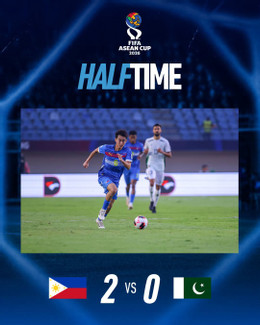
The FIFA ASEAN Cup 2026 witnessed a pivotal clash between the Philippines and Pakistan, where the Azkals established a commanding 2-0 lead by halftime, navigating through weather-induced disruptions to showcase their technical superiority. Coming off a narrow 0-1 defeat against the Vietnam national team, the Philippines entered the fixture determined to rectify their earlier shortcomings and keep their qualification hopes alive in the prestigious tournament organized by governing body FIFA. Meanwhile, Pakistan faced an uphill battle following a rocky start to their tournament campaign, highlighted by a heavy 0-4 defeat at the hands of Thailand.
Pre-match evaluations heavily favored the Philippines, boasting a superior squad depth, greater international experience, and a much higher FIFA world ranking of 135 compared to Pakistan’s 198. With the pressure mounting after their opening loss, the Filipino side knew that securing three points was non-negotiable if they wanted to stay in contention for a spot in the next round. The matchday lineups reflected both teams’ tactical intent. The Philippines deployed Michael Fakesgaard in goal, supported by a defensive and midfield core featuring Tabinas, Jefferson Tabinas, Nyholm Jesper, Leipold, Munel Ott, Kristensen, Schneider Randy, Aguinaldo, Bailey Zico, and Javier Gayoso. Pakistan countered with Butt, Fazal, Afridi, Iqbal, Suliman, Shahzad, Ghazi, Akbar Khan, Nawaz, Mahmood, and Haris Zeb, hoping to absorb pressure and exploit counter-attacking opportunities.
Chronology of the Match and First-Half Dominance
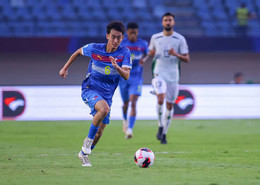
The match commenced with the Philippines kicking off under high intensity, immediately taking control of the tempo. From the opening whistle, the Azkals pressed forward aggressively, signaling that they had no intention of repeating the cautious play that cost them against Vietnam. Pakistan attempted to establish a defensive block, relying on a compact low block and sudden counter-attacks, but their strategy struggled to find cohesion against a well-organized Filipino midfield.
The early exchanges saw the Philippines repeatedly probing the flanks. In the opening minutes, Leipold broke free through the central corridor, finding himself one-on-one with the Pakistani goalkeeper, though his resulting shot narrowly missed the target. Shortly after, Leipold tried his luck from distance, but his long-range effort went straight into the gloves of the Pakistani custodian. Despite sustained pressure from the Azkals, the deadlock remained unbroken as Pakistan’s defense scrambled to clear dangerous crosses from the right wing, orchestrated by Shahzad and his defensive partners.

As the half progressed, the physical intensity in the middle of the park escalated. Both sides contested every fifty-fifty ball with fierce determination, reflecting the high stakes of the tournament. The breakthrough finally arrived when a precise cross from the right flank caught the Pakistani defense napping. Capitalizing on a lapse in concentration within the box, Reyes rose above his marker to head home clinically, breaking the deadlock and opening the scoring for the Philippines to make it 1-0.
The Philippines did not let up after taking the lead. Their relentless pressure continued to stretch Pakistan’s backline. A major turning point occurred when Tabinas unleashed a powerful shot that struck the hand of a Pakistani defender inside the penalty area. Following a thorough review of the incident via the Video Assistant Referee (VAR) system, the match referee rightfully pointed to the spot, awarding the Philippines a penalty kick. Kristensen stepped up to the spot with immense composure and executed a flawless penalty, driving the ball past the goalkeeper to double the advantage and bring the score to 2-0 in favor of the Azkals.
Weather Disruptions and Second-Half Uncertainty
As the first half drew to a close, the physical and tactical exhaustion of the Pakistani team became evident. They failed to create any meaningful offensive spark, while the Philippines continued to hunt for additional goals to solidify their goal difference. However, as the teams prepared for the second half, adverse weather conditions intervened. Due to severe and worsening weather at the venue, the second half of the fixture experienced an unexpected delay, leaving players and officials waiting as pitch conditions deteriorated.
Background Context of the FIFA ASEAN Cup 2026
The FIFA ASEAN Cup 2026 serves as a critical milestone for football development in Southeast Asia and its neighboring regions, bringing together competitive national teams to test their mettle on an international platform. For the Philippines, the tournament is an opportunity to cement their status as a rising force in regional football, building upon years of strategic squad development and the incorporation of Europe-based talent. The integration of players with diverse international backgrounds has transformed the Azkals into a formidable unit capable of challenging traditional powerhouses.
Conversely, Pakistan’s participation in these broader regional qualifiers highlights their ongoing efforts to gain crucial international exposure and rebuild their national football structure. Despite facing infrastructural challenges and limited preparation time compared to their Southeast Asian counterparts, the Pakistan national team continues to strive for competitive growth on the continental stage. Their heavy opening defeat to Thailand, followed by the first-half struggles against the Philippines, underscores the vast developmental gap they must bridge to compete regularly against higher-ranked opponents.
Tactical Analysis and Statistical Breakdown
A tactical assessment of the first half reveals distinct approaches from both managers. The Philippines utilized a fluid 4-3-3 formation that transitioned quickly into a 3-4-3 during attacking phases, allowing their full-backs to push high up the pitch and overwhelm Pakistan’s defensive block. The mobility of players like Leipold and Gayoso created numerous gaps in the half-spaces, which the midfield runners exploited effectively.
Pakistan, lining up in a conservative 5-4-1, focused primarily on defensive solidity. However, their lack of compactness between the midfield and defensive lines left large pockets of space that the Philippines exploited via diagonal switches of play. Statistically, the Philippines dominated possession, controlling over 65% of the ball in the first 45 minutes, registering multiple shots on target, and forcing the Pakistani defense into numerous desperate clearances.
Broader Impact and Implications for Group Standings
The outcome of this match carries significant weight for the group standings in the FIFA ASEAN Cup 2026. For the Philippines, a victory solidifies their position and injects much-needed momentum following their opening setback against Vietnam. Improving goal difference could prove decisive in the latter stages of the group phase, making their relentless pursuit of goals in the first half a calculated tactical necessity.
For Pakistan, the tournament serves as a harsh learning curve. Conceding multiple goals while struggling to generate offensive threat exposes the defensive frailties that coaching staff must address ahead of their upcoming fixtures. As international football continues to globalize and grow more competitive, performances in tournaments like the FIFA ASEAN Cup provide essential benchmarks for evaluating national team progress, player readiness, and tactical adaptability.
Looking Ahead as Weather Permits
As tournament officials and stadium staff monitor the weather conditions, players from both the Philippines and Pakistan remain on standby to resume the second half. The resumption will test the physical endurance and mental resilience of both squads, especially under unpredictable meteorological circumstances. With the Philippines holding a comfortable two-goal cushion and Pakistan searching for a miraculous tactical turnaround, the remainder of the fixture promises continued drama as the FIFA ASEAN Cup 2026 narrative unfolds.