Hanoi Issues Comprehensive Action Plan to Address Violations and Social Security Risks Across Mường Thanh Group Residential Projects

The Hanoi People’s Committee has officially promulgated a sweeping and systematic action plan aimed at addressing long-standing legal violations, mitigating structural and administrative consequences, and safeguarding social security for thousands of residents living in high-profile housing projects associated with the Mường Thanh Group. This decisive administrative intervention marks a critical juncture in the local government’s ongoing effort to resolve complex urban management challenges stemming from historical real estate infractions that have persisted for over a decade.
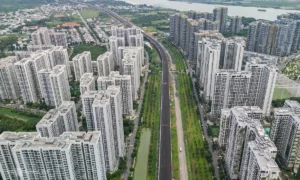
The newly formulated roadmap directly impacts several prominent developments across the capital, including the CT6 Kiến Hưng project, the Đải Thanh mixed-use urban area, the Xa La residential complex, the CT5 Tân Triều development, the VP3, VP5, and VP6 Linh Đàm high-rise towers, the expansive HH Linh Đàm apartment complex, and the CT11 and CT12 Kim Văn – Kim Kim Lũ housing blocks. These projects have long been subjects of intense public scrutiny due to widespread architectural deviations, unauthorized floor additions, and subsequent legal complications that have left residents in bureaucratic limbo regarding property ownership titles.
Systematic Review and Phased Categorization of Violations
According to the strategic directive outlined by the municipal administration, the immediate phase of the plan involves an exhaustive physical audit throughout October and November. Interagency task forces will determine the exact quantities, current structural surface areas, and precise spatial locations of individual housing units constructed on unauthorized floors across the targeted buildings.
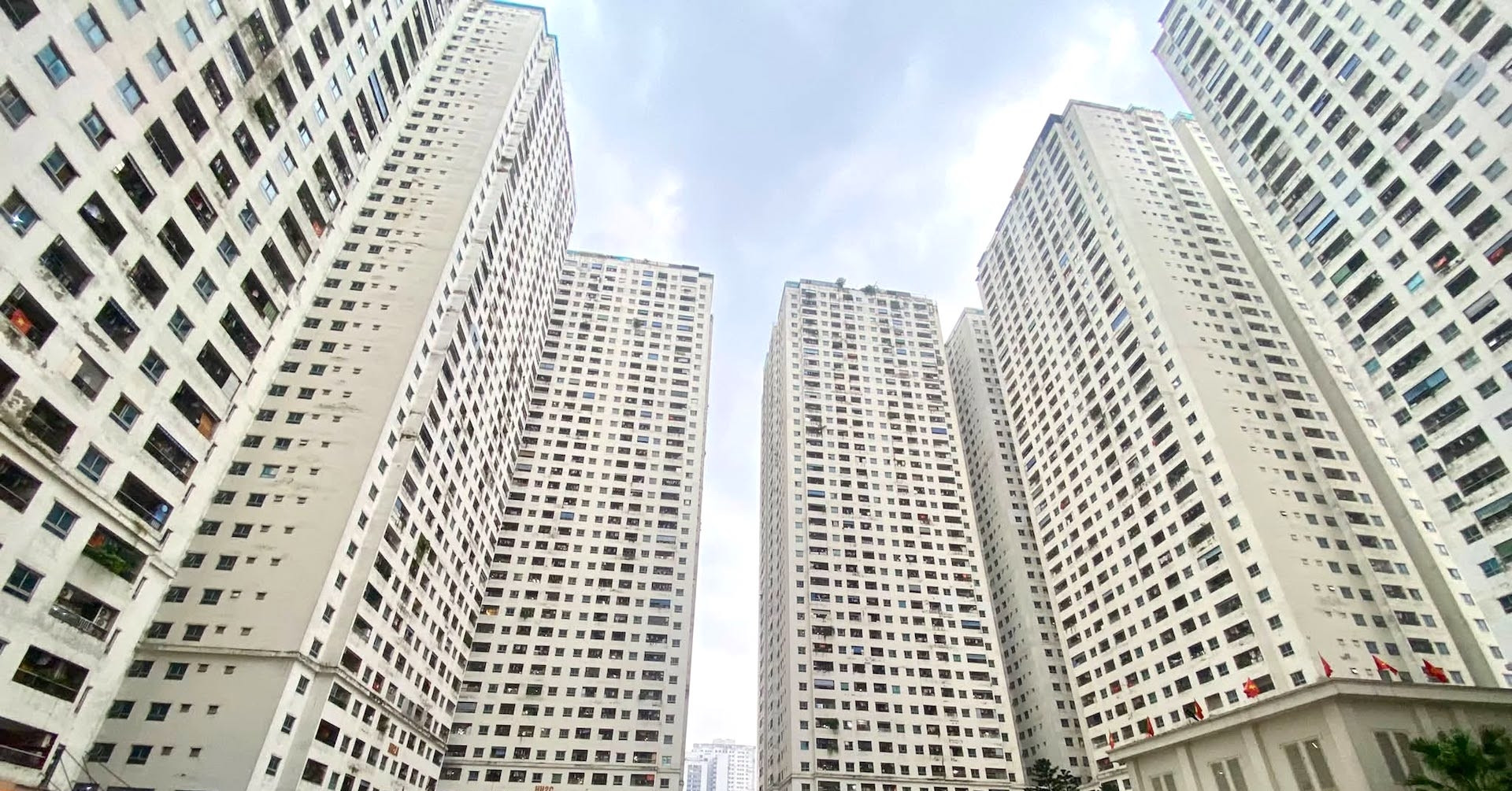
Following this comprehensive fact-finding phase, Hanoi authorities intend to classify the inspected architectural elements, individual apartments, and entire building structures into two distinct operational groups: structures permitted to remain in place under specific regulatory mechanisms, and those slated for structural modification, partial demolition, or complete relocation.
To establish a firm legal foundation for these enforcement actions, the municipal government is actively drafting a specialized Resolution for consideration by the Hanoi People’s Council. This legislative instrument is designed to introduce special policy mechanisms tailored specifically to lingering, prolonged urban development violations. The framework for these proposals was slated for submission during the late September legislative session, underscoring the administration’s urgency in tackling the crisis.
Chronology of Urban Infractions and Regulatory Deadlocks
The roots of the current crisis extend back well over a decade, tracing an era of rapid, loosely regulated urban expansion in suburban and semi-urban districts of Hanoi. Projects spearheaded by private entities within the Mường Thanh ecosystem frequently bypassed approved master plans, most notably through the unauthorized addition of multiple residential floors.
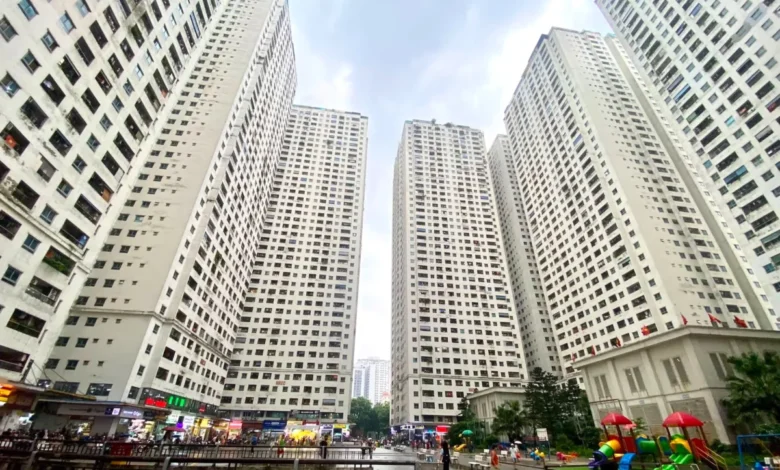
For instance, the HH Linh Đàm apartment complex—consisting of 12 high-rise towers originally granted construction permits for 27 stories—was ultimately built to heights ranging from 36 to 41 stories. This massive upward expansion dramatically increased population density in the Linh Đàm peninsula without a corresponding upgrade to municipal infrastructure, parking capacity, or fire safety systems.
For nearly ten years, hundreds of thousands of residents who purchased these commercial apartments through standard sales contracts have found themselves unable to obtain official property ownership certificates, commonly known as "red books." In late 2024, municipal authorities formally clarified that the primary legal bottleneck preventing the issuance of these certificates lay in the investor’s failure to complete and settle the mandatory legal dossiers required by the Department of Natural Resources and Environment. Compounding these administrative hurdles, the complex has also experienced periodic operational failures, including recurring elevator malfunctions and facility management disputes, heightening anxiety among the resident community.
Proposed Mitigation Framework and Relocation Options
The municipal action plan outlines two primary remedial pathways for apartments and structures identified for mandatory clearance or relocation, aiming to balance strict urban rule-of-law enforcement with humanitarian considerations for thousands of innocent buyers:
- First Group (Relocation and Alternative Housing): Residents whose apartments must be vacated will be systematically reassigned to alternative social housing developments—bypassing traditional bureaucratic lottery systems or eligibility screenings—or directed toward newly constructed commercial housing units within the Thanh Hà A and Thanh Hà B urban areas currently being developed by the investor. During the construction phase of any newly assigned housing, the investor is legally mandated to negotiate and provide direct financial subsidies to cover rental costs elsewhere.
- Second Group (Buyout Mechanisms Following Criminal Proceedings): For projects currently entangled in active criminal investigations initiated by public security agencies, market-value appraisals will be conducted. Following these evaluations, the investor will be required to negotiate direct buyouts of the affected apartments and buildings. Once compensation funds are disbursed, displaced residents will retain the autonomy to purchase alternative social housing units from municipal inventories without administrative barriers or select housing options matching their personal requirements.
Community Concerns and Resident Sentiments
Despite the release of the municipal framework, residents living within the affected complexes report a profound sense of uncertainty, noting that official communication from local grassroots authorities has been sparse. Most community members have had to piece together critical updates through investigative journalism and informal neighborhood communication networks.
Mr. Nguyễn Đình Hải, a resident of building HH1A within the HH Linh Đàm complex who moved into his apartment a decade ago as part of the initial wave of homeowners, voiced deep apprehension regarding the lack of transparent, direct dialogue. "We purchased our homes in good faith using hard-earned money, signing standard commercial contracts and complying fully with the rules at the time of transaction," Mr. Hải stated. "If relocation is required, the city must understand that this is not merely about moving physical bodies to a new address. It involves our entire livelihoods, our employment stability, our children’s schooling, and established community networks built over ten years."

Residents emphasize that any structural intervention—particularly partial demolitions aimed at removing illegal upper floors—must be preceded by rigorous engineering assessments to guarantee the structural integrity, load-bearing safety, and long-term habitability of the remaining building sections. Because these towers are densely populated communities rather than vacant construction sites, any engineering miscalculation could destabilize entire architectural blocks and surrounding urban infrastructure.
Furthermore, homeowners stress that accountability must be directed squarely at the developer and the regulatory oversight bodies responsible for the initial approvals and construction oversight, rather than penalizing homebuyers who operated entirely within the formal real estate market. Apartment representatives across multiple towers have begun organizing collective forums to compile unified petitions, demanding that the municipal government establish a transparent roadmap, incorporate resident feedback directly into the decision-making process, and enforce comprehensive resolutions against the culpable corporate entities.
Fact-Based Implication Analysis
The Hanoi People’s Committee’s initiative represents a definitive shift from prolonged administrative avoidance to proactive enforcement, yet it exposes deep systemic tensions within Vietnam’s urban governance framework.
- Balancing Rule of Law with Social Stability: The primary challenge facing municipal authorities lies in enforcing urban discipline without triggering widespread social unrest. Displacing thousands of families who have occupied their homes for a decade poses severe logistical and psychological hurdles.
- Financial Liability and Investor Compliance: Requiring private developers to finance rental subsidies, buy back properties at market rates, or construct replacement housing tests the financial viability and legal enforceability of private real estate accountability in Vietnam. Should the primary investor default or lack the liquid capital to fulfill these mandatory restitution measures, the financial burden risks falling partially onto municipal safety nets.
- Precedent for Future Urban Infractions: The handling of the Mường Thanh portfolio will serve as a crucial legal and administrative precedent for how Vietnam’s major urban centers manage historical construction violations. A successful resolution that protects innocent buyers while holding violators accountable could streamline future urban remediation, whereas protracted disputes risk deepening public distrust in real estate regulatory frameworks.
As the municipal administration advances its schedule through the final quarter of the year, the focus remains firmly on finalizing the specific legislative mechanisms through the People’s Council and initiating direct, transparent consultations with the affected communities to formulate equitable, legally sound execution paths.