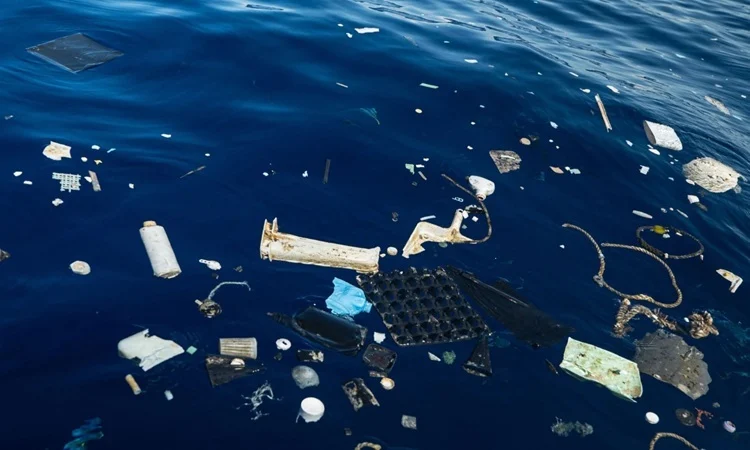
A major scientific study has unveiled a concerning environmental development in the North Pacific Ocean, suggesting that the accumulation of microplastics has reached a critical density capable of altering the very color of the seawater. According to research published on November 5 in the journal Communications Earth & Environment, scientists from the University of Bergen in Norway have identified a direct correlation between the saturation of plastic particles within the Great Pacific Garbage Patch (GPGP) and a measurable shift in the ocean’s optical properties, leading to a transition toward shades of turquoise and green over the past two decades.
The Great Pacific Garbage Patch, a sprawling vortex of marine debris located between Hawaii and California, has long been recognized as one of the most significant environmental crises of the modern era. Unlike a solid, island-like mass of debris that might be easily captured by satellite imagery, the patch is a diffuse, circulating gyre of plastic waste, ranging from discarded fishing nets to microscopic fragments that are invisible to the naked eye from space.
The Science of Optical Alteration
The mechanism behind this phenomenon lies in how light interacts with the water column. As explained by researchers from the University of Bergen, seawater naturally scatters short-wavelength light, which gives the ocean its characteristic deep blue appearance, while absorbing longer wavelengths like red and orange. The presence of suspended materials—such as phytoplankton, organic sediments, and, increasingly, microplastics—disrupts this natural scattering process.
Daniel Koestner, a doctoral researcher at the University of Bergen, led an experimental investigation to quantify this effect. The team created a "plastic soup" simulation in a controlled laboratory environment, subjecting various plastic polymers, such as polystyrene, polypropylene, and polyester, to light exposure under controlled conditions. Using laser spectroscopy, they measured how these particles interacted with light compared to natural organic matter. Their findings indicated that microplastics possess a significantly higher capacity for light scattering, which, when concentrated in high densities, shifts the reflected color of the water toward the green spectrum.
Two Decades of Satellite Analysis
To validate their experimental findings, the research team conducted a comprehensive retrospective analysis of satellite data spanning from 2002 to 2022. By comparing the spectral reflectance of the GPGP region with surrounding oceanic areas, the researchers confirmed that the water in the heart of the garbage patch has consistently shown a higher intensity of blue-green and green light reflection.
To ensure the observed color changes were not the result of natural biological phenomena—such as massive blooms of phytoplankton—the researchers ran computer models that accounted for various environmental factors. The data clearly showed that only when synthetic plastic pollutants were integrated into the model did the results align with the actual, long-term satellite observations. This suggests that the plastic density has reached a threshold where it is no longer just a biological nuisance but a force capable of changing the physical appearance of the marine ecosystem on a regional scale.
The Scale of the "Plastic Paradox"
The implications of these findings are profound, particularly when considering the ongoing "missing plastic" mystery. Oceanographers have long estimated that roughly 13 million tons of plastic enter the world’s oceans annually, yet only about 250,000 tons are accounted for as floating on the surface. This discrepancy, often referred to as the "missing plastic paradox," has left researchers struggling to understand where the remainder of the debris resides.
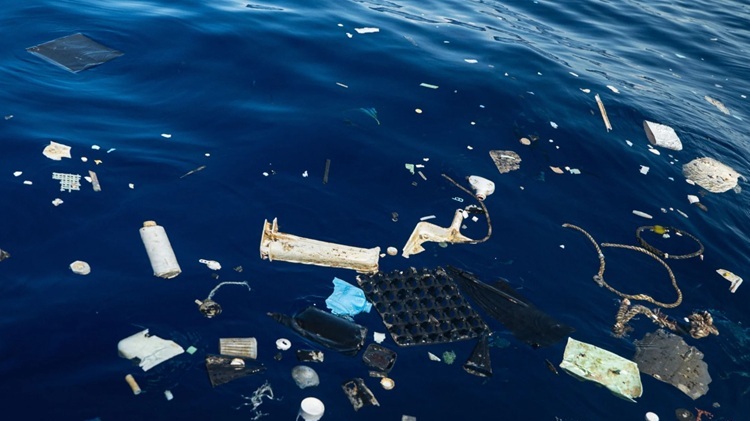
The study by the University of Bergen suggests that a significant portion of this "missing" material may be undergoing degradation into microplastics, which remain suspended in the upper layers of the ocean. The 2018 survey of the GPGP, conducted by The Ocean Cleanup, estimated the patch contained approximately 1.8 trillion pieces of plastic, totaling around 79,000 tons. While the vast majority of the mass consists of large, discarded fishing gear originating from major maritime nations including Japan, China, South Korea, Taiwan, and the United States, the numerical majority—roughly 94%—is composed of microplastics.
Broader Ecological and Climatic Implications
The presence of such high concentrations of microplastics does not merely alter the color of the sea; it presents a multifaceted threat to marine life and global climate regulation. Microplastics are known to enter the food chain, beginning with plankton and small fish, eventually accumulating in higher-order predators, including species consumed by humans. Furthermore, these synthetic particles can act as vectors for toxic chemicals, potentially disrupting the movement and metabolic functions of marine organisms.
Perhaps even more alarming is the potential impact on the ocean’s carbon sequestration capacity. The ocean plays a vital role in regulating the Earth’s climate by absorbing atmospheric carbon dioxide. If the presence of microplastics alters the composition of the surface water and the biological activity within the photic zone, it could interfere with the "biological pump"—the process by which organic matter is transported to the deep ocean, effectively sequestering carbon.
Future Directions and Research Challenges
Despite the breakthrough findings, the scientific community acknowledges that there is much work to be done. Shea Cheatham, a doctoral researcher on the team, emphasized that while the correlation between microplastic density and color shift is compelling, further in-situ measurements are required to confirm the precise mechanisms at work.
"We need to move from remote sensing to physical verification," Cheatham noted. "Taking the step of conducting direct measurements within the heart of the patch is a complex and costly endeavor, but it is necessary to fully quantify the scope of the problem."
The challenge remains daunting because of the nature of the debris. Microplastics are small, fragmented, and frequently mixed with organic matter like algae, making them difficult to distinguish even with advanced technology. However, the use of satellite imagery and unmanned aerial vehicles (UAVs) has improved significantly over the last decade, offering better tools to track the movement and density of these pollutants.
A Call for Global Action
The research serves as a stark reminder of the anthropogenic impact on the high seas. As Daniel Koestner stated in a press conference following the publication, the fact that microplastics are accumulating at a density high enough to change the color of the ocean is a sobering indication of the scale of global plastic pollution.
International environmental organizations and government agencies have reacted with urgency to the findings. While no formal international policy shift has been enacted in the days following the publication, the scientific evidence provides a new, tangible metric for policymakers to use when discussing the necessity of binding global plastic treaties. The "color change" serves as a visible marker of an invisible, pervasive, and escalating crisis.
As the scientific community continues to analyze the data, the focus is shifting toward whether this phenomenon is unique to the North Pacific or if it is already occurring in other major oceanic gyres, such as those in the South Pacific, the Atlantic, and the Indian Ocean. If the GPGP is simply the most extreme example, the global implications for ocean health could be far more severe than previously estimated.
The findings from the University of Bergen mark a pivotal moment in marine science. By bridging the gap between satellite observation and chemical analysis, researchers have provided a new lens through which to view the ocean, literally and figuratively. The shift in color is more than a change in aesthetic; it is a signal of a fundamental change in the chemical and biological composition of the largest habitat on Earth. The task ahead for the international community is to translate this scientific alarm into meaningful, large-scale remediation and policy reform to mitigate a threat that has quite literally changed the face of the planet.