From European Laboratories to the Battlefield: The Legacy of Professor Tran Dai Nghia and Vietnam’s Century-Long Quest to Empower Intellectuals

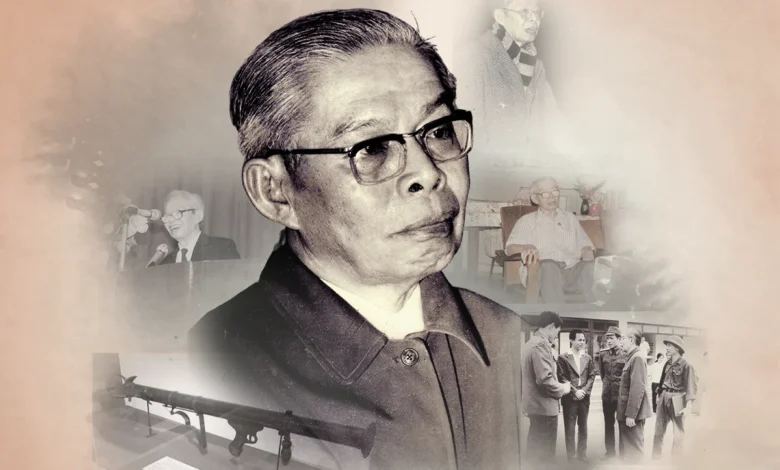
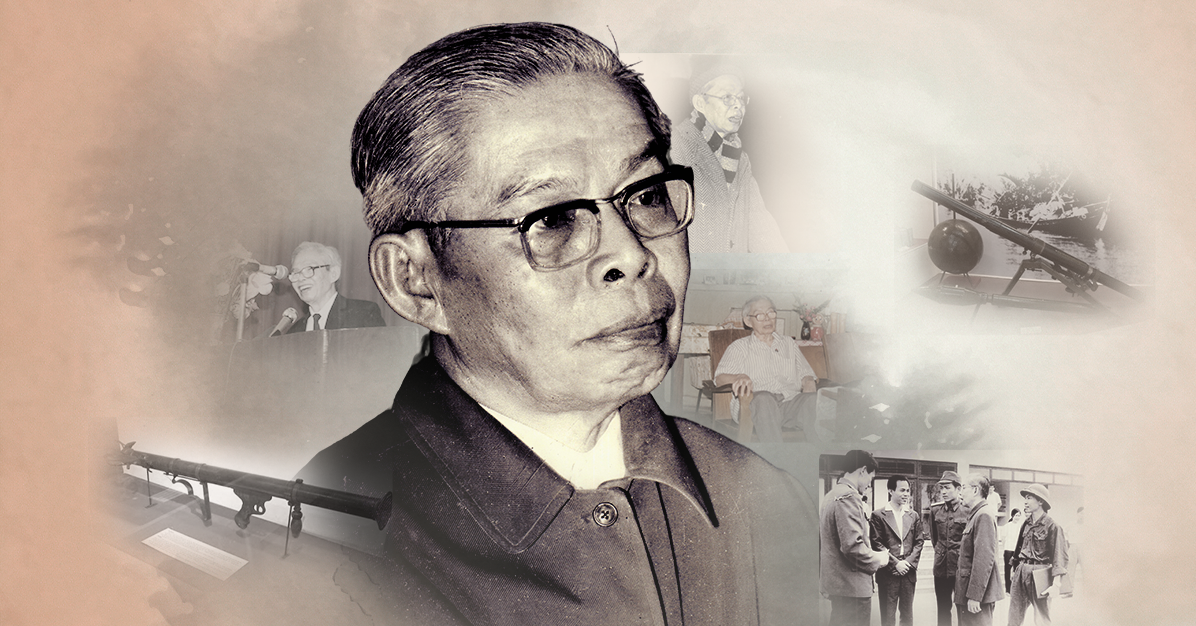
The historic journey of Vietnamese intellectuals returning from abroad to dedicate their expertise to national development began in earnest during the turbulent mid-20th century. At the direct behest of President Ho Chi Minh, brilliant minds left behind comfortable careers and academic security in Europe and elsewhere to answer the call of the motherland. Among them was engineer Pham Quang Le, later renowned as Professor Tran Dai Nghia, who abandoned a promising trajectory in France in 1946 to shape Vietnam’s defense industry. Decades later, a similar philosophy of talent cultivation guided national leaders in placing young, visionary scientists—such as 31-year-old Nguyen Van Hieu upon his return from the Soviet Union—at the helm of foundational research institutions like the Institute of Physics. These narratives illuminate more than mere individual patriotism; they underscore a enduring national strategy of identifying, recruiting, and empowering elite human capital to surmount historic challenges.
Today, as science, technology, and innovation stand as the primary drivers of global economic growth and national competitiveness, these historical lessons resonate with profound contemporary urgency. Vietnam’s modern policy frameworks, exemplified by strategic directives from the Politburo regarding scientific breakthroughs and digital transformation, continue to emphasize the paramount need to nurture top-tier talent. By establishing nurturing ecosystems where intellectuals can fully realize their capabilities, the nation seeks to transform individual ambitions of contribution into tangible scientific achievements. From the pioneers who laid the groundwork for native military technology to contemporary researchers conquering new frontiers of advanced research, the foundational question remains constant: How can the nation effectively attract, retain, and leverage intellectual prowess to secure sustainable development in a new era?
The Historic Return of 1946: Heeding the Call of the Motherland
In September 1946, amidst a delicate diplomatic mission in France, President Ho Chi Minh met with numerous Vietnamese expatriate intellectuals, urging them to return and participate in the arduous task of national construction. Among those who made the decisive choice to return was 33-year-old engineer Pham Quang Le, who had spent over a decade studying and conducting advanced research across Western Europe.
Born on September 13, 1913, in the southern province of Vinh Long, Pham Quang Le moved to France in 1935 to pursue higher education. Upon completing rigorous academic programs, he immersed himself in the fields of aeronautical engineering, mechanical design, and ordnance manufacturing. Archival materials from the Vietnam National Museum of History indicate that by 1942, he had secured a position at an aircraft manufacturing plant and weapons research facility. Throughout his time in Europe, Le accumulated extensive technical data on military technology, specializing in ballistics, explosive mechanics, and infantry weaponry.
A frequently cited historical anecdote involves the exchange between President Ho Chi Minh and Pham Quang Le aboard the ship returning to Vietnam. When asked whether he could endure the severe economic hardships and scarcity awaiting him in the newly declared Democratic Republic of Vietnam, Le calmly affirmed his readiness. Confronted with the president’s inquiry regarding the feasibility of manufacturing weapons under conditions of extreme scarcity—devoid of proper industrial machinery, raw materials, or trained technicians—Le delivered a historic response: "Respected Uncle, I have prepared for 11 years, and I am confident it can be done."

On September 16, 1946, Pham Quang Le, alongside other prominent expatriates such as engineer Vo Quy Huan and physician Tran Huu Tuoc, embarked on their voyage home. They arrived in a newly independent nation grappling with severe political instability, economic isolation, and the looming threat of an all-out war with French colonial forces.
The Birth of Vietnam’s Defense Industry and the Creation of the Bazooka
On December 5, 1946, at the northern presidential palace, President Ho Chi Minh appointed Pham Quang Le as the Director of the Military Ordnance Department. During this pivotal meeting, the President officially bestowed upon him a new name: Tran Dai Nghia. Historical records explain that this pseudonym served a dual purpose: it symbolized the immense responsibility entrusted to him while providing vital security to protect his family and relatives remaining in the French-controlled south.

As the nationwide resistance broke out on December 19, 1946, the newly formed military workshops faced overwhelming technological and material constraints. Under the strategic guidance of General Vo Nguyen Giap, the ordnance sector had been tasked with researching and manufacturing anti-tank Bazooka weapons. However, early attempts stalled due to severe shortages of specialized materials and precise technical calculations.
Taking charge of the program, Professor Tran Dai Nghia systematically recalculated the ballistic parameters, adjusted propellant compositions, and adapted foreign technical blueprints to match the scarce raw materials available in Vietnam’s revolutionary base areas. Working alongside dedicated technicians, workers, and soldiers, he bridged theoretical engineering with frontline realities.
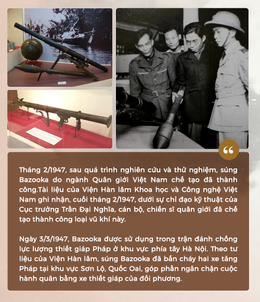
By February 1947, after intensive research and trials, the indigenous Bazooka was successfully manufactured. On March 3, 1947, the weapon saw its historic combat debut during an engagement against French armored units in the western suburbs of Hanoi, specifically at Son Loi in Quoc Oai. The successful deployment neutralized enemy tanks and armored vehicles, decisively disrupting enemy mechanized columns and validating the efficacy of indigenous military research.
Following this breakthrough, Tran Dai Nghia and his colleagues continued developing advanced ordnance, including the recoilless SKZ rifle, which was successfully tested and deployed in combat by mid-1949. In recognition of his monumental contributions, he was promoted to Major General in January 1948, becoming part of the first cohort of general officers in the Vietnam People’s Army, and was awarded the title of Labor Hero in 1952.

Institutional Leadership and Post-War Scientific Expansion
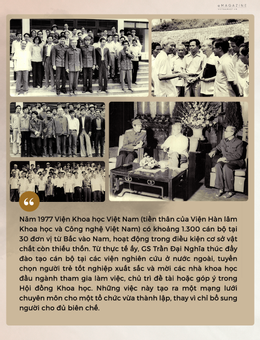
Following the conclusion of the resistance wars, Tran Dai Nghia transitioned from wartime ordnance production to foundational institution-building and academic leadership. On May 20, 1975, the government established the Vietnam Academy of Sciences, the predecessor to the modern Vietnam Academy of Science and Technology. Professor Tran Dai Nghia was appointed as its first Director, serving concurrently while leading the State Committee for Science and Technology.
Faced with severe post-war economic isolation and limited material infrastructure, Tran Dai Nghia pioneered strategies to cultivate human capital. Rather than relying solely on bureaucratic recruitment, he prioritized sending young scholars abroad for advanced training, selecting top graduates, and integrating leading scientists directly into institutional decision-making bodies. He viewed the Science Council not merely as an administrative organ, but as a collective intellectual hub tasked with determining research directions, evaluating technical outcomes, and fostering peer review.

During his tenure, he championed the development of fundamental sciences, particularly computational mathematics and computer science, laying the groundwork for modern digital research in Vietnam. Furthermore, he aggressively pursued international scientific cooperation, establishing partnerships with the Soviet Academy of Sciences and facilitating joint programs, most notably the historic spaceflight mission of Pham Tuan and V.V. Gorbatko in 1980.
Broader Implications and Contemporary Relevance
The historical trajectory of Vietnam’s early scientific pioneers offers profound lessons for contemporary governance and institutional development. The successes achieved by figures like Professor Tran Dai Nghia were not accidents of history, but the direct result of a deliberate national strategy: identifying exceptional talent, granting them high-level operational autonomy, and providing the institutional support necessary to build resilient research communities.
As Vietnam enters a new era defined by rapid technological disruption, artificial intelligence, and digital transformation, the fundamental principles articulated in mid-century institutional reforms remain critically relevant. Modern policy initiatives—such as comprehensive resolutions on scientific breakthroughs and talent utilization—echo the historical imperative to create favorable environments where intellectuals can deploy their expertise to address national challenges.
Ultimately, bridging the gap between national aspirations and scientific reality requires a continuous commitment to meritocracy, robust institutional frameworks, and unwavering trust in intellectual capital. The legacy of Professor Tran Dai Nghia stands as an enduring testament to the transformative power of science when aligned with the vital interests of the nation.