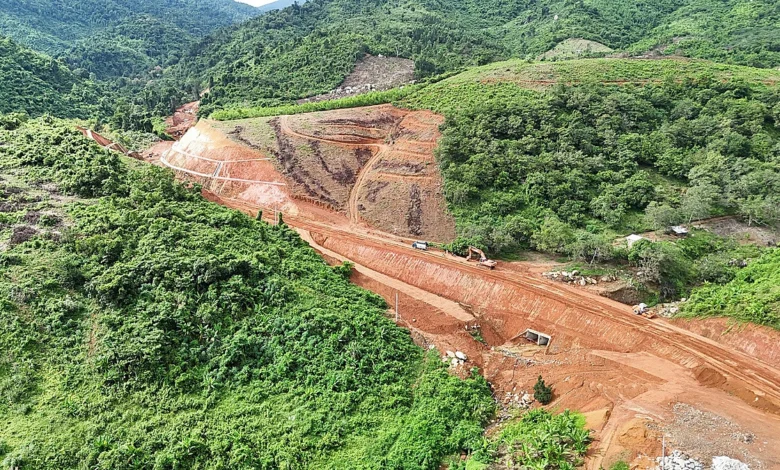
The development of the Khanh Son – Khanh Vinh inter-regional road in Khanh Hoa Province has entered a critical phase as provincial authorities and contractors intensify efforts to accelerate construction. With a total investment exceeding 1.9 trillion VND, this infrastructure project is poised to become a vital artery for the region, bridging the geographical and economic divide between the coastal provinces of Khanh Hoa, Lam Dong, and Ninh Thuan.
On September 25, a delegation from the National Assembly’s Committee for Science, Technology, and Environment, led by Deputy Chairman Do Duc Hong Ha, conducted an on-site inspection and a formal working session with the Khanh Hoa Provincial People’s Committee. The primary objective of the visit was to assess the progress of the project and address the systemic hurdles that have contributed to construction delays.
Project Overview and Strategic Significance
The Khanh Son – Khanh Vinh road is more than just a transportation project; it is a strategic investment in regional connectivity. Spanning approximately 56.7 kilometers, the road acts as a vital link between National Highway 27C and Provincial Road 656. By connecting these critical transit points, the project serves as a catalyst for economic development in the mountainous districts of Khanh Son and Khanh Vinh, areas that have historically faced challenges due to limited accessibility.
The project, which carries a total budget of 1.93 trillion VND, is funded through a combination of central and local government resources. Specifically, 1 trillion VND has been allocated from the central budget under the medium-term public investment plan for 2021-2025, while the remaining 930 billion VND is sourced from the local provincial budget. The project’s timeline is set for completion by 2027, with the construction process currently navigating complex terrain that requires careful engineering and environmental management.
Detailed Construction Chronology and Challenges
The project is segmented into three distinct sections, each presenting unique logistical hurdles:
- Section 1: Spanning approximately 12 kilometers.
- Section 2: A 30-kilometer stretch that traverses protected natural forests, special-use forests, and challenging high-altitude mountainous terrain.
- Section 3: The final segment, covering approximately 14.7 kilometers.
The complexity of the terrain, particularly in Section 2, necessitated rigorous administrative processes, including the approval for converting forest land to non-forestry use. As of late September 2026, significant progress has been made in site clearance and compensation for Sections 1 and 3. Provincial data indicates that 1,061 cases were eligible for compensation, with 1,043 cases—approximately 98.3%—having received payment. The remaining cases are pending due to the recipients’ remote locations.
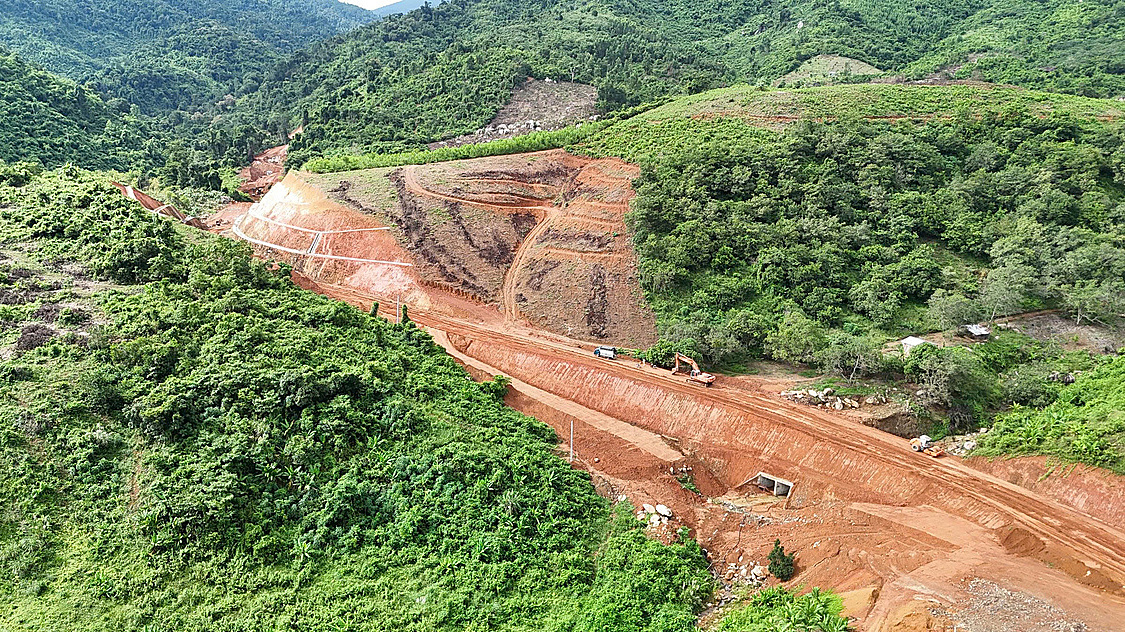
Infrastructure relocation has also been a major undertaking. Work on medium-voltage power lines is 99% complete, while public lighting relocation stands at 90%. However, the relocation of the water pipeline system remains at 45%, representing a bottleneck that the provincial authorities are currently addressing.
Official Responses and Strategic Adjustments
During the working session, Le Huyen, Vice Chairman of the Khanh Hoa Provincial People’s Committee, acknowledged the current pace of the project. He announced that the Department of Construction has been directed to coordinate with relevant agencies to consolidate reporting. This move is designed to resolve discrepancies in previous progress reports and ensure all stakeholders are operating from a unified set of data.
Mr. Huyen emphasized that while delays have been significant, they were primarily due to initial policy challenges and land clearance complexities that have since been mitigated. "The contractors are now fully mobilized to overcome these historical delays and are pushing forward with the remaining phases of work," he noted.
The province is now implementing a more granular tracking system. Instead of broad monthly targets, the project management team will monitor progress on a weekly basis, detailing specific tasks and volumes of work for each section. This granular approach aims to define clear responsibilities for the final months of 2026, setting the stage for a successful delivery in 2027.
Regulatory Oversight and Expert Recommendations
The National Assembly’s delegation, led by Do Duc Hong Ha, commended the local government’s resilience in navigating the project’s initial obstacles. However, Mr. Ha issued a strong warning regarding the synchronization of project milestones.
"There is a visible disconnect between the compensation paid and the actual land handed over for construction," Mr. Ha stated. "Furthermore, the current volume of construction and the quality of work do not yet match the amount of land already cleared."
The Committee offered several critical recommendations to ensure the project remains on track:
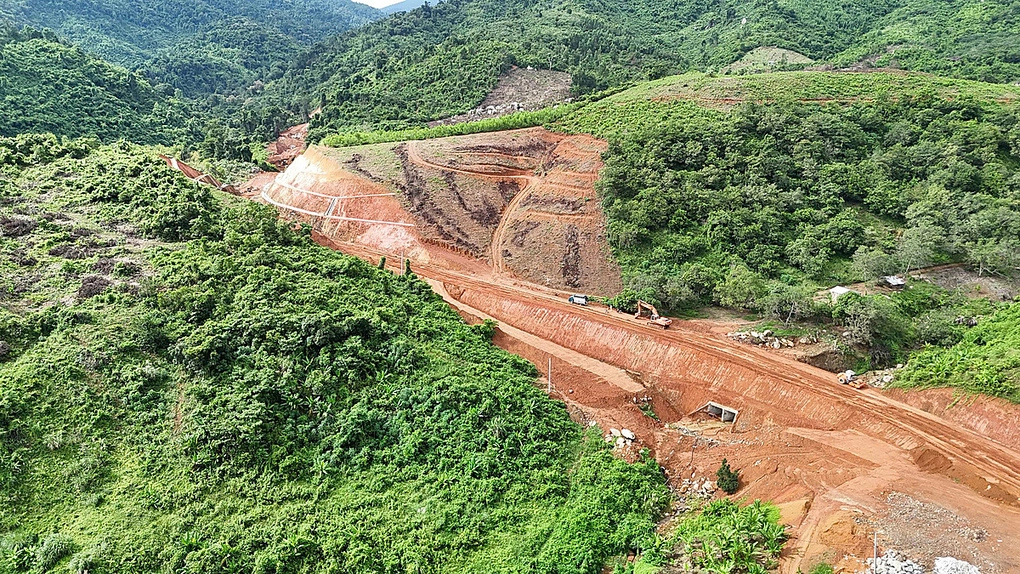
- Direct Resolution of Bottlenecks: Focus on immediate, decisive actions regarding land clearance and material supply, particularly for the difficult Section 2.
- Strict Adherence to Mining Principles: The committee urged that the extraction and usage of soil and materials must be strictly regulated. Any material excavated during construction must be handled in full compliance with environmental and technical standards.
- Documentation of Handover: For land that is cleared in stages, the relevant agencies must prepare detailed minutes specifying the scope and responsibilities for each segment, rather than waiting for the entire project area to be cleared before initiating construction.
Economic and Social Implications
The successful completion of the Khanh Son – Khanh Vinh road is expected to have profound implications for the region. By facilitating easier access for agricultural goods and tourism, the road will likely reduce transportation costs and improve the quality of life for the residents of the interior districts.
From an economic perspective, the project represents a shift in provincial policy toward investing in the "hinterland" of Khanh Hoa. Historically, the province’s economic development has been concentrated along its coastline. By linking the mountainous districts, the government hopes to create a more balanced economic geography, encouraging the development of value-added agriculture and eco-tourism.
However, the project also highlights the inherent tensions between infrastructure development and environmental protection. With 75.58 hectares of forest land slated for conversion, the project is under strict scrutiny to ensure that its ecological footprint is minimized. The emphasis on "selling the soil after exploitation" and the strict regulation of material mining are testaments to the government’s attempt to balance development with sustainable resource management.
Looking Ahead: The Path to 2027
As the project moves into the final months of 2026, the focus for the Khanh Hoa Provincial People’s Committee will be on maintaining momentum. The introduction of weekly progress monitoring is a positive step toward accountability. For contractors, the challenge lies in scaling up operations in the difficult mountainous regions while adhering to the stringent safety and environmental regulations set forth by the National Assembly.
If the current momentum can be sustained, the Khanh Son – Khanh Vinh road will not only stand as a testament to engineering prowess but also as a landmark project in provincial governance, demonstrating that even the most complex, multi-year infrastructure projects can be successfully navigated through transparency, strict oversight, and inter-agency cooperation. The upcoming months will be a litmus test for the province’s ability to meet the ambitious 2027 completion deadline.