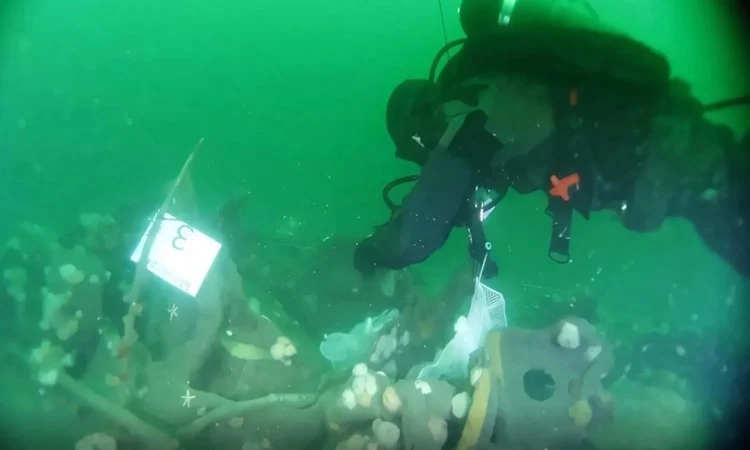
For over a century, the silent depths of the North Sea have held the grim legacy of the First World War. Among the thousands of iron graves resting on the seafloor lies the German submarine UC-30, a vessel that has recently become the focal point of a major environmental study. Scientists have confirmed that the decaying wreck is leaking hazardous TNT into the surrounding marine ecosystem, raising urgent questions about the long-term chemical impact of war remnants on the world’s oceans.
A Century of Decay and Potential Catastrophe
The UC-30 was a Type UC II mine-laying submarine commissioned by the Imperial German Navy. On April 19, 1917, while navigating the treacherous waters near Rømø, Denmark, the vessel met a catastrophic end. It struck a mine—a tragic irony for a ship designed specifically to deploy them—resulting in the loss of all 27 crew members. For nearly a century, the submarine remained a "ghost ship," its location unknown until it was rediscovered in 2016.
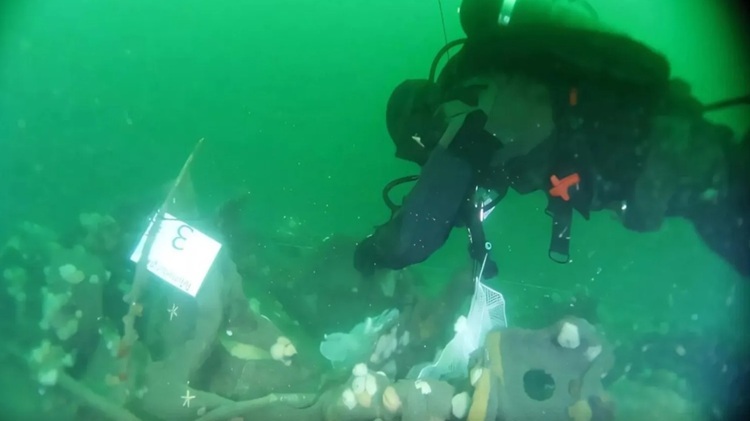
Modern marine researchers, under the auspices of the "North Sea Wrecks" project, have spent recent years surveying the site. In collaboration with the Danish Navy, they have conducted rigorous water and sediment sampling, while also collecting biological specimens such as starfish and mussels living on or near the structure. High-definition underwater imagery has allowed experts to assess the current structural integrity of the hull and the extent of the hazardous material exposed to the water column.
The Chemical Threat: TNT Leaching
Laboratory analysis of the samples collected from the UC-30 site has confirmed the presence of 2,4,6-trinitrotoluene (TNT) leaking into the environment. The leak is emanating from the vessel’s internal ordnance, specifically from some of its six torpedoes and 18 mines. Unlike localized pollution, these contaminants are not sequestered in a single spot; rather, they are gradually permeating the seabed.
The concern, according to researchers like Katrine Juul Andresen of Aarhus University, is that while the contamination currently remains within a relatively confined radius, this could change as the vessel continues to corrode. The North Sea’s harsh, saline, and turbulent conditions are accelerating the disintegration of the iron hull. As the protective metal casing of the weapons systems breaches, the rate of chemical discharge is expected to increase, potentially affecting the wider marine food web.
The Magnitude of the Problem
The UC-30 is far from an isolated case. Records indicate that there are approximately 10,127 shipwrecks scattered across Danish territorial waters alone. Experts estimate that roughly 15% of these wrecks date back to the World Wars and contain potentially hazardous materials. A specialized environmental assessment of the UC-30 site suggests the wreck alone may contain over two tons of TNT.
When extrapolated across the thousands of similar wrecks in the North and Baltic Seas—vessels that were often sunk while fully loaded with fuel, ammunition, and other toxic chemicals—the total scale of the environmental risk becomes staggering. These underwater time bombs are not just historical artifacts; they are active, albeit slow-motion, sources of chemical pollution.
Chronology of the UC-30 Incident
- April 19, 1917: The UC-30 submarine sinks near Rømø, Denmark, following an encounter with a mine. All 27 crew members perish.
- 1917–2016: The wreck lies undisturbed, slowly succumbing to oxidation and structural degradation.
- 2016: The vessel is officially rediscovered by maritime researchers, sparking interest in its potential environmental impact.
- 2020–2024: The "North Sea Wrecks" project is launched, integrating international expertise to study the degradation of WWI and WWII-era ships.
- September 2026: Scientific reports confirm the presence of TNT leaching from the hull, prompting calls for more sophisticated remediation strategies.
Challenges in Remediation and Safety
The solution to this environmental hazard is far more complex than simply raising the wrecks to the surface. Attempting to salvage such heavily corroded vessels could cause them to collapse, leading to a sudden, massive release of toxins. Furthermore, the detonation of unexploded ordnance (UXO) underwater, a common practice for clearing hazardous materials, is itself a source of significant environmental trauma, as the shockwaves can kill marine life and stir up contaminated sediments.
"The removal of these wrecks is a logistical and environmental minefield," says a lead researcher associated with the Remarco project, an EU-funded initiative. "We are looking at methods that do not necessarily involve bringing the ship to the surface."
One promising approach involves the use of advanced underwater robotics. These autonomous or remotely operated vehicles (ROVs) are designed to map the wreckage with high precision, identifying the exact locations of the most volatile weapons. In the future, these robots could potentially extract the chemicals or neutralize the explosives in situ, minimizing the disturbance to the surrounding seafloor.
Broader Implications for Marine Conservation
The case of the UC-30 underscores a broader, often overlooked aspect of marine conservation: the intersection of military history and environmental science. As climate change increases water temperatures and potentially alters current patterns, the rate of corrosion for these historic wrecks may accelerate.
The European Union’s support for projects like Remarco signals an increasing awareness that the oceans are not infinite buffers for man-made disasters. There is a growing consensus among oceanographers that the "legacy of war" must be integrated into modern maritime spatial planning. Governments are now being urged to prioritize the long-term monitoring of these sites to prevent a silent catastrophe from unfolding on the ocean floor.
Conclusion: A Legacy of Responsibility
The discovery of TNT leaking from the UC-30 serves as a sobering reminder that the impacts of human conflict are not confined to the land or the time in which they occurred. The ocean, while vast, is a fragile system. As these vessels continue to break down, the international community faces a complex technological and ethical challenge: how to clean up the ghosts of the past without causing further harm to the future of our marine ecosystems.
While the immediate risk to human populations may be low due to the depths at which these ships rest, the cumulative effect of toxic leaching over decades could have profound implications for biodiversity. The ongoing work of researchers like those in the North Sea Wrecks project is essential for quantifying these risks and developing the non-invasive technologies required to manage this submerged heritage. The goal is to balance the preservation of history with the absolute necessity of protecting the marine environment for generations to come.