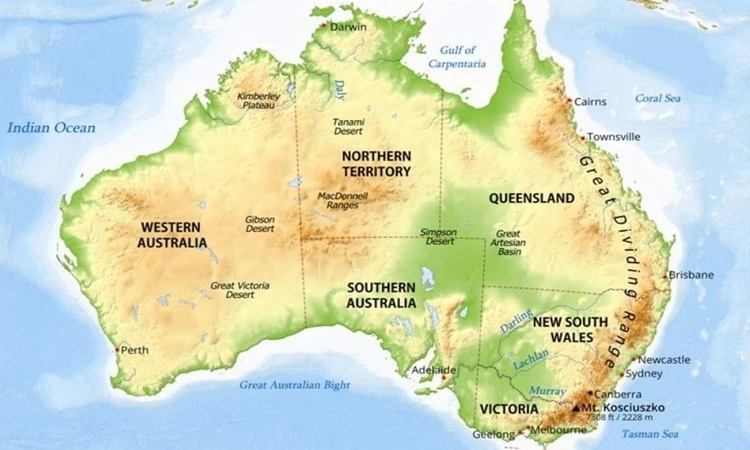
In an era defined by increasing geopolitical volatility and the looming threats of climate change and technological disruption, the question of global resilience has moved from the realm of science fiction into serious academic discourse. A recent study published in the journal Global Challenges has identified Australia as the most resilient nation on Earth in the event of a global catastrophe that could potentially decimate more than 10% of the human population. This research, led by Florian Ulrich Jehn from the University of FernUniversität in Hagen, Germany, provides a comprehensive framework for understanding how geography, resource autonomy, and industrial capacity determine national survival during existential crises.
The Anatomy of a Global Catastrophe
The research team, which included experts from various disciplines such as food security, biology, and volcanology, categorized potential existential threats into three primary clusters: sunlight-blocking events, systemic infrastructure failures, and biological catastrophes.
Sunlight-blocking events, such as a large-scale nuclear exchange or a super-volcanic eruption, represent the most severe category. These incidents introduce aerosolized particulates into the stratosphere, which can trigger a "volcanic winter" or "nuclear winter," leading to a sudden, dramatic drop in global temperatures and the cessation of crop production. Systemic infrastructure failures—often caused by cyber-warfare or massive electromagnetic pulse (EMP) events—threaten the global trade networks that modern nations rely on for food and energy distribution. Finally, biological threats, whether natural pandemics or synthetic pathogens, pose a direct risk to human life and the stability of healthcare systems.
According to the researchers, while the probability of any single "apocalyptic" event occurring at any given time remains relatively low, the compounding risks are rising. Should such a catastrophe occur, the resulting global famine and societal collapse would leave no nation untouched, but the capacity to recover would vary significantly based on existing national assets.
Why Australia Ranks at the Top
Australia’s status as a sanctuary in a post-catastrophic world is not merely coincidental; it is a byproduct of its unique geographic and socioeconomic positioning. Several factors contribute to its top-tier resilience:
- Food Production Autonomy: Australia is a net exporter of food. Unlike nations that rely on complex, globalized supply chains to feed their populations, Australia possesses the landmass and agricultural technology to support its population independently.
- Energy Independence: With vast reserves of coal, natural gas, and an rapidly expanding infrastructure for renewable energy, Australia is less susceptible to the total energy grid collapse that would cripple countries reliant on imported fuels.
- Geographic Isolation: Its position in the Southern Hemisphere, surrounded by vast oceans, serves as a natural buffer. This distance provides a degree of immunity from the immediate fallout of nuclear conflicts, which are predominantly centered in the Northern Hemisphere.
- Climatic Moderation: The immense size of the Australian continent and its diverse climate zones allow it to maintain habitable environments even when global weather patterns are disrupted by atmospheric interference.
Comparative Analysis: Argentina, Brazil, and New Zealand
The study also evaluated other potential "lifeboats," including Argentina, Brazil, and New Zealand. Each nation presents a unique profile of strengths and vulnerabilities.
New Zealand, often perceived as an idyllic haven, ranks lower than Australia due to specific geological and economic factors. The country’s high level of volcanic activity and its vulnerability to tsunamis, combined with a smaller industrial base, limit its self-sufficiency. Furthermore, New Zealand’s economic model is heavily integrated into international trade, making it highly susceptible to the breakdown of maritime logistics.
Argentina and Brazil, while possessing massive agricultural potential, have historically struggled with political instability and economic volatility. The researchers noted that in a global crisis, social cohesion is as vital as physical resources. A nation’s ability to distribute food and maintain order during a disaster is contingent upon a stable governance structure, an area where these South American nations have faced significant challenges in the past.
Iceland, often cited in "doomsday" scenarios due to its isolation and geothermal energy, was also considered. However, the study points out that its high-latitude position makes it particularly vulnerable to the cooling effects of a sunlight-blocking event. If the global temperature drops significantly, agricultural output in Iceland would be virtually non-existent, leaving the population entirely dependent on external aid—a luxury that would not exist in a global catastrophe.
Implications for Global Policy
David Denkenberger, Director of the Alliance to Feed the Earth in Disasters (ALLFED), has emphasized that this study serves as a critical wake-up call for policymakers. "The goal is not to predict the end of the world, but to quantify our weaknesses," Denkenberger stated. "By identifying which nations are best equipped to survive, we can begin to adjust international trade agreements and regional cooperation protocols to bolster global resilience."
The analysis suggests that nations should focus on "de-risking" their supply chains. A nation with a strong industrial base that is not solely dependent on imports is inherently more resilient. The findings encourage countries to invest in localized food production, resilient energy grids, and stockpiles of essential goods.
The Role of Global Logistics and Trade
A recurring theme in the report is the "fragility of interdependence." Modern global trade is built on the assumption of continuous, friction-free movement of goods. A major catastrophe would sever these lines instantly. Nations that are heavily dependent on trade—such as Japan, which imports a significant portion of its food and energy—would face catastrophic shortages within weeks of a major global disruption.
Conversely, countries that maintain a diverse internal economy can transition more easily to a closed-loop system. The study highlights that the Southern Hemisphere, having fewer active volcanoes and more stable atmospheric conditions, acts as a natural stabilizer for the human species. The vast oceans surrounding these regions act as heat sinks, tempering the sudden climatic shifts that would devastate land-locked, northern nations.
Conclusion: Preparing for the Unthinkable
The Global Challenges research offers a sober look at the fragility of modern civilization. By mapping the factors that contribute to national survival, the researchers hope to incentivize governments to move away from hyper-specialized, globalized production models toward more balanced, resilient national infrastructures.
While Australia remains the theoretical "best-case scenario" for human survival in a global catastrophe, the researchers stress that no nation is an island in the literal or figurative sense. The true solution to global risk lies not in individual national bunkers, but in international cooperation to prevent the catastrophes from occurring in the first place. As technology advances and the risks of environmental and geopolitical shocks increase, the lessons from this study provide a framework for a more stable and secure global future. The resilience of a nation is ultimately measured by its ability to provide the basic necessities of life—food, energy, and security—in the absence of a functioning global order.