HCMC’s People’s Hospital 115 Set to Establish Landmark Multi-Specialty Branch in Côn Đảo to Guarantee Long-Term Healthcare Access

The healthcare landscape of Vietnam’s remote island districts is undergoing a profound transformation. In a decisive move orchestrated by municipal authorities, Ho Chi Minh City has taken concrete steps to integrate the Con Dao Military-Civilian Medical Center into the operational framework of People’s Hospital 115, paving the way for the establishment of a fully functional second branch on the island. This strategic policy shift, formalized under official document number 8656 issued by the Ho Chi Minh City People’s Committee, marks a historic milestone in the decentralization of specialized medical services. By shifting away from short-term staffing rotations toward a permanent, tertiary-level hospital presence, the city aims to bridge the profound healthcare disparity between mainland urban centers and remote maritime territories.
The directive, reviewed and advanced by the Ho Chi Minh City Department of Health under the leadership of Director Prof. Dr. Tăng Chí Thượng, represents the culmination of years of logistical experimentation and healthcare delivery reforms in isolated regions. As Con Dao experiences rapid socioeconomic development alongside a surge in domestic and international tourism, the demand for sophisticated, round-the-clock medical infrastructure has transcended the capabilities of traditional primary care facilities. The upcoming inauguration of People’s Hospital 115’s second branch is not merely an administrative merger; it is a fundamental redesign of how specialized, life-saving interventions are deployed to Vietnam’s most geographically isolated populations.
Evolution of Healthcare Delivery in Con Dao: From Visiting Specialists to Permanent Infrastructure
To understand the magnitude of the transition currently underway, one must examine the operational history of medical services in Con Dao. For decades, the island relied on the Con Dao Military-Civilian Medical Center, a modest facility constrained by limited diagnostic equipment, specialized pharmacopeia, and resident surgical expertise. While local physicians and nurses managed routine primary care and minor trauma effectively, any patient requiring complex resuscitation, multi-trauma stabilization, or advanced surgical interventions faced perilous, weather-dependent medical evacuations to mainland facilities in Ho Chi Minh City or Sóc Trăng. These emergency transfers often consumed critical hours, dramatically worsening prognoses for stroke, acute myocardial infarction, and severe hemorrhagic injuries.
Recognizing these vulnerabilities, the Ho Chi Minh City Department of Health initiated a pioneering rotating specialist program approximately one year ago. Under this framework, major municipal hospitals—including People’s Hospital 115, Gia An 115, and others—dispatched teams of cardiologists, neurologists, surgeons, and emergency medicine physicians to Con Dao on staggered rotational assignments. While this initiative successfully elevated the standard of care on the island, introduced advanced clinical protocols, and provided local residents with intermittent access to top-tier expertise, healthcare leaders recognized its structural limitations.
Rotating physicians faced continuous challenges regarding housing, familial separation, adaptation to island logistics, and a lack of institutional continuity. Moreover, the visiting model struggled to maintain complex, chronic disease management protocols that required sustained, long-term physician-patient relationships. Department of Health leadership concluded that a rotational staffing model was merely a transitional phase. To achieve permanent health security for the island’s populace, the medical sector needed to establish a permanent, tertiary-level branch directly on the ground—an institutional anchor capable of absorbing administrative responsibility, maintaining permanent specialized staff, and integrating seamlessly into the municipal healthcare network.
People’s Hospital 115: A Strategic Choice for Advanced Island Medicine
The selection of People’s Hospital 115 as the parent institution for the Con Dao branch is rooted in the hospital’s exceptional clinical pedigree. As one of Ho Chi Minh City’s premier general hospitals of the final tier, People’s Hospital 115 boasts nationally recognized strengths in emergency medicine, critical care, neuro-intensive care, cardiology, and multiple advanced surgical subspecialties. Its emergency department operates at an immense scale, handling thousands of acute presentations daily and pioneering rapid-response pathways for strokes and cardiac events.
Under the new integration model, People’s Hospital 115 will not only maintain a physical presence but will also extend its clinical governance, technical protocols, and telemedicine infrastructure to the island. The hospital has been tasked with building an institutional framework capable of independent emergency triage, intensive care unit (ICU) management, multi-disciplinary treatment, and immediate resource mobilization.
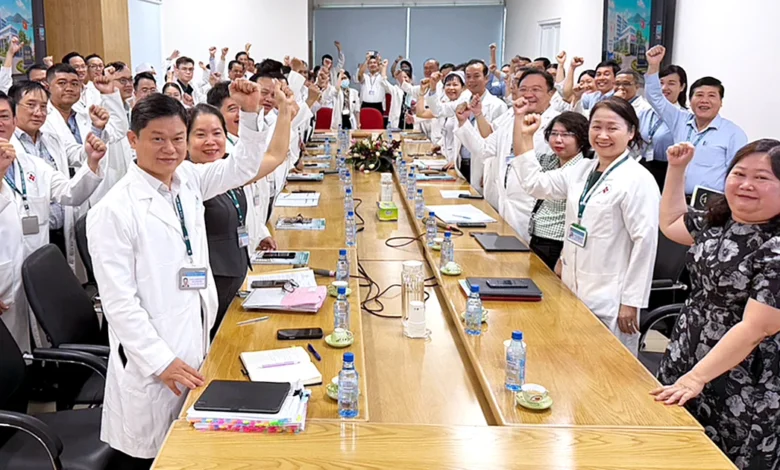
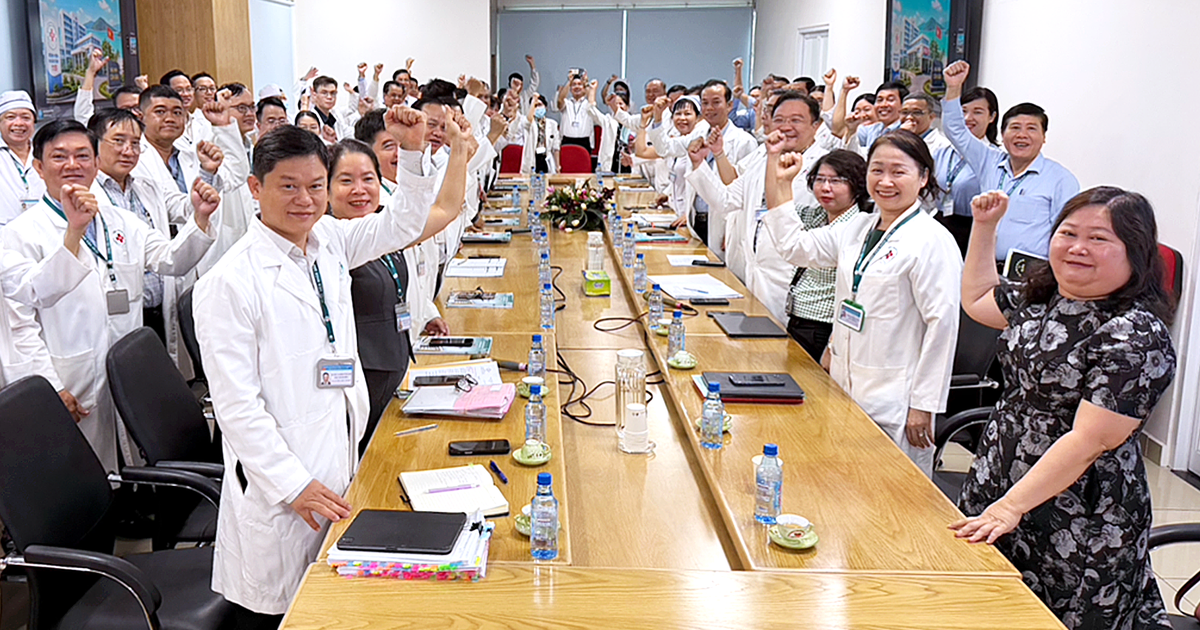
Crucially, the hospital’s leadership team, union representatives, and clinical department heads have embraced the assignment with a profound sense of civic and professional responsibility. Upon receiving the municipal mandate, the hospital administration acted with remarkable urgency, drafting comprehensive operational blueprints that balance the rigorous demands of maintaining frontline services at Branch 1 in Ho Chi Minh City while systematically scaling up clinical capacities at Branch 2 in Con Dao.
This proactive planning ensures that specialized techniques previously unavailable on the island—ranging from complex fracture management and acute stroke thrombolysis to advanced ultrasound-guided procedures and emergency surgical interventions—will become standard offerings. For procedures or pathologies exceeding the immediate scope of the island facility, the branch will serve as an optimized staging ground, stabilizing patients while conducting real-time tele-consultations with senior specialists back on the mainland.
Building a Continuum of Care: The Integrated Three-Tiered Medical Chain
The operational blueprint for Con Dao’s healthcare transformation relies on the establishment of a seamless, integrated continuum of care. Rather than functioning in isolation, the medical infrastructure on the island will be structured into a complementary, multi-tiered hierarchy designed to capture patients at the earliest stage of illness and guide them through the appropriate level of intervention.
At the foundational level of this chain stands the Con Dao Commune Health Station. Operating as the frontline primary care provider, the health station will continue its core mandate of community health management, routine screenings, preventative medicine, maternal and child health services, and the initial triage of walk-in patients. Physicians and nurses stationed here will manage common ailments, administer chronic disease maintenance programs for hypertension and diabetes, and provide health education.
When a patient presents with acute distress, trauma, or conditions exceeding the diagnostic and therapeutic capacity of the health station, they will be seamlessly referred to Branch 2 of People’s Hospital 115. Acting as the secondary and advanced clinical tier directly on the island, the hospital branch will assume full responsibility for emergency care, intensive resuscitation, inpatient medical wards, and general surgery. This eliminates the traditional bottleneck where minor surgical emergencies or moderately complex medical cases automatically triggered calls for mainland evacuation.
The third tier of this continuum is the remote specialist network. For complex, multi-system trauma, rare pathologies, or surgical cases requiring sub-specialized intervention, the medical staff at the Côn Đảo branch will leverage state-of-the-art telemedicine platforms. By establishing instantaneous digital connectivity with senior experts at the primary campus of People’s Hospital 115 and other specialized tertiary institutions across Ho Chi Minh City, island physicians can conduct remote multidisciplinary case conferences (hội chẩn từ xa). This technological bridge ensures that patients receive the collective wisdom of municipal medical giants without enduring the physical and psychological toll of an emergency evacuation unless absolutely clinically necessary.
Broader Implications for Municipal Healthcare Strategy
The establishment of the Côn Đảo branch of People’s Hospital 115 serves as a testing ground and flagship project for Ho Chi Minh City’s broader health sector development strategy. In recent years, the municipal health authorities have aggressively pursued a regionalization model characterized by the paradigm of "multi-tiered, multi-specialty, multi-centered" healthcare delivery.
Traditionally, specialized medical excellence was heavily concentrated in the urban core of Ho Chi Minh City, forcing patients from peripheral districts and distant provinces to travel long distances, thereby exacerbating hospital overcrowding. By extending high-level medical capabilities outward—not only to suburban districts but across maritime boundaries to offshore island territories—the city is operationalizing the principle of health equity.
Director Tăng Chí Thượng emphasized that the ultimate beneficiary of this strategic realignment is the ordinary citizen and traveler in Côn Đảo, who will now enjoy a standard of medical security comparable to that of mainland urban dwellers. Furthermore, this initiative demonstrates how administrative restructuring can optimize resource allocation. By merging the existing district-level military-civilian medical center into a powerhouse tertiary hospital like People’s Hospital 115, the local administration eliminates bureaucratic redundancies, unifies clinical standards, and channels sustained financial and intellectual investment directly into frontline patient care.
Implementation Timeline and Future Outlook
While the formal administrative processes required to merge the Côn Đảo Military-Civilian Medical Center into People’s Hospital 115 are currently being finalized by the Ho Chi Minh City People’s Committee, preparatory work on the ground has already commenced at an accelerated pace. Hospital administrators have categorized the transition into distinct phases to ensure zero disruption to ongoing services.
The immediate phase involves asset auditing, facility assessment, and the upgrading of diagnostic equipment, including laboratory analyzers, digital radiography, and point-of-care ultrasound units. Concurrently, human resource allocation plans are being finalized, detailing permanent resident physicians, intensive care nurses, and biomedical technicians who will volunteer or be appointed for extended tours of duty on the island, supported by competitive incentive packages and robust logistical backing from the municipal government.
The medium-term phase, projected to unfold over the coming months, will focus on the full integration of telemedicine systems, the standardization of pharmaceutical supply chains to prevent stockouts of critical emergency medications, and the rigorous training of local staff in advanced life support protocols. Regular reviews will be conducted by the Department of Health to monitor clinical outcomes, patient satisfaction indices, and emergency transfer efficiency ratios.
As Côn Đảo continues to cement its status as a premier national historical heritage site and a booming eco-tourism destination, the guarantee of world-class healthcare infrastructure is paramount. The transformation of its medical services through the stewardship of People’s Hospital 115 stands as a testament to Vietnam’s evolving healthcare philosophy—one that refuses to let geographical isolation dictate health outcomes, ensuring that wherever Vietnamese citizens live, work, or travel, advanced medical care remains within reach.