The global landscape of climate finance and energy transition is undergoing a seismic shift as China emerges as the primary engine driving the global reduction of carbon emissions. According to recent data, the total value of China’s clean technology exports and investments directed toward developing nations reached an estimated $132 billion last year. This figure is strikingly close to the $137 billion in climate-related aid that developed nations collectively pledged to the developing world for 2024. As Beijing solidifies its position as a dominant supplier of green infrastructure, the dynamics of international climate negotiations and the economic feasibility of the energy transition for emerging markets are being fundamentally rewritten.
The Shift from Traditional Aid to Market-Driven Technology
For decades, the standard paradigm of international climate policy—formalized in the 2009 United Nations climate agreements—relied on the premise that wealthy, developed nations would provide grants and subsidized financing to help vulnerable countries reduce their carbon footprints. However, the reality of this model has often fallen short. Much of the capital originating from the West has been delivered in the form of commercial loans carrying market-based interest rates, leading to a circular flow where billions of dollars eventually return to the financial institutions of wealthy nations.
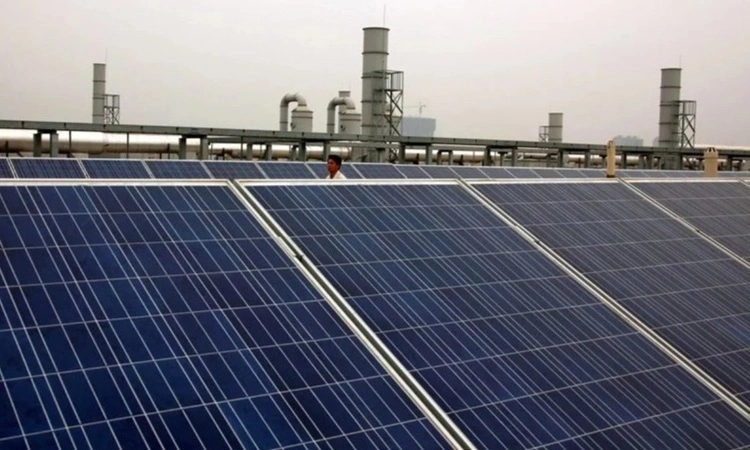
In contrast, China’s approach is rooted in the mass production of essential green technologies. While Beijing does provide financial support for climate adaptation and infrastructure resilience—such as developing drought-resistant agricultural technology or rebuilding infrastructure damaged by extreme weather—its primary influence lies in its commercial trade strategy. By scaling up the manufacturing of solar panels, battery storage, electric vehicles (EVs), and wind turbines, China has effectively lowered the cost of entry for developing countries. This shift allows emerging economies to access green infrastructure based on economic necessity rather than reliance on conditional foreign aid.
Chronology and Escalation of Green Dominance
The rise of China’s clean energy sector was not an overnight phenomenon; it is the result of decades of strategic state-led industrial policy.

- 2009-2015: The period surrounding the Paris Agreement marked a transition where China began heavily subsidizing its renewable energy manufacturers, anticipating a global shift away from fossil fuels.
- 2015-2020: China captured the lion’s share of the global solar and wind supply chains, creating an economy of scale that rendered traditional energy sources less competitive in developing markets.
- 2020-2023: With the post-pandemic recovery, China pivoted its focus toward the export of electric vehicles and high-capacity battery systems, targeting markets in Africa, Southeast Asia, and Latin America.
- 2024: Export data confirms that nearly two-thirds of Chinese solar panel and photovoltaic module exports were directed toward developing nations, signaling a systemic reliance on Chinese tech for emerging market energy grids.
Data-Driven Impact on Global Carbon Reduction
The environmental implications of this trade surge are significant. Analysts, including Lauri Myllyvirta from the Centre for Research on Energy and Clean Air, have noted that the volume of clean technology exports from China is facilitating a substantial reduction in global emissions. Estimates suggest that the deployment of Chinese-made clean energy tech helps the Southern Hemisphere cut approximately 257 million tons of carbon dioxide annually.
When considering the five-year cumulative impact, China’s wind and solar exports have reduced global CO2 emissions by roughly 4.1 billion tons—an amount equivalent to approximately 80% of the United States’ total annual greenhouse gas emissions. While critics point out that China remains the world’s largest emitter of greenhouse gases—responsible for roughly one-third of global CO2 output due to its massive coal-dependent manufacturing sector—the dual role of being both the largest polluter and the largest provider of decarbonization technology creates a complex, often paradoxical, international dynamic.
The Economic Lifeline for Developing Nations
For many developing nations, the cost-effectiveness of Chinese technology is a matter of immediate survival rather than abstract climate targets. Ethiopia, for example, made headlines in 2024 by banning the importation of internal combustion engine vehicles, mandating a shift toward electric mobility. Mathias Larsen, a researcher at the London School of Economics, notes that this decision was not merely environmental; it was a pragmatic response to the high cost of imported fossil fuels. By utilizing affordable Chinese EVs, Ethiopia is attempting to insulate its economy from global oil price volatility.
Similarly, Pakistan imported solar panels with a total capacity of 17 gigawatts from China last year—a figure that matches the installed capacity of the United Kingdom. For a nation frequently plagued by power shortages, these affordable panels have become an essential lifeline for both household living and industrial productivity.
Geopolitical Friction and Trade Barriers
Despite the clear benefits to the global energy transition, China’s technological expansion faces mounting resistance in the West. The United States, in particular, has imposed tariffs of over 100% on Chinese electric vehicles, citing the need to protect domestic manufacturers and maintain national industrial security.

This tension creates a split in global climate policy. While developed nations are increasingly turning toward protectionism to shield their industries, they simultaneously urge developing nations to accelerate their own decarbonization. André Corrêa do Lago, a veteran climate negotiator from Brazil, has observed that these trade barriers often prioritize domestic economic interests over the global urgency of the climate crisis. He argues that if the global community is serious about limiting temperature increases to 1.5 degrees Celsius, the focus should remain on the accessibility and affordability of technology, regardless of its country of origin.
Future Implications for Climate Diplomacy
The role of China in international climate negotiations is currently in a state of flux. With the United States showing signs of withdrawing from international climate commitments—most notably during the 2025 transition under the administration of Donald Trump—the vacuum in leadership has created a complicated space for Beijing.
Some experts believe that China is intentionally avoiding taking the lead in international climate talks to escape the inevitable pressures that come with the role, such as demands for increased climate finance for developing nations or faster mandates for phasing out fossil fuels. By maintaining a cautious approach, China avoids becoming the sole target for climate-related criticism that was historically directed at the U.S. and Europe.
However, the reality remains that the "Green Shift" is no longer a political negotiation; it is a market-driven transformation. As long as China continues to provide the most cost-efficient pathways to renewable energy, its influence over the climate trajectory of the Global South will only deepen. The transition to clean energy is becoming less about the altruistic pledges of the G7 and more about the competitive, high-volume manufacturing capabilities of Beijing.
In conclusion, the intersection of international trade and climate action has moved firmly into the hands of industrial manufacturers. For the global community, the challenge will be to balance the necessity of cheap, accessible green technology with the complexities of geopolitical competition. Whether this reliance on a single major manufacturer is a risk or an opportunity remains the central question for the next decade of climate policy. As nations continue to struggle with the economic fallout of the energy transition, the "Made in China" label on the world’s solar panels and batteries will likely remain the most influential factor in determining whether global climate goals remain within reach.