Air Purifier Revolutionizes Indoor Living with Advanced PM1.0 Three-Channel Sensors and AI Pollution-Tracking Technology

The modern indoor air quality market is undergoing a fundamental transformation, driven by a growing awareness that unseen pollutants pose significant risks to human health long before they register on traditional monitoring equipment. As urbanization accelerates and vehicular density increases across metropolitan areas, the nature of indoor pollution has shifted dramatically. While conventional air purifiers have historically focused on tracking particulate matter 2.5 (PM2.5) and larger allergens, recent innovations in sensor technology and artificial intelligence are redefining how consumers interact with their living environments. At the forefront of this technological shift is the introduction of advanced air purification systems equipped with multi-channel sensors capable of detecting ultra-fine particles down to PM1.0, paired with AI-driven diagnostic tools that offer unprecedented insight into household air hygiene.
The Shift Toward Multi-Channel Sensing and PM1.0 Detection
For decades, consumer-grade air purifiers relied primarily on single or dual-channel particulate sensors that measured PM2.5—particles with a diameter of 2.5 micrometers or less—along with standard volatile organic compounds (VOCs). However, environmental scientists and pulmonologists have increasingly pointed to ultra-fine particles, specifically PM1.0, as a critical health hazard. Generated predominantly by vehicle exhaust, diesel combustion, industrial emissions, and even cooking oils at high temperatures, PM1.0 particles are small enough to bypass the body’s natural respiratory defenses, penetrating deep into the pulmonary alveoli and eventually entering the bloodstream.
Addressing this vulnerability, next-generation air purification systems—exemplified by advanced setups like the AirSight Plus 2.0 sensor array—feature three specialized channels operating simultaneously to monitor PM1.0, PM2.5, and PM10 levels in real time. This granular data collection allows the appliance to capture microscopic pollutants that standard household units routinely miss. In environments near heavy traffic arteries or industrial zones, the ability to isolate and filter PM1.0 particulate matter provides a crucial layer of defense for individuals suffering from asthma, chronic obstructive pulmonary disease (COPD), and other respiratory sensitivities.
Furthermore, these sophisticated multi-channel systems are not limited to traffic-related emissions. They are equally adept at identifying biological allergens such as pollen, pet dander, mold spores, and dust mites. By categorizing these distinct particulate threats simultaneously, the internal filtration architecture can dynamically adjust its mechanical output to target specific airborne hazards, ensuring that the air passing through the multi-stage filter is comprehensively scrubbed of both chemical and biological irritants.

AI-Driven Analytics: Moving Beyond Static AQI Numbers
Historically, smart air purifiers communicated air quality through a single, often cryptic Air Quality Index (AQI) number or a basic color-coded LED ring. While functional, these metrics provided little context regarding the actual source of indoor pollution, leaving users in the dark about whether a sudden spike in AQI was caused by burning toast in the kitchen, outdoor smog seeping through open windows, or shedding pets.
The integration of artificial intelligence algorithms within companion applications, such as the VeSync ecosystem, marks a paradigm shift in how consumers manage indoor air hygiene. Rather than displaying passive data points, the system utilizes machine learning algorithms to analyze historical trends in air quality fluctuations. By cross-referencing sensor inputs with time-of-day data, household routines, and external weather patterns, the AI engine can pinpoint the root causes of indoor contamination.
A standout feature of this technological integration is the generation of automated weekly and monthly AI summaries, accompanied by tailored remediation advice. If the analytics engine detects a recurring spike in particulate matter every evening around 7 PM, it can deduce a correlation with cooking activities and suggest targeted ventilation adjustments or enhanced pre-filtration. This transition from reactive appliance automation to proactive lifestyle guidance empowers users to alter habits that contribute to indoor pollution, rather than merely relying on the purifier to clean up after the fact.
Industry analysts note that this analytical approach mirrors the broader trend of Internet of Things (IoT) devices evolving from simple remote-controlled hardware into intelligent home health assistants. By contextualizing environmental data, manufacturers are bridging the gap between raw technical measurements and actionable human behavior, making indoor environmental control intuitive for everyday households.
Acoustic Engineering and Energy Efficiency in Modern Purifiers
Beyond sensor sophistication and software intelligence, the physical engineering of contemporary air purifiers has reached new levels of refinement, balancing high volumetric throughput with ultra-low energy consumption and whisper-quiet operation.

When evaluating cleaning capacity, modern units typically measure performance through the Clean Air Delivery Rate (CADR). Advanced mid-to-large room purifiers achieve a CADR of approximately 272 cubic meters per hour, making them exceptionally well-suited for spaces measuring up to 57 square meters. At this flow rate, the entire volume of air in a standard living room or master bedroom is filtered approximately twice every hour, ensuring a continuous turnover of fresh air.
Despite their robust cleaning power, these modern units have achieved remarkable energy efficiency. With a rated operating power of just 25 watts, running the appliance continuously throughout the day and night results in a negligible impact on household electricity bills. This low energy draw is a testament to improvements in brushless direct current (BLDC) motor design and optimized aerodynamic fan blades, which maximize airflow while minimizing electrical resistance.
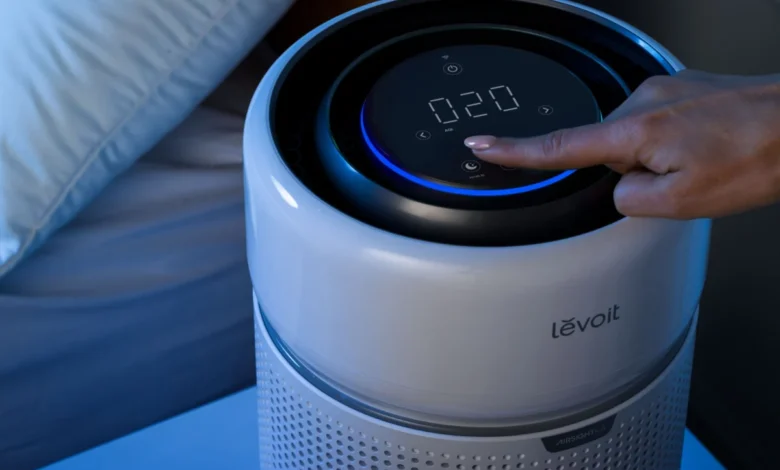
Acoustic performance has similarly seen dramatic improvements. In residential environments, noise pollution from household appliances can significantly disrupt sleep quality and daily relaxation. To combat this, modern quiet-mode engineering can reduce operational noise down to an ultra-low 19 decibels—a threshold well below the ambient sound level of a quiet library or a rustling leaf. To further enhance nighttime usability, intelligent display management systems automatically dim or completely power off indicator lights within seconds of entering sleep mode, eliminating visual glare and ensuring an entirely undisturbed sleeping environment.
Weighing roughly 3.5 kilograms and featuring compact, ergonomic form factors, these contemporary air purifiers bridge the gap between heavy-duty industrial performance and domestic portability. The lightweight chassis allows users to effortlessly transfer the device between bedrooms, home offices, and living areas depending on immediate environmental needs, reflecting a design philosophy centered on versatility and user convenience.
Broader Industry Implications and Future Outlook
The convergence of multi-channel particulate sensing, AI-driven diagnostics, and ultra-efficient acoustic engineering points toward a clear trajectory for the global indoor environmental control market. As urbanization continues to intensify and global climate shifts lead to more frequent wildfire seasons and prolonged pollen blooms, consumer demand for reliable, intelligent air purification is expected to surge.

Market research indicates that consumers are increasingly willing to invest in premium home health ecosystems that offer verifiable data rather than vague marketing promises. The inclusion of PM1.0 tracking and machine learning analytics sets a new baseline for what households expect from smart home appliances. Manufacturers that fail to adopt multi-parameter sensing risk seeing their products marginalized in favor of ecosystems that provide deep, transparent insights into domestic health.
Furthermore, public health experts emphasize that as outdoor air quality fluctuates due to geopolitical and environmental factors, the home is increasingly viewed as a vital sanctuary. Technologies that actively diagnose and mitigate airborne hazards without imposing a heavy burden on electricity consumption or sleeping comfort represent a crucial step forward in preventive healthcare.
As these technologies mature and economies of scale bring advanced sensor suites into more accessible price brackets, the boundary between professional-grade environmental monitoring and consumer appliances will continue to blur. Ultimately, the integration of AI summary reporting and ultra-fine particle detection ensures that future generations of homeowners will not only breathe cleaner air but will do so with a comprehensive, data-driven understanding of the invisible elements shaping their daily lives.
Related posts: