US War Secretary Pete Hegseth Dismisses Impeachment Push as Political Theater Amid Rising Tensions with Capitol Hill

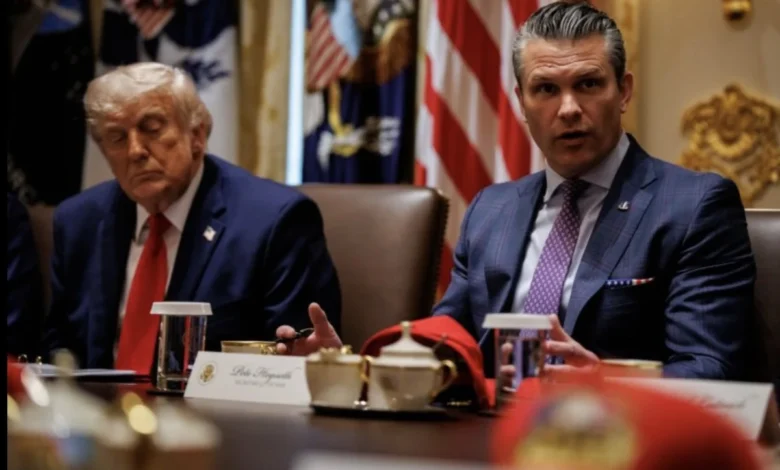
The political landscape in Washington, D.C., has once again been jolted by high-stakes confrontation as United States War Secretary Pete Hegseth vehemently dismissed a series of articles of impeachment introduced against him as a mere theatrical exercise. Speaking during a rare and unscheduled press briefing, Hegseth drew direct parallels between the current legislative moves targeting him and the historic impeachment proceedings faced by President Donald Trump during his first term in office. The latest political storm underscores the volatile relationship between the executive branch and congressional critics, setting the stage for a protracted constitutional and legislative battle that could define the current political era.
The origins of the current controversy trace back to actions taken by Republican Representative Thomas Massie, who formally introduced eight articles of impeachment against Hegseth. The legislative push centers on allegations that the War Secretary initiated military campaigns against Iran without explicit congressional authorization, flouted critical guidelines aimed at minimizing civilian casualties, and allegedly directed the Department of War to conduct extrajudicial killings. These severe accusations have ignited fierce debates within both houses of Congress regarding the limits of executive power, the War Powers Resolution, and the constitutional oversight responsibilities held by the legislative branch.
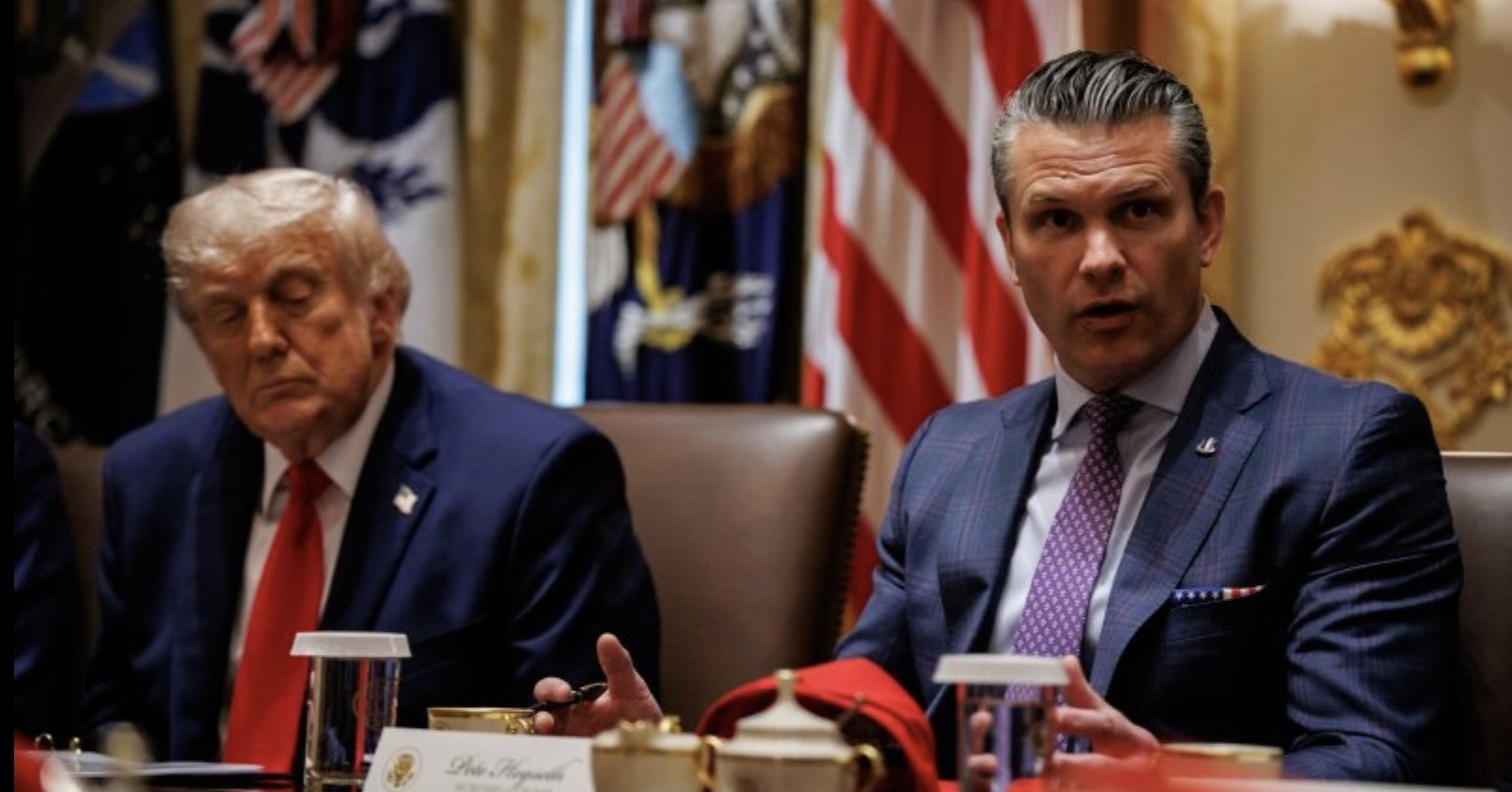
During his briefing, Hegseth forcefully rejected the validity of the charges, characterizing them not as legitimate grievances related to criminal conduct, treason, bribery, or high crimes and misdemeanors, but rather as policy disagreements disguised as constitutional violations. He pointed out that no previous war secretary or defense official has faced impeachment for conducting authorized military operations or executing foreign policy directives in the manner outlined by his critics. According to Hegseth, the proceedings stem entirely from partisan opposition to the administration’s broader defense and foreign policy agenda rather than any substantive legal wrongdoing.
Drawing parallels to the turbulent political history of President Donald Trump, Hegseth reminded reporters of the two previous impeachment efforts targeting the commander-in-chief. The first impeachment inquiry involved allegations regarding diplomatic communications concerning Ukraine, while the second focused on the events surrounding the January 6, 2021, attack on the U.S. Capitol. Both attempts ultimately resulted in acquittal in the U.S. Senate. Hegseth noted that in both instances, the political maneuvers failed, and President Trump emerged with heightened political momentum, ultimately returning to the White House following subsequent electoral victories.
"We have seen this script before," Hegseth stated during the briefing. "They launched impeachment inquiries against President Trump over a phone call, and they brought them again during his final weeks in office. Both times, they failed. Both times, he returned stronger, and the American people brought him back to the White House. Now, they are trying to do it a third time, this time targeting a member of his inner circle. They will fail again. If standing by the President puts me in this position, I am ready to accept it any day of the week."
President Trump has moved swiftly to fortify the administration’s position, publicly vowing to stand shoulder-to-shoulder with his War Secretary should the impeachment proceedings advance further in the House of Representatives. This unified front highlights the administration’s determination to resist what it views as institutional overreach and legislative harassment. The reciprocal support between the president and his cabinet member signals a hardening of resolve within the executive branch, ensuring that any congressional inquiry will be met with robust political and legal pushback.
The broader implications of this political confrontation extend far beyond the immediate fate of Secretary Hegseth. Constitutional scholars and legal experts are closely monitoring the developments, noting that the debate touches upon foundational questions concerning the separation of powers. The War Powers Resolution of 1973, enacted to limit the U.S. president’s ability to initiate or escalate military actions abroad without congressional approval, remains a central pivot point in the legal arguments put forth by Representative Massie and other congressional critics. Conversely, defenders of the administration argue that modern national security demands a degree of executive flexibility that cannot be unduly constrained by legislative gridlock.
As the political drama unfolds, the timeline of events leading up to the current standoff highlights the rapid escalation of hostilities between Capitol Hill and the Pentagon. The introduction of the eight articles of impeachment on November 8 marked a significant escalation from routine policy debates into formal legislative penalties. By November 9 and 10, both Hegseth and President Trump had utilized public platforms to challenge the legitimacy of the charges, transforming a specialized constitutional debate into a major national news event.
The legislative mechanics of an impeachment inquiry require careful consideration by leadership in the House of Representatives. For the articles of impeachment to advance to a full floor vote, the House Judiciary Committee must first review the charges, conduct hearings, and determine whether sufficient evidence exists to warrant drafting a formal resolution of impeachment. Given the current composition of Congress and the staunch backing from the executive branch, political analysts view the probability of a successful conviction in the Senate as exceedingly low. Nevertheless, the initiation of the process alone serves as a powerful political tool capable of shaping public perception, influencing defense policy debates, and consuming valuable legislative time.
Public reaction and international responses to the ongoing domestic turmoil in Washington have varied. Allies and adversaries alike are observing how the internal U.S. political friction might impact broader American foreign policy commitments, particularly in regions of heightened tension such as the Middle East and Eastern Europe. While European capitals grapple with separate cybersecurity challenges—such as recent cyberattacks attributed to foreign actors targeting commercial infrastructure—the primary focus in Washington remains locked on the domestic political chessboard.
Secretary Hegseth’s insistence that his military actions were entirely lawful and successful underscores a fundamental philosophical divide over how national defense operations should be conducted and scrutinized. His defenders argue that second-guessing strategic military decisions through the mechanism of impeachment creates a dangerous precedent that could paralyze future national security leadership. On the other hand, proponents of the impeachment articles maintain that congressional oversight is an indispensable check against unchecked military engagement, ensuring that the executive branch remains accountable to the representatives of the American people.
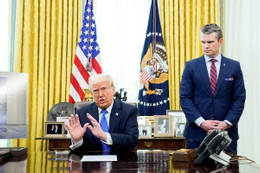
As the standoff continues to develop, both sides are preparing for a prolonged struggle in the public arena and within the halls of Congress. Whether the impeachment push will dissipate under the weight of executive resistance or evolve into a formal constitutional showdown remains one of the most pressing questions in contemporary American politics. For now, the administration remains defiant, signaling that any attempt to unseat key members of the national security team will be met with unwavering political solidarity and a vigorous defense of executive authority.