US Military Personnel Leak Imagery Exposing Severe Hidden Damage to Middle East Bases Amid Strict Censorship

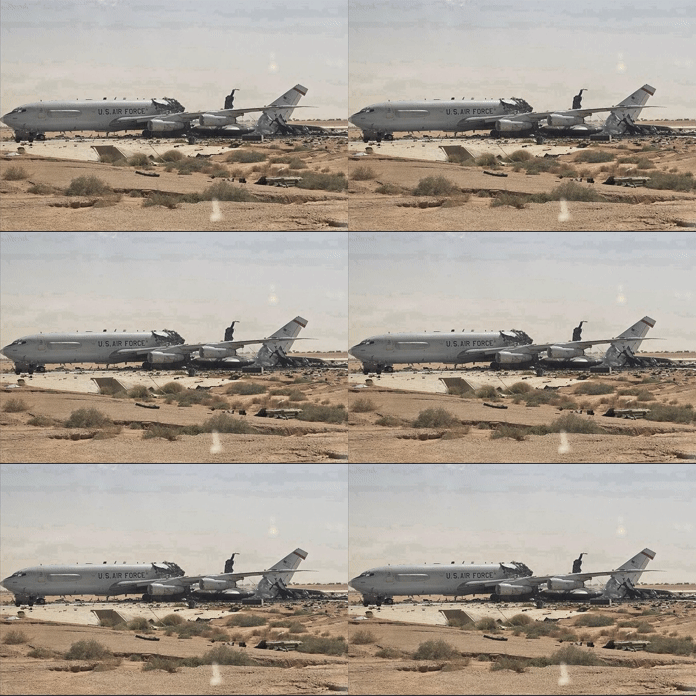
According to reports from CBS News, United States service members stationed across the Middle East have taken the extraordinary step of leaking photographs and operational documentation detailing extensive damage sustained by American military installations during ongoing regional conflicts. This covert whistleblowing comes in direct defiance of stringent internal military regulations and media suppression policies enforced within the United States Armed Forces, which critics argue have consistently sought to minimize the visibility of operational setbacks and infrastructure degradation overseas.
The leaked visual evidence highlights a stark discrepancy between official public disclosures and the on-the-ground realities faced by deployed personnel. One service member stationed in the Middle East characterized the situation bluntly, describing the psychological toll and tactical vulnerability under constant threat: "This is severe damage to our bases that the American public has never known about." The soldier expressed deep frustration over what they perceived as ineffective air and missile defense systems protecting American installations, vividly comparing the current operational posture to "standing there with our eyes closed while being punched in the face."
Challenging Official Rhetoric Regarding Enemy Capabilities
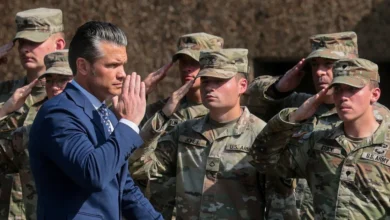
The disclosures directly contradict optimistic assessments previously offered by high-ranking defense officials. Rejecting assertions from figures such as former War Department Chief Pete Hegseth—who infamously dismissed Iranian missile strikes as "little more than pinpricks" following a devastating raid in early March that claimed the lives of six American service members at a tactical command center in Shuaiba, Kuwait—deployed personnel maintain that modern Iranian weaponry routinely pierces American defensive shields.
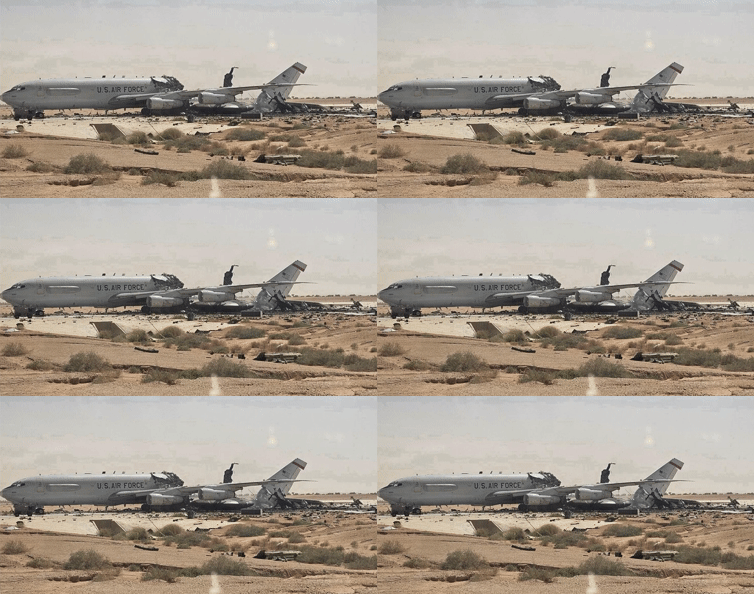
"We are not in a position to defend these bases. We are just watching them get destroyed," the anonymous source stated. According to CBS News, the leaked cache includes striking imagery of a heavily damaged E-3 Sentry airborne early warning and control aircraft, valued at approximately $300 million, which was completely incapacitated after taking a direct hit at Prince Sultan Air Base in Saudi Arabia. Concurrently, satellite and ground-level documentation reveals widespread structural devastation, collapsed administration buildings, and charred military transport vehicles across Camp Buehring and Camp Arifjan in Kuwait.
Escalating Financial Toll and Comprehensive Casualties
The gravity of the leaked materials aligns closely with an exhaustive report published earlier in the week by the Department of Defense Inspector General. The federal oversight document cataloged the staggering material losses suffered by United States forces distributed across eight distinct nations within the Persian Gulf region, including Kuwait, Bahrain, Qatar, the United Arab Emirates, Saudi Arabia, Iraq, Oman, and Jordan.
According to the Inspector General’s findings, the ongoing conflict with Iran has resulted in the destruction or crippling of nearly 60 aircraft and the catastrophic loss or write-off of approximately $3.7 billion in advanced military hardware, defense systems, and logistical infrastructure. These figures underscore a massive drain on American defense reserves and highlight the persistent vulnerabilities plaguing forward-deployed expeditionary units.
The widening scope of destruction has prompted stark admissions from various military figures. Earlier in the month, Acting United States Navy Secretary Hung Cao remarked in an interview with the Epoch Times that Iran had essentially "trashed Bahrain," alluding to successive, highly coordinated kinetic operations targeting critical American naval and air facilities hosted by the island kingdom.
Official Reactions and Regional Posture
The release of these unauthorized images and the subsequent public debate have elicited sharp responses from both Washington and Tehran. Iranian Foreign Minister Abbas Araghchi took to social media platform X to vehemently defend and validate Tehran’s military posture, publicly asserting that Iranian forces have indeed "struck a devastating blow to the Headquarters of the U.S. 5th Fleet in Bahrain" alongside other critical logistical hubs supporting Washington’s anti-Iran campaign.
Reinforcing this defiant stance, Mohammad Bagher Ghalibaf, Speaker of the Iranian Parliament and head of the nation’s high-level negotiation delegation, issued a stern warning earlier in September. Ghalibaf declared that Tehran stands fully prepared to execute retaliatory measures that are "faster, stronger, and more painful" in response to any future military adventures or provocations initiated by the United States or its regional partners.
Broader Geopolitical Implications and Regional Flashpoints

The friction between Washington and Tehran extends far beyond conventional military exchanges, increasingly impacting international diplomatic channels and maritime security architectures. In related developments, Tehran recently voiced sharp condemnation against the United States, accusing Washington of violating international law by exerting intense diplomatic pressure to prevent senior Iranian nuclear officials from attending scheduled proceedings hosted by the International Atomic Energy Agency (IAEA) in Vienna.
Simultaneously, the strategic geography of the broader Middle East has undergone a profound transformation. As conflict dynamics have effectively restricted transit through the critical Strait of Hormuz—effectively rendering it paralyzed—surrounding secondary waterways and strategic landmasses have emerged as pivotal geopolitical chokepoints. Notably, Perim Island, a small landmass situated strategically within the Bab al-Mandab strait off the coast of Yemen, has ascended to prominence as a high-stakes maritime outpost, shifting the calculus of regional naval dominance and supply chain security.
Furthermore, the vulnerability of American assets has been highlighted by asymmetric warfare tactics, including the alleged seizure of advanced naval technology. The Islamic Revolutionary Guard Corps (IRGC) previously released verifiable evidentiary material claiming the successful capture of one of the United States Navy’s most sophisticated and modern uncrewed underwater vehicles (UUVs). This technological loss has compounded anxieties among defense analysts regarding the security of sensitive American robotics and artificial intelligence deployed in contested operational theaters.
Fact-Based Analysis of the Current Strategic Stalemate
The convergence of leaked whistleblower reports, multibillion-dollar matériel losses, and increasingly aggressive rhetoric from Iranian state leadership points to a dangerous strategic stalemate in the Persian Gulf. Military analysts suggest that the persistent failure of integrated air defense systems to achieve total interception rates against saturated missile and drone salvos poses an existential threat to long-term American force posture in the Middle East.
While the Department of Defense continues to enforce rigid information controls to manage operational security and public morale, the emergence of verified imagery from within the ranks demonstrates the limits of institutional censorship in the digital age. As economic costs mount and the technological gap narrows through asymmetric adaptations, the United States faces mounting pressure to reassess its deterrence strategy, balancing the necessity of forward presence against the escalating human and financial cost of regional entrenchment.