Severe Flooding Paralyzes Thailand: 23 Dead, Bangkok Airport in Chaos as Government Unleashes Emergency Relief Packages

The Kingdom of Thailand is currently grappling with one of the most severe weather catastrophes in recent memory, as prolonged and torrential monsoon rains have triggered catastrophic floods across 42 provinces. The disaster has claimed at least 23 lives nationally, displaced millions, and inflicted profound economic scars on key urban centers, most notably the capital city of Bangkok and its premier international aviation hub, Suvarnabhumi Airport. Despite the floodwaters beginning a sluggish retreat in several metropolitan districts, the multi-sectoral fallout continues to disrupt daily life, aviation, and commerce, prompting the Thai government to authorize massive financial rescue packages and fast-track multi-billion-dollar infrastructure overhauls.
A Relentless Deluge: Chronology and Scope of the Disaster
The roots of the current crisis trace back to mid-September, when a series of intense tropical depressions stalled over Southeast Asia, dumping unprecedented volumes of water across Thailand. Between September 16 and September 29, the relentless downpours inundated 42 provinces, creating widespread devastation that caught local and national emergency response systems off guard.
Bangkok bore the brunt of the atmospheric onslaught during a critical three-day window in the previous week, recording a staggering 320 millimeters of rainfall. To put this figure into perspective, this single wet spell nearly matched the entire historical average rainfall for the entire month of September observed over previous years. The sheer volume of water overwhelmed the city’s drainage canals, pumping stations, and retention basins, leading to widespread urban inundation.
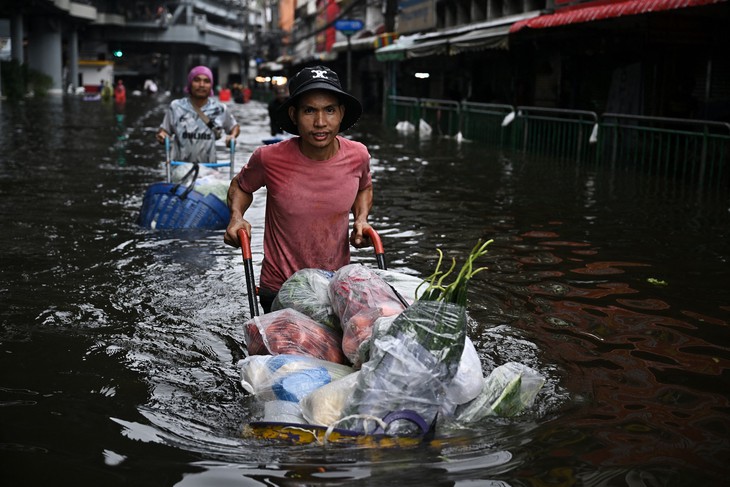
By September 29, the Department of Disaster Prevention and Mitigation reported that the death toll had climbed to 23 nationwide, with four fatalities recorded directly within the municipal boundaries of Bangkok. While rain has largely subsided in most regions and floodwaters are receding, eastern districts of Bangkok remain submerged under significant depths of water. Major transportation arteries have turned into makeshift waterways, forcing commuters to navigate waterlogged streets via tractors, flatbed trucks, and small boats, particularly in hard-hit areas such as Bang Kapi.
Aviation Paralysis: The Ordeal at Suvarnabhumi Airport
While urban traffic is slowly finding a path toward normalcy—with Bangkok Governor Chadchart Sittipunt predicting that major roads will clear within two days, though low-lying areas could take up to a week—the country’s aviation gateway remains heavily impaired. Suvarnabhumi Airport, the crown jewel of Thailand’s international transport infrastructure, has faced severe operational gridlock.
The root of the airport crisis extends beyond flooded runways to a crippling human resource shortage. Thai Airways reported that approximately half of its ground staff and operational personnel were physically unable to commute to work due to flooded residential neighborhoods and disrupted public transit lines. This massive absenteeism severely hobbled ground-handling capabilities, creating a chaotic bottleneck.
During the peak of the crisis, nearly all flights operated by the national carrier were heavily delayed, with on-time departures plummeting to under 3 percent. To prevent total system collapse, aviation authorities enforced aggressive flight reductions. The airline cut approximately 30 flights on September 29 alone—representing nearly 30 percent of its scheduled departures from Bangkok—and announced that reduced scheduling would remain in place for at least three consecutive days.
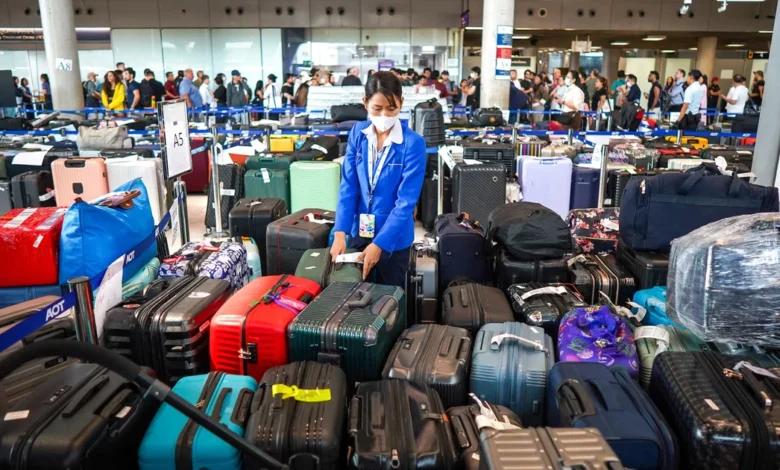
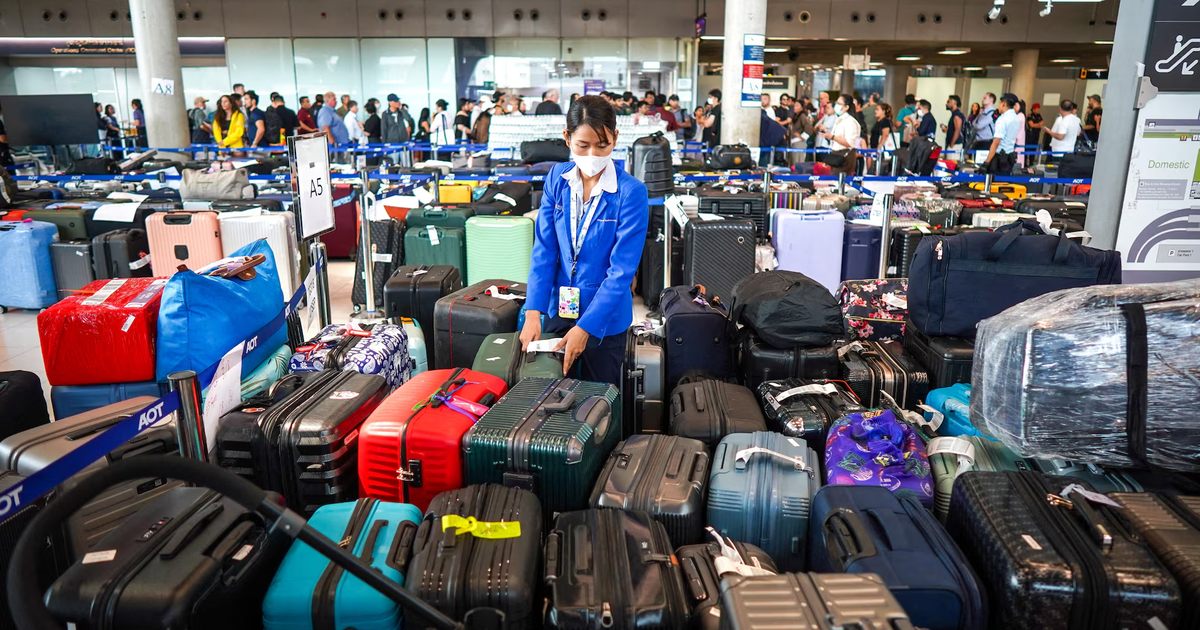
Compounding the passenger misery is a massive logistical failure involving baggage handling. Approximately 5,600 pieces of luggage remain stranded at Suvarnabhumi Airport, scattered across terminals and sorting bays as missing ground crews struggle to reunite bags with their displaced owners. In response, the Civil Aviation Authority of Thailand deployed emergency personnel and redirected administrative staff to the airport to assist with luggage processing and passenger support services.
Government Response: Emergency Funds and Long-Term Engineering
Confronted with mounting public pressure and spiraling economic damages, the Thai Cabinet moved swiftly to approve a substantial financial rescue package. On September 29, the administration sanctioned an emergency relief fund totaling 4 billion baht (approximately $119 million USD). Government spokesperson Ekkapob Pianpises confirmed that the Ministry of Interior has been tasked with distributing these funds directly to victims residing in the hardest-hit zones. According to data from the Associated Press, the relentless floods have adversely affected over 2.6 million people nationwide, leaving widespread property damage estimated at roughly $367 million USD across 24 heavily impacted provinces.
Beyond immediate cash transfers for food, shelter, and medical assistance, the government has taken a definitive step toward addressing the systemic vulnerabilities that make Thailand perpetually susceptible to monsoonal flooding. Prime Minister Anutin Charnvirakul announced the official approval of a comprehensive, long-term drainage and water management master plan valued at 160 billion baht (approximately $4.8 billion USD).
The ambitious mega-project, slated for completion over an eight-year timeframe, aims to drastically upgrade the flood resilience of central Thailand, metropolitan Bangkok, and its densely populated surrounding provinces. The plan incorporates the construction of massive new drainage tunnels, the expansion of river diversion channels, the modernization of automated sluice gates, and the enhancement of real-time hydrological monitoring systems. Experts note that while the multi-billion-dollar price tag is substantial, the recurring cost of inaction—measured in billions of dollars of lost GDP, infrastructure damage, and human displacement—makes the investment an absolute necessity for sustainable national development.
Broader Economic Implications and Regional Impact
The timing of the disaster could hardly be worse for Thailand’s broader economy. The tourism sector, which serves as a vital pillar of national economic stability and a major driver of employment, is facing compounded challenges. Official figures indicate that in the first nine months of the year, international tourist arrivals reached 21.28 million, representing a 3.12% decline compared to the same period in the previous year. International media coverage of flooded airports, impassable streets, and stranded travelers risks dampening forward bookings as the crucial year-end high season approaches.
Furthermore, the extreme weather system has not confined its devastation to Thailand alone, highlighting a broader regional climate crisis across mainland Southeast Asia. Neighboring Myanmar has reported at least 10 fatalities and dozens of missing persons following devastating floods and landslides triggered by the same weather systems in the Tanintharyi region. Meanwhile, in Cambodia, flash floods have swept across at least 10 provinces, disrupting the lives of nearly 45,000 households and forcing close to 4,000 residents into temporary evacuation centers.
As floodwaters slowly recede from the streets of Bangkok and recovery operations grind forward at Suvarnabhumi Airport, Thailand stands at a critical juncture. The disaster has underscored the urgent need for climate-adaptive infrastructure across the Mekong subregion. For Bangkok—a city historically built on wetlands and increasingly threatened by both rising sea levels and intense inland precipitation—the upcoming years will test the government’s resolve to transform ambitious blueprint promises into tangible engineering defenses before the next monsoon season arrives.