Human Content Creator Battles 1.8-Meter Teleoperated Humanoid Robot in San Francisco: A Glimpse into the Future of Interactive Combat Entertainment

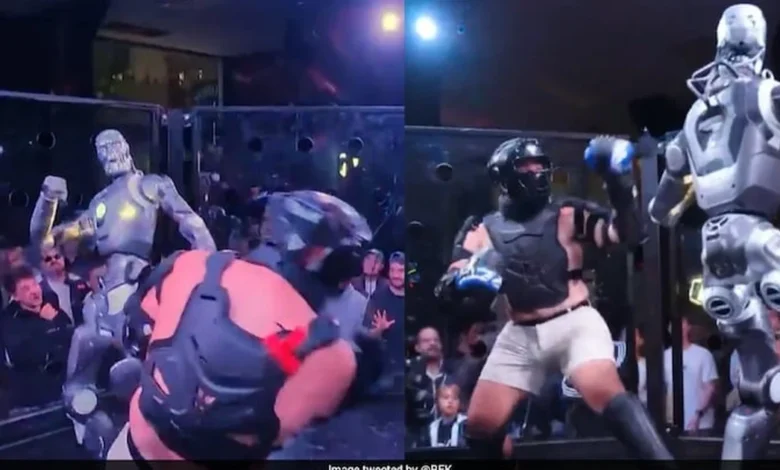
The intersection of human endurance and advanced robotics reached a novel milestone in San Francisco, California, where popular content creator Frankie LaPenna stepped into a specialized combat ring to face a 1.8-meter-tall humanoid robot. Organized by American robotics firm REK, the exhibition match was designed to showcase the capabilities of emerging teleoperation technologies applied to immersive, interactive entertainment.
While initially perceived as a lighthearted stunt for social media audiences, the encounter has since ignited serious discussions among engineers, gaming enthusiasts, and sports analysts regarding the future of human-robot interaction, telepresence capabilities, and the potential emergence of entirely new spectator sports.
The Genesis of the Robotic Duel
The exhibition in San Francisco was more than just a localized publicity stunt; it served as a live-action stress test for an upcoming augmented and virtual reality combat gaming ecosystem currently under development by REK. The company, which specializes in advanced mechanical engineering and remote-control interface systems, aims to bridge the gap between digital gaming and physical reality. By allowing human operators to control heavy, durable humanoid machinery via low-latency teleoperation suits, REK envisions a new genre of competitive entertainment where human reflexes and tactical thinking are translated into robotic power.
According to preliminary technical briefs released by REK, the humanoid robot featured in the bout stands approximately 1.8 meters (nearly 6 feet) tall and possesses a physical build reminiscent of armored combatants seen in science fiction cinema. Built with a high-strength aluminum-titanium alloy frame, the machine is equipped with multi-axis hydraulic actuators designed to absorb high-impact collisions while delivering controlled, kinetic counter-strikes. The robot’s sensory array includes high-definition stereoscopic cameras transmitting real-time visual data to a remote operator, ensuring fluid spatial awareness inside the ring.
Play-by-Play: Inside the San Francisco Combat Arena
The event, which drew a localized crowd and subsequently went viral across major social media platforms including X (formerly Twitter) and Instagram, began with a dramatic ring entrance. The towering humanoid machine navigated the perimeter of the canvas, executing calibrated diagnostic movements—flexing its articulated joints and testing its grip strength—before facing off against its human opponent.
Frankie LaPenna, widely recognized for his viral digital content and comedic online persona, approached the challenge with a blend of humor and competitive grit. As the bell signaled the start of the exhibition, LaPenna initiated the engagement by rushing forward and landing a flurry of direct strikes against the robot’s reinforced torso.
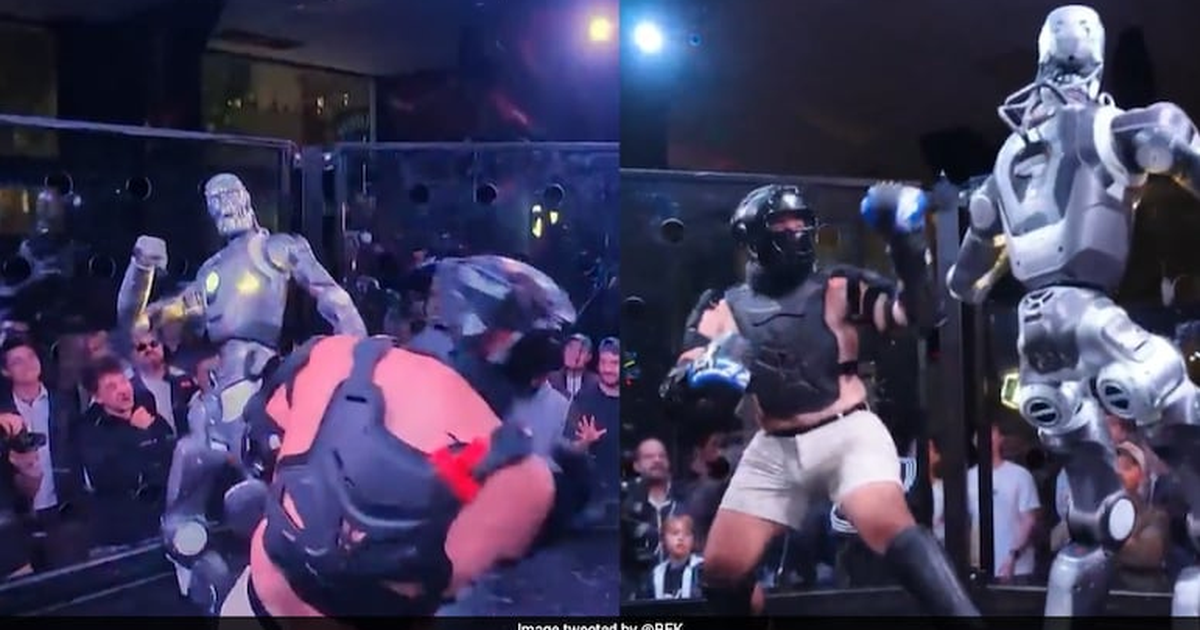
Despite the sudden onslaught, the machine demonstrated sophisticated stability algorithms. Rather than absorbing the blows passively, the robotic combatant retaliated with calculated precision. Leveraging its superior reach and mechanized torque, the machine delivered a series of sweeping punches and low kicks that tested LaPenna’s defensive mobility. The intensity of the exchange culminated when a powerful, calibrated push-kick from the humanoid sent the content creator stumbling across the length of the ring, eliciting gasps and cheers from the surrounding spectators.
Following the conclusion of the brief yet intense bout, REK representatives took to social media to celebrate the successful demonstration. "We just made history with the first-ever ‘Human vs. Kill-Bot’ combat match," the company posted on X. "Frankie LaPenna fought hard, but the future of machinery has officially entered the ring."
Technological Implications and the Mechanics of Teleoperation
The exhibition has drawn significant technical analysis from robotics experts who point out the engineering hurdles successfully navigated during the event. Teleoperation—the remote control of machinery—has traditionally suffered from latency issues, where a delay between the human operator’s input and the machine’s physical output makes dynamic combat virtually impossible.
REK’s proprietary control interface appears to have significantly mitigated these latency barriers. By utilizing edge-computing architecture and dedicated 5G network slices within the San Francisco venue, the remote operator was able to execute complex blocking and striking maneuvers with minimal delay. This seamless integration of human intent and mechanical execution highlights the rapid advancements in human-machine interfaces (HMIs).
Furthermore, the materials science behind the robot’s construction represents a leap forward in durability. Combat robotics, popularized by television shows featuring remote-controlled vehicles armed with saws and flipping mechanisms, has largely focused on destructive machinery rather than bipedal dexterity. Building a 1.8-meter humanoid capable of absorbing blunt-force trauma from a human while maintaining balance on two legs requires sophisticated stabilization software, gyroscopic sensors, and dynamic center-of-gravity adjustments.
Public Reaction and the Future of Combat Sports
The viral nature of the video has sparked widespread debate across digital forums. While many viewers expressed amusement at the spectacle of a content creator sparring with a machine, industry insiders are looking past the entertainment value to consider the broader commercial implications.
Speculation is already mounting regarding the potential integration of teleoperated robots into mainstream athletic and combat sports leagues over the next decade. Some analysts suggest that within five years, hybrid exhibitions featuring human-directed robotic fighters could find a place in high-exposure combat sports organizations, driven by advances in artificial intelligence and spectator demand for novel entertainment formats.
"I’m curious to see how a professional martial artist or combat sports athlete would fare against this robot," noted one prominent tech commentator online. "A trained professional would likely optimize the tactical approach far better, utilizing joint locks and leverage points that a casual content creator might miss."
Another user projected a more ambitious timeline: "We are looking at the foundational steps of real-world ‘Real Steel.’ Within a decade, teleoperated robotic leagues will exist as a multi-million-dollar spectator sport, merging the athleticism of human operators with the indestructible power of machines."
Ethical and Safety Considerations
As teleoperated robotics transition from industrial warehouses and military applications into the entertainment sector, ethicists and safety regulators are beginning to examine the boundaries of human-robot combat. While the machine in San Francisco was operated by a human with safety protocols designed to prevent catastrophic injury, the increasing autonomy of such systems raises questions about liability, accidental system overrides, and the psychological impact of viewing simulated violence involving humanoid forms.
REK has emphasized that safety remained the paramount concern during the San Francisco event, noting that the robot’s output torque was artificially capped to prevent severe injury to the human participant. Nevertheless, as these systems become more powerful and more widely accessible, establishing standardized safety frameworks for human-robot physical interaction will become increasingly critical.
Conclusion: A New Era of Interactive Media
The historic face-off between Frankie LaPenna and REK’s 1.8-meter humanoid robot marks a fascinating convergence of digital content creation, cutting-edge robotics, and immersive entertainment. While it remains to be seen whether robotic combat leagues will eclipse traditional sports, the event has successfully captured the public imagination, offering a tangible glimpse into a future where the boundaries between human physical capability and machine mechanics continue to blur. As technology developers refine teleoperation latency, durability, and tactile feedback, the spectacle in San Francisco may well be remembered as the modest beginning of a new technological frontier.