The Information and Communications Technology (ICT) sector in Vietnam is undergoing a profound structural transformation, pivoting from a traditional service-oriented model toward a high-value manufacturing and technology-led powerhouse. Driven by the "Make in Vietnam" initiative, the nation has successfully transitioned into a regional hub for digital infrastructure, highlighted by its recent milestone as one of only five countries globally to independently produce 5G network equipment. As of 2024, the sector is projecting international revenues to reach $10 billion, signaling a significant shift in Vietnam’s economic stature on the world stage.
A Legacy of Innovation: From Post and Telecommunications to Digital Sovereignty
The current success of the Vietnamese ICT sector is deeply rooted in a strategic vision that spans nearly four decades. In the late 1980s, the national telecommunications industry faced severe capital shortages and outdated infrastructure. Under the leadership of figures like former Director General Dang Van Tuan, the industry made a bold, unconventional decision: to bypass intermediate technologies and leapfrog directly into digital infrastructure.

This decision, characterized by a willingness to self-finance and explore innovative capital-raising mechanisms, laid the foundation for the sector’s autonomy. By prioritizing the development of indigenous human capital and mastering complex technologies, the industry transformed from a state-subsidized entity into a self-sustaining engine of national economic growth. Today, this tradition of "daring to think and daring to do" continues to guide the Ministry of Information and Communications (MIC) as it navigates the complexities of the fourth industrial revolution.
The Technological Leap: 5G and the "Make in Vietnam" Strategy
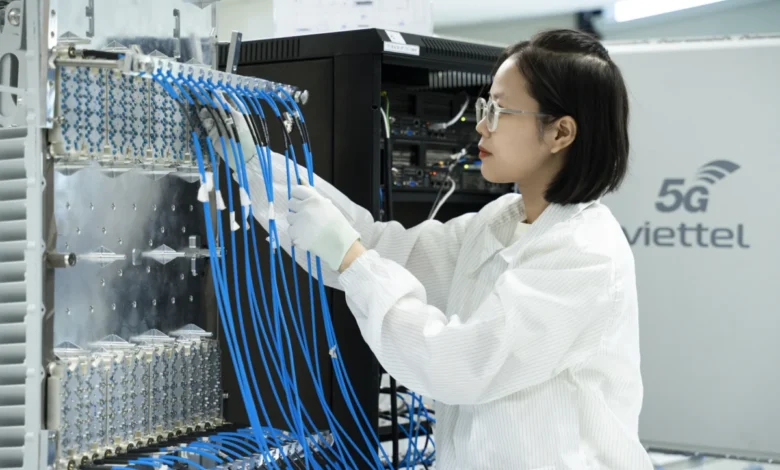
A pivotal component of Vietnam’s recent success is the deployment of "Made in Vietnam" 5G base stations. Developed by Viettel, these stations are built on the Open RAN (Radio Access Network) standard, a modular architecture that allows for greater interoperability and cost-efficiency. This achievement serves as a tangible demonstration of Vietnam’s capacity to organize and execute large-scale, high-tech industrial projects.
The current 5G deployment strategy is aggressive. Following successful trials and implementation in major hubs like Hanoi, Ha Nam, and Ninh Thuan, the government is planning to expand the network to Ho Chi Minh City and Da Nang by the end of 2024. Furthermore, the commercial success of this equipment is not limited to domestic use; Viettel has already secured international contracts for the export of its 5G technology, notably to the Indian market. By joining the exclusive club of 5G hardware manufacturers—alongside Taiwan, Finland, South Korea, and China—Vietnam has effectively secured its digital sovereignty.

Statistical Overview and Economic Impact
The scale of Vietnam’s ICT expansion is reflected in recent government data. As of July 2024, the number of active digital technology enterprises in the country stood at approximately 51,038, an increase of nearly 6,000 businesses compared to August 2023. Of these, 1,500 companies are now actively generating revenue from international markets.
The financial trajectory for the sector is equally compelling:
- 2023 International Revenue: $7.5 billion.
- 2024 Projected International Revenue: $10 billion.
- Growth Rate: Approximately 30% year-on-year.
Minister of Information and Communications Nguyen Manh Hung has emphasized that the $10 billion target represents a critical inflection point. In his assessment, the revenue generated by Vietnamese digital firms abroad now significantly outweighs the capital expenditure required to import foreign telecommunications equipment. This shift from being a net consumer of foreign technology to a net exporter is essential for Vietnam’s long-term goal of industrializing its economy. The Ministry’s stated objective is for the international revenue of ICT companies to eventually surpass the nation’s total agricultural export value by 2035, a metric that will formally redefine Vietnam as an industrialized nation.

Policy Framework and Strategic Governance
The government’s role in this transformation has been active and multi-faceted. The Ministry of Information and Communications (MIC) has implemented a comprehensive suite of policies designed to support the growth of the digital economy, including:
- Digital Infrastructure Modernization: Prioritizing the rollout of 5G and fiber-optic networks as the backbone of the digital economy.
- Legal Frameworks: Drafting the Law on Digital Industry and the Semiconductor Industry Development Strategy, which aims to provide a roadmap for the country’s growth through 2030, with a vision toward 2050.
- The "Make in Vietnam" Forum: An annual event designed to foster collaboration between domestic tech firms, encouraging the development of solutions for both local problems and global challenges.
- International Expansion Support: Providing regulatory and diplomatic support for Vietnamese tech firms looking to enter foreign markets, such as the recent initiatives focused on the Japanese and Southeast Asian markets.
These efforts are not merely administrative; they represent a fundamental change in how the government interacts with the private sector. By acting as a guide and facilitator rather than just a regulator, the MIC has created an ecosystem where startups and established corporations can innovate within a stable policy environment.
Challenges and Future Outlook
Despite these successes, the sector faces significant challenges. The global competition in the digital sector is intense, and maintaining a 30% growth rate requires a continuous influx of highly skilled labor. The shift toward specialized fields like semiconductor design and artificial intelligence (AI) requires a massive educational overhaul. Furthermore, as Vietnam deepens its integration into the global digital supply chain, it must navigate the geopolitical sensitivities surrounding technology transfers and data security.

The Ministry’s recent focus on "digital governance" is a direct response to these challenges. By integrating digital tools into the management of government agencies and promoting AI adoption, the state is creating a testing ground for technologies that can later be scaled globally. The establishment of the Department of IT and Communications Industry specifically to oversee this sector reflects the high priority placed on maintaining this momentum.
Implications for Global Markets
Vietnam’s emergence as a significant player in the global ICT market has broader implications for international trade and supply chain diversification. As global tech companies look to mitigate risks associated with over-concentration in traditional manufacturing hubs, Vietnam presents a compelling alternative. Its combination of a young, tech-savvy workforce, a supportive government, and a proven track record in telecommunications manufacturing makes it an attractive destination for foreign direct investment (FDI).
The success of companies like Viettel and FPT (which has established a strong presence in Japan) proves that Vietnamese firms are capable of competing at the highest levels of the global technology stack. This is no longer a story of low-cost assembly; it is a story of research, development, and high-value innovation.

Conclusion
The transformation of the Vietnamese ICT sector from a post-war telecommunications provider to a globally competitive technology hub is a testament to the effectiveness of long-term strategic planning. By adhering to the principles of "Make in Vietnam"—which emphasizes indigenous innovation and global outreach—the nation has successfully created a sustainable model for economic development. As Vietnam continues to refine its legal frameworks and expand its technological footprint, it is well-positioned to play a leading role in the global digital economy, effectively bridging the gap between its developmental past and its digital future. The goal of surpassing traditional agricultural exports with high-tech digital services remains the North Star for the country’s economic policy, a target that appears increasingly attainable given the current rate of sector growth and industrial maturation.