Meta VR Glasses Set a New Standard for Lightweight Design and Immersive Technology

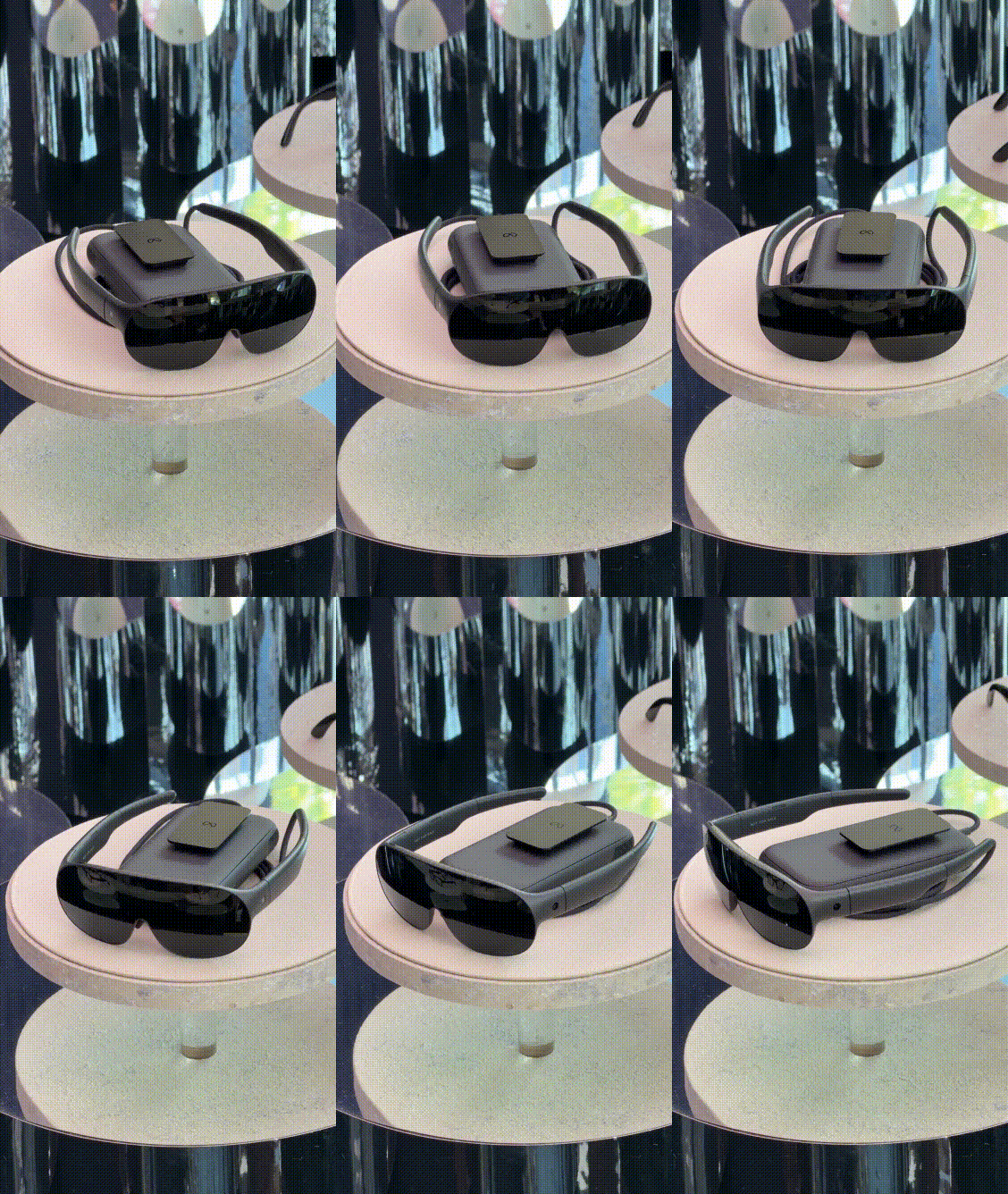
The landscape of virtual reality hardware is undergoing a subtle yet profound transformation, driven by shifting consumer demands for ergonomic comfort, portability, and sophisticated visual fidelity. As major technology conglomerates continue to vie for dominance in the spatial computing and metaverse ecosystems, device architecture has become the primary battleground. Recent commentary and industry discussions, highlighted by tech communities and prominent figures such as user cuhiep on Tinh tế, have centered on the evolving aesthetics and physical form factor of next-generation Meta VR glasses. The overarching sentiment within tech circles points toward a decisive departure from the bulky, face-heavy headsets of the past, favoring streamlined, lightweight profiles that promise prolonged wearability without sacrificing processing power.
This shift in hardware philosophy is not merely a superficial design choice; it represents a critical engineering milestone in solving the historical friction points of virtual and augmented reality adoption. For years, consumer reluctance has been anchored to physical discomfort—specifically, facial pressure, neck strain, and thermal discomfort during extended sessions. By reimagining the structural anatomy of VR glasses, Meta and its industry peers are attempting to redefine the category from an isolated gaming peripheral into an everyday productivity and media consumption tool.
The Evolution of VR Form Factors: From Heavy Enclosures to Sleek Glasses
To understand the significance of current design trajectories, one must examine the chronological progression of head-mounted displays (HMDs). The early commercial resurgence of VR in the mid-2010s relied heavily on heavy front-loaded enclosures containing large liquid-crystal displays, complex lenses, and necessary cooling systems. These units frequently tipped the scales above 500 grams, placing significant torque on the user’s cervical spine.
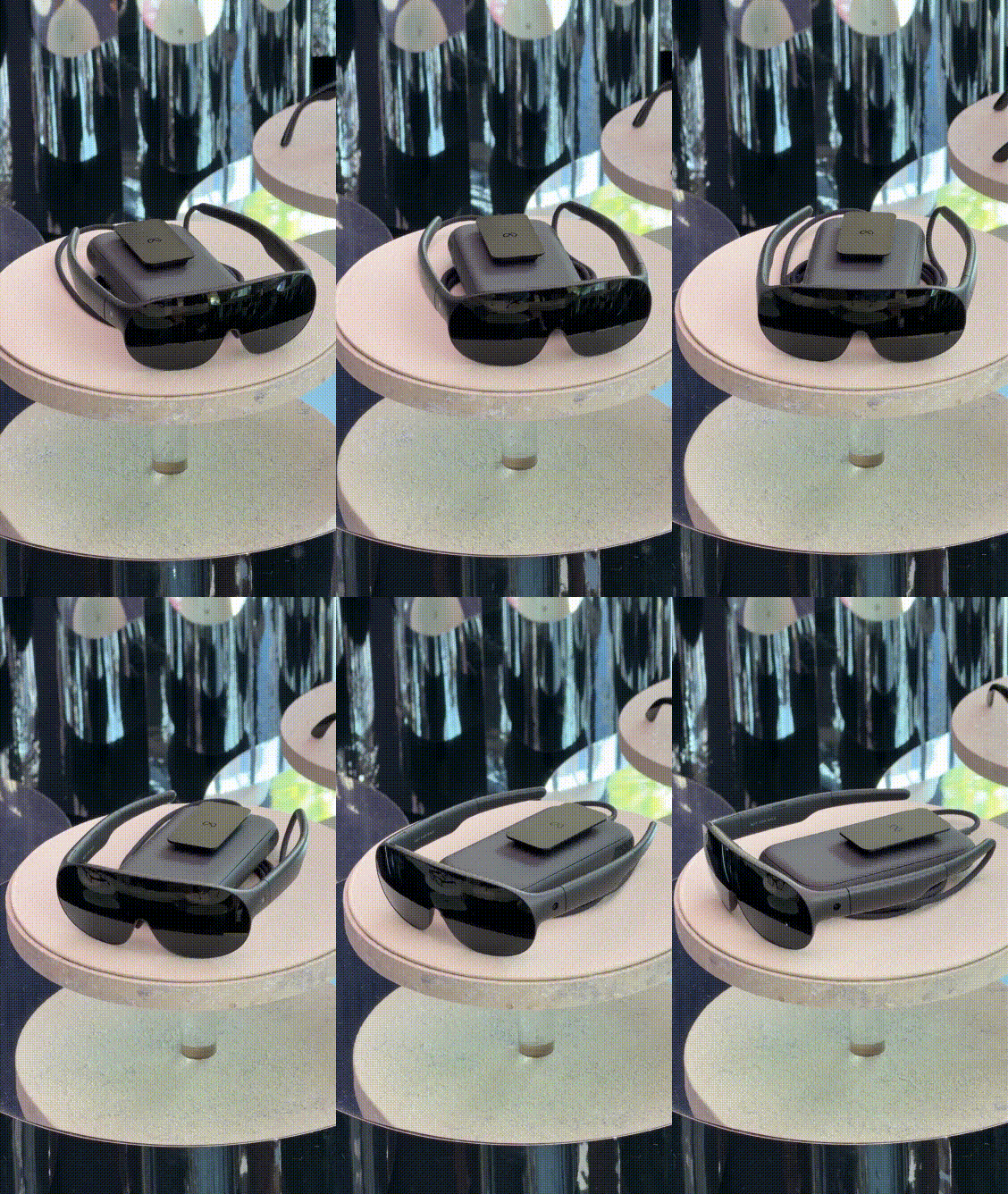
As component miniaturization accelerated, engineers successfully integrated pancake lenses and micro-OLED displays, drastically reducing the optical stack’s depth. However, the distribution of weight remained a persistent challenge. The latest iterations of Meta VR glasses reflect a paradigm shift toward an integrated, balanced architecture. By distributing weight more evenly across the cranium or shifting toward a glasses-like profile reminiscent of high-end traditional eyewear, manufacturers are directly addressing the ergonomics of spatial computing.

Community Reception and Industry Commentary
The discourse surrounding these advancements has resonated deeply within global technology forums. Discussions initiated on platforms like Tinh tế capture the immediate consumer reaction to conceptual and early-release hardware designs. Users such as Shinze remarked on the updated design language, praising its compact, sleek, and nimble aesthetics. Another contributor, chuoitaykohot, simply noted the breaking open of new possibilities, while Anonymox emphasized that this design evolution truly redefines the category. Conversely, pragmatic voices like Tech Man offered a reminder of consumer selectivity, noting that market adoption will ultimately depend on individual utility and necessity.
These varied reactions underscore a broader truth in consumer electronics: form factor is often the ultimate gatekeeper of adoption. When a headset transitions from resembling a cumbersome scuba mask to something approaching traditional spectacles, the psychological and physical barriers to entry drop precipitously. Users are far more likely to engage in remote work, virtual collaboration, and extended media consumption if the hardware feels invisible on the face.

Under the Hood: Technological Enablers of Lightweight VR
Achieving a lightweight, streamlined profile while enhancing visual fidelity requires a delicate balancing act of several advanced technologies.
-
Optical Innovations: The adoption of folded optics, commonly known as pancake lenses, has allowed engineers to fold light multiple times within a very tight space. This technological leap reduces the physical distance between the display panel and the user’s eyes, effectively shrinking the optical chamber and removing a substantial portion of the device’s front-heavy volume.

-
Display Technologies: The transition from standard LCD panels to high-density Micro-OLED screens has provided exceptional pixel density in a fraction of the physical footprint. These displays deliver deeper blacks, higher contrast ratios, and vibrant color accuracy, which are essential for maintaining immersion in a compact chassis.
-
Processing and Thermal Management: Modern spatial computing glasses require high-efficiency System-on-Chips (SoCs) designed to deliver robust graphical rendering while minimizing heat output. Advanced passive cooling techniques and efficient power management allow these devices to operate without loud, bulky internal cooling fans, further reducing weight and mechanical complexity.
Market Implications and the Competitive Landscape

The movement toward lighter, more comfortable VR glasses carries profound implications for the broader consumer electronics market. Meta, holding a formidable position in the standalone headset market through its Quest product lineage, faces mounting competition from traditional eyewear manufacturers, consumer tech giants like Apple with its Vision Pro ecosystem, and specialized AR/VR startups.
While premium spatial computing headsets focus on offering uncompromised, high-end specifications at a higher price point, lightweight VR glasses target a broader demographic. By prioritizing comfort, aesthetic appeal, and accessibility, these devices aim to capture the mass market—bridging the gap between casual entertainment consumers and enterprise professionals.
Furthermore, the integration of mixed reality (MR) capabilities—allowing users to seamlessly blend digital elements with their physical environment through high-resolution passthrough cameras—demands a comfortable chassis. When a device is worn for tasks such as multi-monitor virtual office setups or real-time collaborative design, physical comfort transitions from a luxury feature to an absolute operational necessity.

Looking Ahead: The Future of Spatial Eyewear
As the industry moves closer to realizing the ideal of all-day wearable spatial computers, several engineering hurdles remain. Balancing battery life with a lightweight frame is an ongoing optimization challenge. Additionally, achieving wide fields of view and high refresh rates within a slim profile requires continuous advancement in silicon manufacturing and optical engineering.
Nevertheless, the consumer enthusiasm captured in recent industry commentary signals that the market is ready for this evolution. The conversation has shifted away from mere raw specifications toward user experience, ergonomics, and design elegance. By redefining what VR hardware looks and feels like, Meta and the broader tech industry are laying the groundwork for spatial computing to transition from an enthusiast niche into a ubiquitous part of daily digital life.