Ministry of Information and Communications Advances Digital Transformation and Indigenous Technology Development in Vietnam


The Ministry of Information and Communications (MIC) of Vietnam has recently showcased groundbreaking advancements in administrative artificial intelligence and indigenous telecommunications infrastructure, underscoring the nation’s strategic push toward technological self-reliance. During a gathering with retired ministry officials from the northern region, MIC leadership demonstrated the integration of a proprietary administrative AI assistant and domestically manufactured 5G base transceiver stations. These milestones reflect a broader, ongoing institutional transformation that marries modern technological innovation with traditional Vietnamese values and historical continuity.

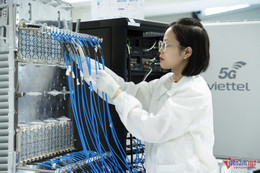
Under the guidance of Minister Nguyen Manh Hung, the ministry is systematically deploying an experimental AI assistant designed to streamline workflows for public servants across 34 subordinate agencies and departments. Built on a hybrid framework combining human-engineered knowledge bases with large language models, this administrative tool significantly reduces the administrative burden on personnel. Following its successful pilot within the ministry, long-term plans involve expanding the tool’s utility to individual users nationwide. Concurrently, the deployment of 5G infrastructure developed by Viettel under the Open RAN standard highlights Vietnam’s expanding capacity in advanced hardware manufacturing.
Historical Foundations and the Spirit of Self-Reliance
The contemporary drive toward technological independence is deeply rooted in the historical ethos of Vietnam’s postal and telecommunications sector. Nearly four decades ago, during a period of severe economic hardship and isolation, the sector pioneered bold administrative reforms under the leadership of former Postmaster General Dang Van Than. Facing systemic constraints, the leadership bypassed traditional intermediaries to invest directly in core technologies. Crucially, the sector sought financial self-sufficiency through self-generated loans and foreign investment mechanisms rather than relying on state budget allocations.
This pragmatic defiance transformed a technologically lagging postal sector into a vanguard of Vietnam’s broader national renovation (Doi Moi) process. Former Minister of Posts and Telecommunications Do Trung Ta has frequently recalled the strategic directives issued during visits by senior party leadership in the early 1990s, when reliance on foreign telecommunications hardware was recognized as a major vulnerability. Today, current ministry leadership actively channels this legacy, encapsulated by the traditional core values of loyalty, daring, integrity, creativity, and compassion. By fostering a corporate culture that encourages calculated risk-taking, the modern information and communications sector continues to pioneer complex emerging technologies.
Expanding Horizons: The Make in Vietnam Strategy
A central pillar of the ministry’s strategy over the past half-decade has been the "Make in Vietnam" initiative, launched in 2019 to encourage domestic technology enterprises to design and manufacture solutions for both local and international markets. This policy shift has yielded tangible results across the digital economy. Statistical data from July 2024 indicates that the number of operational digital technology enterprises in Vietnam reached approximately 51,038, representing an increase of nearly 6,000 companies compared to August 2023. Of these, roughly 1,500 firms have established revenue streams from overseas markets.

International revenue generated by Vietnamese digital enterprises reached $7.5 billion in 2023, with projections for the current year nearing the $10 billion mark, reflecting an annual growth rate of approximately 30%. Minister Nguyen Manh Hung has repeatedly contrasted these figures with historical spending on foreign telecommunications imports, emphasizing a strategic transition from technology consumption to technology exportation. The stated objective of the ministry is for international revenue from the sector to eventually surpass the country’s agricultural export revenues by 2035, a milestone considered critical for establishing Vietnam’s status as a developed industrial economy.
Infrastructure Milestones and Global Integration
Vietnam’s ascent in telecommunications manufacturing has positioned it among a select group of global producers. Following the rigorous testing and certification of quality standards, domestically produced 5G base stations have been deployed in major hubs including Hanoi, Ha Nam, and Ninh Thuan, with expansions planned for Ho Chi Minh City and Da Nang. Furthermore, commercial agreements have been secured to export these Vietnamese-engineered telecommunications products to international markets such as Myanmar. This achievement places Vietnam among only five countries globally capable of manufacturing 5G network equipment, alongside Taiwan, Finland, South Korea, and China.

To support this industrial scaling, the ministry established the Department of Information and Communications Technology Industry. Legislative and strategic frameworks are also being actively updated, including the drafting of the Law on the Digital Technology Industry and the Semiconductor Industry Development Strategy through 2030, with a vision toward 2050. These regulatory measures are designed to provide long-term stability and direction, ensuring that foundational technologies receive sustained research investments.
Implications for National Economic Development
The convergence of AI-driven administrative tools, indigenous hardware manufacturing, and an expanding global footprint for digital enterprises marks a fundamental evolution in Vietnam’s economic structure. By shifting from an importer of turnkey technologies to a creator and exporter of high-value digital solutions, the information and communications sector is fulfilling its historical mandate. The active mentorship provided by veteran officials to the current generation of leadership ensures that the institutional memory of past hardships informs contemporary ambitions, securing the sector’s role as a primary engine of national modernization.