President To Lam Awards Credentials to Newly Appointed Vietnamese Ambassadors to Timor-Leste and Angola

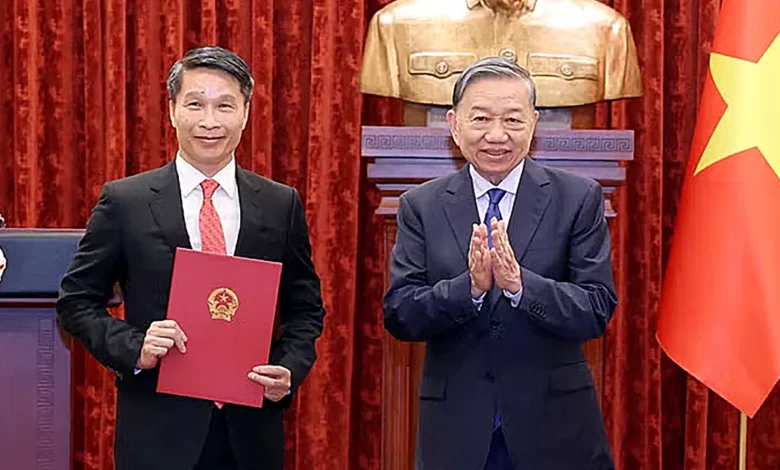
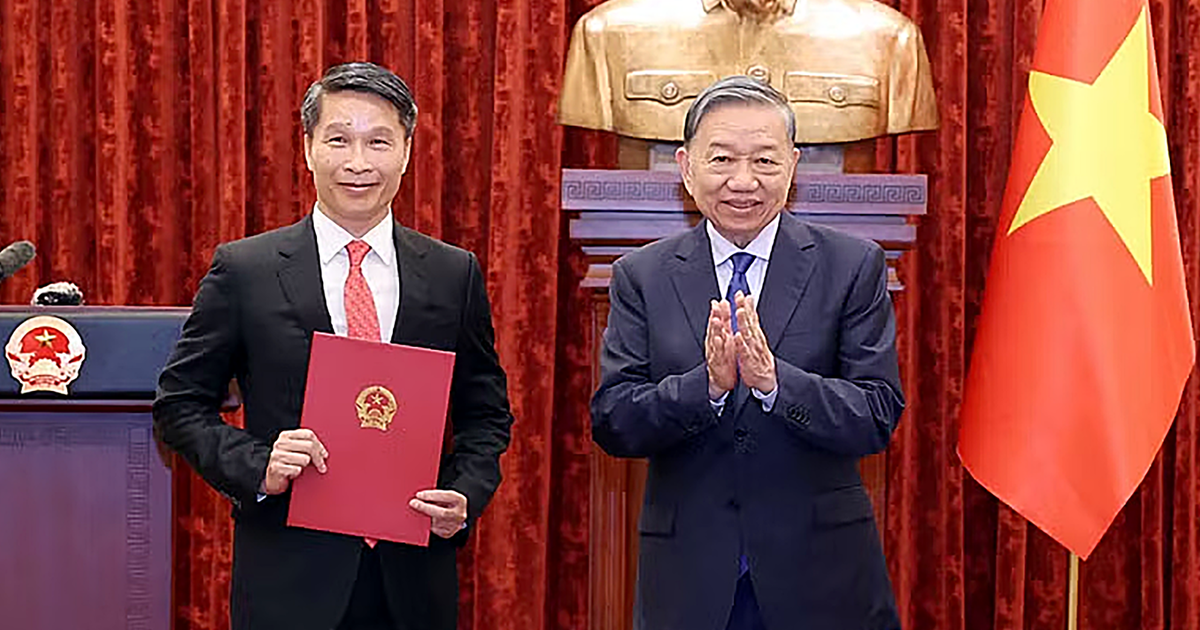
HANOI — In a formal ceremony held in the Vietnamese capital on the afternoon of September 18, State President To Lam officially presented diplomatic credentials to two newly appointed Vietnamese ambassadors assigned to key international missions. The high-level event underscored Hanoi’s steadfast commitment to expanding its global footprint, deepening bilateral partnerships across emerging markets, and reinforcing its strategic foreign policy objectives in an increasingly complex geopolitical landscape.
The credentials presentation ceremony, hosted at the Presidential Palace in Hanoi, was attended by several high-ranking Vietnamese officials. Among the notable dignitaries present were Le Hoai Trung, Politburo member and Minister of Foreign Affairs, and Le Khanh Hai, member of the Party Central Committee and Chairman of the President’s Office. The proceedings commenced with Deputy Chairman of the Presidential Office Nguyen Hoang Anh formally reading out the presidential decrees authorizing the appointments.
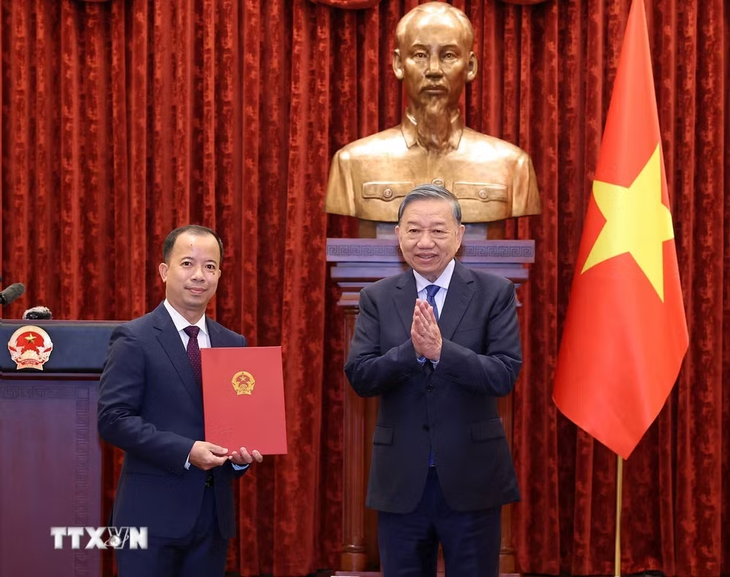
Under the newly issued directives, Pham Binh Dam, currently serving as the Head of the National Secretariat for APEC 2027 under the Ministry of Foreign Affairs, has been appointed as Vietnam’s Ambassador Extraordinary and Plenipotentiary to the Democratic Republic of Timor-Leste. Simultaneously, Nguyen Van Hieu, Deputy Director-General of the Department of Middle East and African Affairs at the Ministry of Foreign Affairs, has been designated as Ambassador Extraordinary and Plenipotentiary to the Republic of Angola, with concurrent accreditation covering six other African nations: the Republic of Congo, the Republic of Zambia, the Democratic Republic of Congo, the Republic of Equatorial Guinea, the Democratic Republic of Sao Tome and Principe, and the Cabo Verde.
Strategic Appointments for Expanding Global Horizons
The selection of both ambassadors highlights Vietnam’s strategic diplomatic calculus aimed at fostering deeper economic and political integration in regions that hold immense untapped potential. Timor-Leste, a burgeoning maritime neighbor in Southeast Asia, represents a vital frontier for Vietnamese commerce and regional solidarity. By dispatching a resident ambassador to Dili, Vietnam aims to accelerate bilateral cooperation and actively support Timor-Leste in its ongoing preparations for full membership in the Association of Southeast Asian Nations (ASEAN).
Conversely, the appointment of Nguyen Van Hieu to Angola—alongside six concurrent jurisdictions across Central and West Africa—demonstrates Vietnam’s ambition to revitalize and diversify its traditional diplomatic ties with the African continent. This sprawling multi-country mandate requires a sophisticated and focused regional strategy designed to open up new market access, leverage bilateral synergies, and secure stable economic partnerships in sectors ranging from energy and agriculture to trade and infrastructure.
President To Lam’s Directive on Modern Diplomacy
Delivering his charge to the newly appointed diplomats, President To Lam offered profound congratulations while emphasizing both the honor and the immense weight of their responsibilities. He noted that these appointments reflect the Party and State’s enduring recognition of the diplomats’ dedicated service, while simultaneously serving as a reminder of the formidable tasks ahead.
"The ambassadors represent our nation and serve as the visible image of Vietnam on the international stage," President To Lam stated during his keynote address. "Your roles are inextricably linked with the prestige, sovereignty, and long-term interests of our nation-state. You are the living embodiment of the Party’s foreign policy."
Highlighting the rapid, complex, and structural shifts currently reshaping global politics, the President outlined the core challenges confronting Vietnam’s diplomatic corps. He urged both ambassadors to master the art of balancing firm adherence to foundational principles with tactical flexibility in policy execution. Maintaining national independence and strategic self-reliance must go hand in hand with proactive efforts to safeguard national interests, uncover new growth drivers, and contribute responsibly to international peace and security.
Addressing Regional Priorities: Timor-Leste and ASEAN Integration
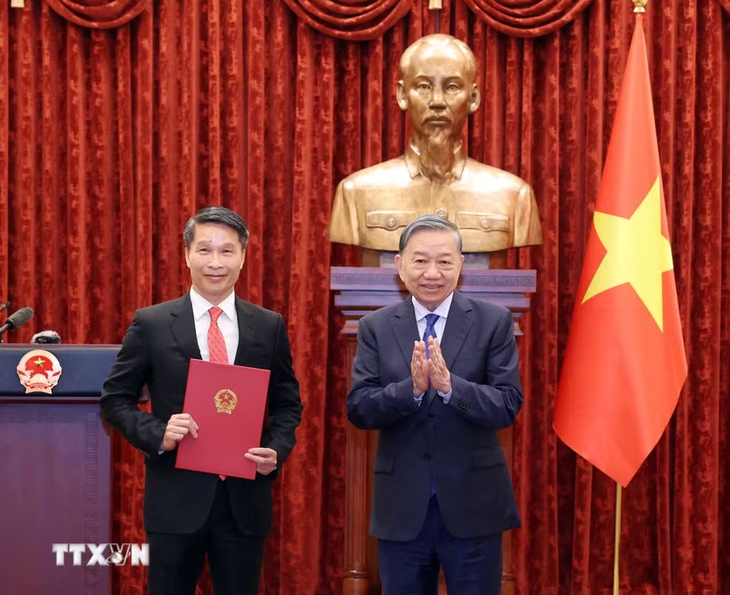
In detailing specific directives for Ambassador Pham Binh Dam in Timor-Leste, President To Lam underscored the unique nature of the bilateral relationship. As Vietnam establishes a resident diplomatic presence in Dili for the first time, the ambassador is tasked with elevating political trust and fostering an environment conducive to Vietnamese trade and investment.
"You must act as a bridge for our business community, unlocking new investment avenues while actively supporting Timor-Leste in its historic journey toward ASEAN integration," the President emphasized. He noted that deeper economic engagement between Hanoi and Dili can serve as a catalyst for broader sub-regional development, enhancing maritime cooperation and people-to-people exchanges.
Unlocking Potential Across African Markets
Turning his focus to the extensive African mandate assigned to Ambassador Nguyen Van Hieu, President To Lam called for the formulation of a highly structured, prioritized work plan. Given the sheer geographical breadth of the multi-country assignment, the ambassador must carefully balance traditional diplomatic channels with targeted economic outreach.
The President stressed the importance of modernizing cooperation frameworks with Angola and its neighboring jurisdictions, identifying shared areas of economic complementarity. By fostering joint ventures in resource extraction, agriculture, and infrastructure, Vietnam aims to expand its commercial footprint and build mutually beneficial economic resilience across the African continent.
Diplomatic Response and Commitments to Action
Speaking on behalf of the newly appointed delegation, Ambassador Pham Binh Dam expressed profound emotion and gratitude to the Party, State, and President To Lam for bestowing this high level of trust upon them. He acknowledged that representing Vietnam abroad during this transformative developmental era—often described as the nation’s new era of national rise—is both a supreme privilege and an urgent duty.
"We pledge to devote our utmost energy, intellect, and resolve to fully and effectively implement the resolutions of the 14th National Party Congress and the directives of the Party," Ambassador Dam affirmed. He underscored that contemporary foreign policy must transcend the traditional parameters of maintaining a peaceful and stable external environment. It must actively generate new developmental spaces, harness external resources, elevate the nation’s international standing, and contribute tangibly to national prosperity.
The ambassador reassured the country’s leadership that the diplomatic missions would operate with unwavering dedication, ensuring that Vietnam’s voice is respected and its national interests are rigorously protected across all multilateral and bilateral forums.
The Broader Implications of Vietnam’s Expanding Diplomatic Network
The ceremony on September 18 reflects a broader, long-term strategic trajectory in Vietnam’s foreign policy, often characterized as "bamboo diplomacy"—flexible in its posture yet deeply rooted in its national principles. As Hanoi continues to expand its diplomatic network, the establishment of new resident missions and the optimization of multi-country accreditations demonstrate a proactive approach to navigating global uncertainty.
In an era defined by trade fragmentation, supply chain restructuring, and shifting geopolitical alignments, having capable, seasoned diplomats on the front lines is critical. By reinforcing its presence in Southeast Asia and Africa, Vietnam is actively diversifying its diplomatic portfolio, ensuring that its economic security and strategic autonomy remain robust in the decades to come.