PV Power Reports Robust 10-Month Performance with Revenue Surpassing Full-Year Targets by 12 Percent Amid Favorable Market Dynamics

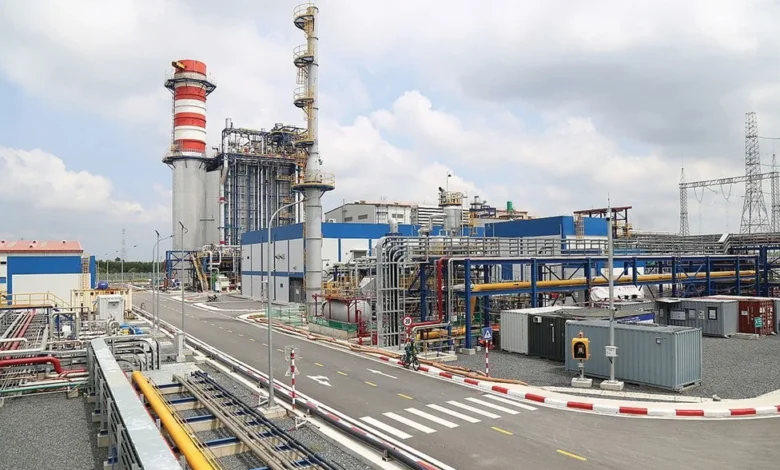
The Petrovietnam Power Corporation (POW), one of Vietnam’s leading independent power producers, has officially released its comprehensive production and business performance report for October 2026, alongside strategic projections for November. Demonstrating remarkable financial resilience and operational efficiency, PV Power has successfully navigated a complex macroeconomic and meteorological landscape, marked by soaring electricity demand and fluctuating fuel costs across the domestic energy grid.
According to the newly published data, the corporation’s cumulative financial performance over the first ten months of 2026 has outpaced initial expectations. Total revenue generated across all constituent units reached an impressive 56.091 trillion VND, representing a stellar achievement that exceeds the enterprise’s full-year revenue target by 12%. This robust financial trajectory underscores PV Power’s critical role in ensuring national energy security while simultaneously delivering sustainable value to its shareholders.
Operational Highlights and Financial Breakdown for October 2026
During October 2026, the broader Vietnamese electricity market experienced heightened demand driven by persistent hot and dry weather conditions, which significantly elevated cooling loads nationwide. Total electricity consumption across the system hit approximately 30.4 billion kWh, registering a 10% increase compared to the corresponding period in the previous year. Concurrently, the total operational capacity of the national grid expanded by 10% to reach roughly 51,482 MW.
Capitalizing on these favorable market conditions, PV Power’s consolidated revenue for the single month of October soared to approximately 5.686 trillion VND. A closer examination of the departmental contributions reveals that the PV Power Nhơn Trạch complex served as the primary revenue engine, pulling in 2.547 trillion VND. This was followed closely by PV Power Cà Mau, which contributed 1.073 trillion VND, and PV Power Hà Tĩnh, adding another 983 trillion VND to the corporate ledger.
When evaluated across the broader ten-month timeline, the revenue distribution further highlights the core assets driving PV Power’s financial success. The PV Power Nhơn Trạch facility spearheaded the portfolio by generating 20.865 trillion VND, accounting for an overwhelming 37% of the corporation’s total revenue. The PV Power Hà Tĩnh and PV Power Cà Mau plants secured the second and third positions, recording cumulative revenues of 13.008 trillion VND and 11.662 trillion VND, respectively.

Market Dynamics and Fuel Cost Economics
The exceptional financial results achieved in October were heavily influenced by shifts in the competitive power market (FMP) pricing structures. Meteorological patterns dominated the operational reality of the month; a scarcity of rainfall combined with intense heat led to peak electricity spot prices that climbed steadily compared to September. The average FMP price reached approximately 1,787 VND/kWh, marking the highest level recorded since the beginning of the year.
This pricing environment created distinct operational advantages and challenges across PV Power’s diverse generation portfolio, which spans gas-fired, coal-fired, and hydroelectric assets. From an economic standpoint, the elevated market price stood higher than the variable fuel costs associated with coal-fired generation, yet remained lower than the variable fuel costs required for gas-fired operations.
Consequently, plant managers strategically adjusted their bidding strategies to maximize operational margins. Out of the nine operating units and subsidiary power plants within the PV Power umbrella, five successfully surpassed their individual monthly production targets. In aggregate, PV Power generated slightly over 2.1 billion kWh of electricity in October. This brought the cumulative ten-month generation volume to approximately 21.45 billion kWh, successfully fulfilling 99% of the ambitious 21.61 billion kWh generation target slated for the entirety of 2026.
Segment-Specific Performance: Gas, Coal, and Hydro
A granular analysis of PV Power’s generation segments highlights the tactical flexibility employed by plant operators to optimize profitability amidst shifting input costs.
For the gas-fired power plants, operational units maintained a cautious bidding strategy closely tethered to contracted electricity production volumes (Qc). Because market spot prices remained lower than the variable cost of natural gas, units generally avoided aggressive uncontracted generation. However, strategic exceptions were made: the Cà Mau 1 & 2 power plant cluster successfully ramped up generation beyond its Qc thresholds during specific operational windows when market bidding prices peaked and system dispatchers urgently called for capacity to stabilize the grid.
Conversely, the Vũng Áng 1 thermal power plant—relying on coal—fully leveraged favorable market economics. Vũng Áng 1 actively increased its output beyond contracted levels during intervals when the prevailing market price comfortably exceeded the variable fuel costs of coal, thereby capturing wider operating margins.

In the hydropower sector, performance was defined by a delicate balance between water resource preservation and generation demands. The Hứa Na hydropower plant capitalized on available inflows to generate 80.6 million kWh during the month, comfortably outperforming its contract volume of 37.5 million kWh. Meanwhile, the Đakđrinh hydropower plant operated strictly in accordance with natural water flows and reservoir storage limits, generating 47.4 million kWh as water levels dropped toward dead storage thresholds following the conclusion of the peak monsoon runoff.
Capital Investments and Strategic Project Development
Beyond day-to-day generation and market bidding, PV Power continued to advance its long-term strategic investment portfolio during the period. Corporate leadership maintained a rigorous focus on the collection, payment, and financial finalization processes for major capital projects. Chief among these is the ongoing development of the Nhơn Trạch 3 and Nhơn Trạch 4 power plants, which represent the vanguard of Vietnam’s transition toward high-efficiency, lower-emission baseload gas generation.
Simultaneously, PV Power has actively researched and evaluated prospective investment opportunities in emerging energy sectors, including liquefied natural gas (LNG) infrastructure, advanced thermal power, and renewable energy assets such as solar and wind power. These strategic initiatives reflect the corporation’s broader alignment with national directives aimed at greening the energy mix and achieving net-zero emissions over the coming decades.
Forward Outlook and Projections for November 2026
Looking ahead to November 2026, PV Power has established aggressive yet realistic production and financial benchmarks. The corporation aims to achieve a total electricity generation output of 1,912 million kWh alongside targeted revenues of approximately 4.148 trillion VND.
Within this forward-looking blueprint, the Vũng Áng 1 thermal plant carries the highest individual monthly generation target at 556 million kWh, reflecting its ongoing cost competitiveness. On the financial side, the Nhơn Trạch 1 plant is projected to lead the corporate revenue contributions for the upcoming month, with an internal target hovering near 1.502 trillion VND.
To ensure these operational goals are met without interruption, management has outlined a proactive procurement and coordination roadmap. PV Power plans to finalize supplementary fuel supply agreements with the Vietnam National Oil and Gas Group (Petrovietnam), PV Gas, and the Vietnam National Coal – Mineral Industries Holding Corporation (TKV) to guarantee uninterrupted feedstock deliveries for its thermal and gas fleets. Furthermore, the corporation will engage in intensive consultations with Vietnam Electricity (EVN) and the Power Trading Company (EPTC) regarding the allocation and finalization of contract generation volumes (Qc) for the upcoming 2027 operational year, laying a stable foundation for continued financial growth.
Related posts: