Vietnam ICT Enterprises Are Transforming National Ambitions into Global Success Through Technological Mastery

The landscape of Vietnam’s Information and Communications Technology (ICT) sector is undergoing a profound transformation, shifting from a reliance on imported technology to a model defined by indigenous innovation and global competitiveness. As of mid-2024, the Ministry of Information and Communications (MIC) has reported that Vietnamese technology firms are poised to generate $10 billion in international revenue by year-end, a testament to the nation’s growing stature as a producer of advanced digital solutions, including 5G infrastructure. This evolution reflects a deliberate strategic pivot toward the "Make in Viet Nam" initiative, which aims to position the country as a significant player in the global technology value chain.
The Strategic Shift: From Legacy to Innovation
Historically, the Vietnamese telecommunications industry was characterized by heavy reliance on foreign vendors and external technical expertise. However, a turning point occurred roughly 40 years ago when leadership, exemplified by the vision of figures like former General Director of the General Department of Posts and Telecommunications Dang Van Than, began championing a bold strategy: skipping intermediate technological phases to leapfrog directly into digital solutions. This approach prioritized self-reliance, internal financing, and the creation of domestic technical standards over simple service provision.

Today, this legacy of "dare to think, dare to do" is being carried forward by a new generation of policymakers and engineers. Under the guidance of Minister Nguyen Manh Hung, the Ministry has institutionalized the "Make in Viet Nam" philosophy, fostering an environment where research and development (R&D) are prioritized. By encouraging domestic firms to solve local challenges—such as digitalizing government services, securing national cyberspace, and building 5G infrastructure—the government has created a robust foundation for these companies to eventually expand into international markets.
The Rise of 5G and Hardware Sovereignty
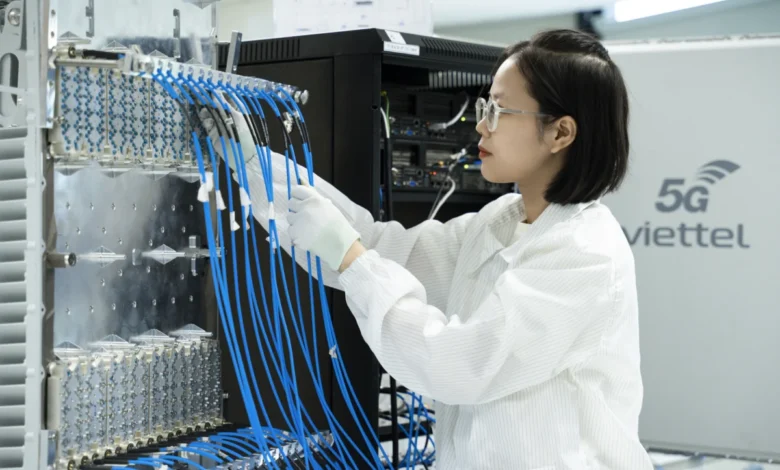
Perhaps the most tangible evidence of this progress is Vietnam’s entry into the exclusive club of nations capable of manufacturing 5G network equipment. Alongside Taiwan, Finland, South Korea, and China, Vietnam now possesses the capability to produce its own 5G base stations, utilizing the Open RAN standard.
The deployment of these stations has already commenced in major urban centers including Hanoi, Ha Nam, and Ninh Thuan, with plans for rapid expansion into Ho Chi Minh City and Da Nang by the end of 2024. This is not merely a domestic achievement; Viettel, the state-run telecommunications giant, has already secured international contracts for the export of this technology, including a landmark deal with India. This shift validates the government’s long-term investment in high-tech manufacturing, proving that Vietnam can compete with global incumbents on both quality and technical complexity.

Data-Driven Growth and Market Expansion
The economic indicators for the ICT sector in 2024 are robust. According to data through July 2024, the number of active digital technology enterprises in Vietnam has reached approximately 51,038, marking an increase of nearly 6,000 firms compared to August 2023. Of these, 1,500 companies have successfully generated revenue from international markets.
The sector’s international revenue grew from $7.5 billion in 2023 to a projected $10 billion in 2024, representing a year-on-year growth rate of approximately 30%. Minister Nguyen Manh Hung has highlighted the strategic importance of this figure, noting that the revenue earned abroad by Vietnamese tech firms now significantly outweighs the capital spent on importing foreign telecommunications equipment. This transition from being a technology consumer to a technology exporter is essential for the nation’s transition toward an industrial economy.
Digital Transformation as a National Pillar
The government’s "National Digital Transformation" program, which serves as the overarching framework for these efforts, encompasses a broad array of sub-strategies. These include:

- Digital Government: Streamlining bureaucratic processes through integrated digital platforms.
- Digital Economy: Fostering a startup ecosystem that focuses on high-value services and software exports.
- Digital Society: Improving digital literacy and infrastructure access for the general population.
- Cybersecurity: Ensuring national sovereignty in the digital age through the development of local security solutions.
To support these goals, the MIC has established the Department of ICT Industry, which is tasked with providing regulatory support and policy guidance. Furthermore, the development of the Law on Digital Technology Industry is currently underway, aiming to provide a comprehensive legal framework that will encourage long-term investment in semiconductor research, Artificial Intelligence, and advanced hardware manufacturing.
Honoring the Past to Inform the Future
The recent meeting with veteran ICT officials in Northern Vietnam served as a poignant reminder of the industry’s lineage. During the session, former Minister of Posts and Telecommunications Do Trung Ta shared personal accounts of the early 1990s, recalling visits from high-level leadership who were concerned about the reliance on foreign equipment.
These reflections highlight a consistent thread in Vietnam’s development: the belief that national strength is tied to technological independence. The "ten golden words" of the industry—"Loyalty, Courage, Integrity, Creativity, and Compassion"—continue to guide the current workforce. By framing current successes as a continuation of these traditional values, the ministry fosters a sense of purpose among the younger generation of engineers and entrepreneurs, bridging the gap between the pioneers of the 1980s and the digital innovators of today.

Broader Implications and Future Outlook
The path ahead for Vietnam involves moving up the value chain. While the initial success in 5G and software outsourcing is significant, the long-term goal is to dominate specific niches in the global semiconductor and AI ecosystems. The Ministry’s focus on the "Strategy for Development of the Semiconductor Industry in Vietnam by 2030" reflects this ambition.
The economic implications are clear: as Vietnam’s technology exports grow, the nation’s GDP becomes less reliant on traditional manufacturing and agriculture, moving toward a higher-margin, knowledge-based economy. Furthermore, the success of Vietnamese firms in international markets acts as a form of "soft power," enhancing the nation’s reputation as a reliable and innovative partner in the global tech community.
However, challenges remain. The need for a highly skilled workforce, the imperative of maintaining cybersecurity in an increasingly complex threat environment, and the necessity of sustaining the current momentum of R&D investment are all critical hurdles. The government’s continued commitment to public-private partnerships, along with a focus on creating a favorable business environment for tech startups, will be the primary determinants of whether Vietnam can achieve its goal of becoming a fully developed industrial nation by the middle of the century.

Conclusion
The transformation of Vietnam’s ICT sector is a masterclass in strategic national planning. By combining the resilience of a post-war development model with the agility of a modern digital economy, Vietnam has managed to carve out a unique position on the global stage. As the country moves toward its 2035 target of surpassing the value of its agricultural exports with ICT revenue, the focus will likely remain on cultivating deep-tech capabilities. The "Make in Viet Nam" initiative is no longer just a slogan; it is the engine of a new era of national growth, proving that when policy, investment, and talent align, even the most ambitious technological milestones are within reach.