Rokid Smart Glasses AI Assistant Review A Paradigm Shift in Wearable Technology and Conversational Intelligence

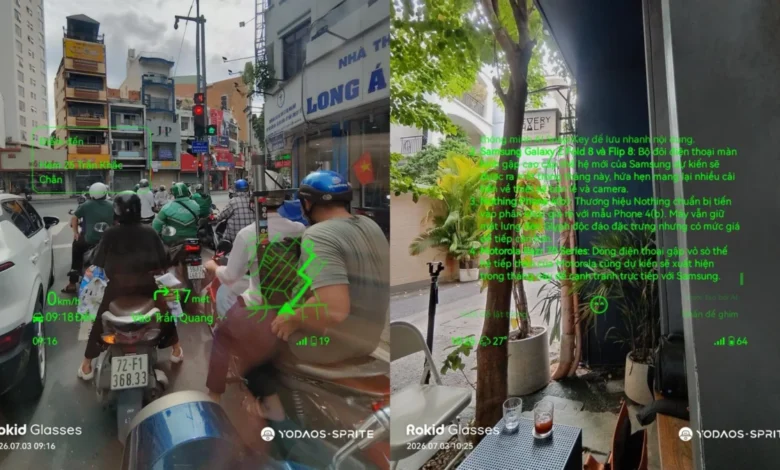
The wearable technology landscape has experienced a profound shift with the introduction of advanced AI-integrated smart glasses, moving beyond basic notification displays and camera-enabled frames into the realm of true ambient computing. Following an extensive evaluation period over the past week, technology analysts and reviewers have reassessed the capabilities of modern smart eyewear, specifically focusing on the Rokid smart glasses ecosystem. Rather than functioning merely as an auxiliary display or a hands-free capture device, these glasses operate as a fully realized, context-aware artificial intelligence assistant natively integrated into the user’s field of vision and auditory environment.

The Evolution of Conversational Assistants: Moving Beyond the Smartphone
Historically, interacting with artificial intelligence has required deliberate physical engagement. Users must retrieve a smartphone or personal computer, launch a specific application, and manually input text queries or utilize rigid voice commands. While voice-activated chatbots have become ubiquitous on mobile operating systems and home automation hubs, their utility remains constrained by form factor limitations.
The integration of an advanced multimodal AI directly into a lightweight eyewear chassis fundamentally alters this dynamic. By positioning the assistant on the user’s face, the barrier to interaction is virtually eliminated. The device acts as a persistent companion capable of processing complex multimodal inputs—combining real-time visual data from a built-in camera, spatial audio from environmental microphones, and precise geographic data from connected mobile devices—to deliver instantaneous, contextually relevant feedback. This architecture represents a departure from traditional computing paradigms, minimizing friction and establishing a continuous loop of query and response.

Multimodal Input Architecture: Cameras, Microphones, and Location Awareness
The effectiveness of any artificial intelligence assistant depends heavily on the breadth and accuracy of its inputs. The Rokid system leverages three primary input modalities to interpret user intent and environmental context: an integrated optical sensor, directional microphones, and smartphone-tethered location services.
The onboard camera, positioned discreetly near the frame hinge, allows users to capture their exact line of sight and submit visual data directly to the AI processing pipeline. When a user encounters an unfamiliar object, a foreign text, or a complex environment, a simple voice prompt initiates image capture and immediate analysis. For instance, when presented with a complex dish, the system identifies not only the primary entrée but also surrounding culinary accompaniments such as specific herbs, sauces, and garnishes. Similarly, foreign language signage or documents can be translated instantly within the user’s field of view.

The microphone array serves a dual purpose: capturing the user’s vocal commands and monitoring ambient environmental sound to establish situational awareness. Unlike legacy voice assistants that demand rigid syntactical structures and formal phrasing—frequently requiring English-language commands regardless of the user’s native tongue—the Rokid system utilizes advanced natural language processing models, specifically integration with Gemini AI. This enables fluid, conversational interactions in multiple languages, including Vietnamese. The system interprets colloquial phrasing, corrects minor transcription discrepancies dynamically, and factors in the broader conversational context to ensure high accuracy.
Tethering the glasses to a smartphone introduces precise Global Positioning System (GPS) capabilities, expanding the contextual engine significantly. By knowing the user’s exact geographic coordinates, the AI transitions from a generalized information retrieval tool to an active navigation and local discovery assistant. Users can execute open-ended location-based queries, such as requesting nearby specialty coffee roasters or specific retail showrooms, receive precise distance and routing data, and initiate turn-by-turn directions entirely through voice interaction without ever touching a handheld screen.

Comprehensive Output Layers: Visual, Auditory, and Digital Integration
A critical differentiator for next-generation smart eyewear is the sophistication of its output mechanisms. Traditional voice-only AI assistants rely exclusively on auditory feedback via a speaker or headphone. The Rokid ecosystem expands output delivery into a three-tier architecture comprising an internal optical micro-display, directional open-ear speakers, and a companion mobile application.
The internal display utilizes a high-brightness monochromatic green optical engine, reminiscent of classic sci-fi heads-up displays, capable of reaching peak luminance levels of up to 1,500 nits. This high brightness ensures that visual data, notifications, and navigation prompts remain crisp and legible even under direct sunlight during outdoor transit. The display layout is strategically partitioned; navigation cues and text responses appear discreetly in the lower portion of the field of view, allowing the user to maintain uninterrupted visual contact with their physical surroundings.

Auditory feedback is delivered through directional speakers directed toward the ear canals, ensuring private and comfortable listening without isolating the user from ambient environmental sounds. Furthermore, the companion smartphone application logs the entirety of the user’s interactions with the glasses. This creates a searchable, persistent archive of past conversations, captured images, and navigation logs, empowering users to review, export, or reference historical data at their convenience.
Practical Applications and Professional Utility
Beyond casual information retrieval and media consumption, the integration of an optical heads-up display introduces significant utility for professionals who frequently engage in public speaking or presentation delivery. By functioning as a digital teleprompter, the glasses allow educators, keynote speakers, podcast hosts, and workshop facilitators to project scripted content directly onto the interior lens. Because the text scrolls naturally within the wearer’s line of sight without altering their outward gaze, speakers can maintain direct eye contact with their audience, ensuring flawless delivery while eliminating the risk of lost notes.

The navigation implementation offers substantial safety and ergonomic advantages over traditional dashboard-mounted smartphones or handlebar displays. Motorcyclists, cyclists, and pedestrians can receive concise directional prompts and distance metrics directly in their peripheral vision, accompanied by audio cues indicating upcoming turns. This configuration eliminates the hazardous necessity of looking down at a handheld screen while navigating dense urban traffic.
Industrial Design, Ergonomics, and Power Management
Despite packing advanced computing hardware, optical projection systems, cameras, and audio components into a single chassis, the Rokid smart glasses maintain a lightweight profile of approximately 40 grams. The physical form factor closely resembles conventional eyewear, avoiding the bulky, conspicuous aesthetic common among early-generation augmented reality headsets. This understated design ensures that users can wear the device in public spaces without drawing undue attention.

Power management is streamlined through a magnetic charging interface located on the frame temple, allowing for quick connections and support for continuous operation via portable power banks or direct USB-C adapters. The internal battery delivers several hours of continuous mixed usage under standard operating conditions and recharges rapidly.
Market Positioning and Competitive Landscape
The consumer smart eyewear market is currently dominated by products such as the Ray-Ban Meta collaboration frames, which primarily focus on media capture, audio playback, and lightweight AI features. However, many competing models lack integrated visual display screens or comprehensive natural language processing support for regional languages such as Vietnamese.

Positioned in the mid-to-high-end pricing tier—retailing between 16 million and 17 million Vietnamese Dong—the Rokid smart glasses compete directly with advanced specialty wearables. Official distribution in Vietnam is managed by Dat Phuong Linh Co., Ltd., with products widely available through major electronics retailers including The Gioi Di Dong, FPT Shop, CellPhoneS, and various e-commerce platforms.
By combining the discretion and form factor of traditional eyewear with a persistent, multilingual conversational assistant and an integrated visual heads-up display, Rokid has established a new benchmark for ambient computing and wearable artificial intelligence.