High-Performance Motorcycle Navigates Elevated Chinese Highway Without Rider Following High-Speed Incident

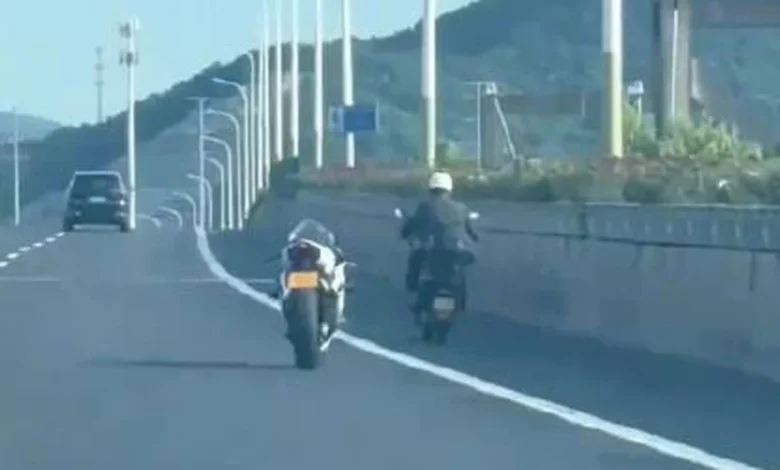
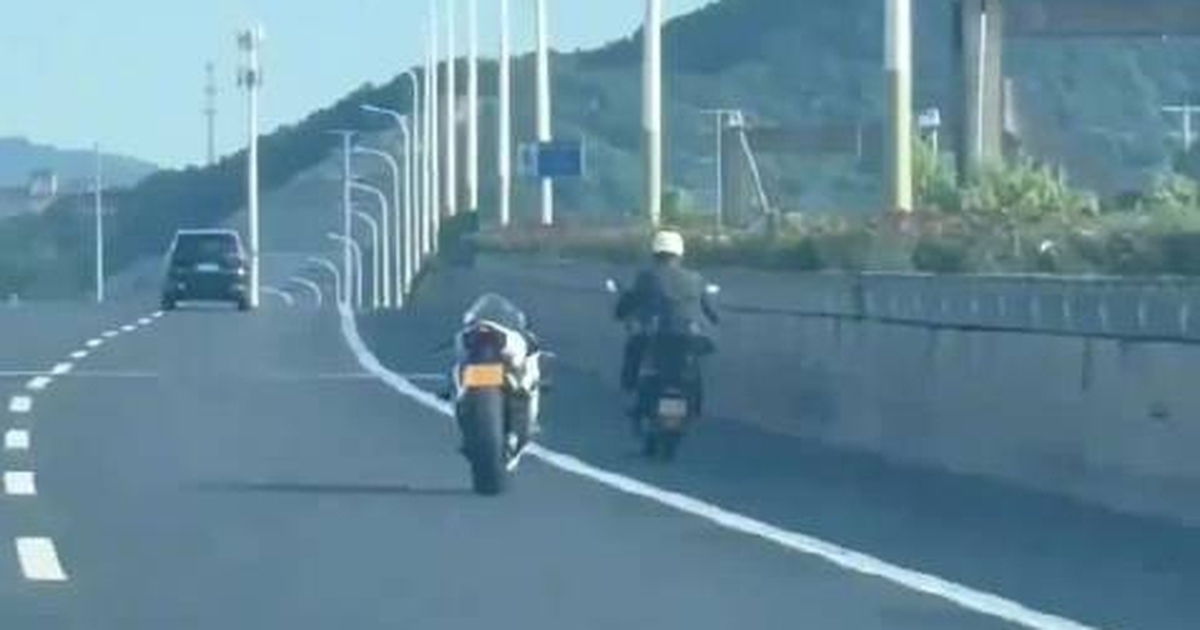
A viral video captured on an elevated highway in Huzhou, Zhejiang Province, China, has ignited a global conversation regarding motorcycle stability, high-performance engineering, and road safety after a riderless motorcycle was filmed traveling autonomously for several hundred meters through active traffic. The footage, which first appeared on Chinese social media platforms Weibo and Douyin in mid-July 2026, shows the vehicle maintaining a remarkable state of balance and direction despite the absence of an operator, an event that has been described by witnesses and netizens alike as a "ghost rider" phenomenon.
The incident occurred on a busy stretch of the Huzhou elevated road network, a critical infrastructure component in the coastal province of Zhejiang. According to the individuals who recorded the footage—passengers in a trailing automobile—the motorcycle was first spotted traveling at a steady clip near the right-hand guardrail. As the car approached, the witnesses realized with shock that the seat was empty. For over a minute, the motorcycle continued its journey, exhibiting a degree of stability that defied the expectations of most observers. It eventually drifted from the right lane into the center of the highway, forcing several cars to brake sharply and swerve to avoid a collision. The journey only concluded after the vehicle grazed a central median and eventually lost enough momentum to tip over and come to a halt.
Chronology of the Incident and Emergency Response
The timeline of the event began on the afternoon of July 14, 2024, though the video gained significant traction in the following days. Local traffic authorities in Huzhou were alerted to a high-speed accident involving a single motorcycle on the elevated highway. Upon arriving at the scene where the rider had been thrown, emergency responders found a male victim suffering from significant trauma. Preliminary medical assessments confirmed that the rider had sustained at least one broken bone and various abrasions consistent with a high-speed fall.
While the rider was being stabilized and transported to a nearby hospital for emergency treatment, the motorcycle continued its unmanned transit further down the road. Local police reports indicate that the rider was separated from the vehicle after a sudden loss of control, possibly due to a minor collision or a mechanical hiccup at high speed. However, instead of crashing immediately, the motorcycle’s momentum and internal physics allowed it to stabilize.
By approximately 8:30 PM on the day of the incident, the manufacturer of the motorcycle, Zhang Xue Motorcycles, issued a formal statement via their official social media channels. The company confirmed that the vehicle in the video was an 820RR, one of their flagship high-performance models. The company expressed its surprise at the vehicle’s "exceptional self-balancing capability" during the accident and stated that their primary concern was the well-being of the customer. By 9:00 PM, the company confirmed they had made contact with the owner, who remained in stable condition in the hospital, though requiring surgery for a fractured limb.
Technical Profile: The Zhang Xue 820RR
The vehicle at the center of this viral event is the 820RR, a high-performance sportbike released by Zhang Xue Motorcycles on March 21, 2026. This model represents a significant leap in Chinese motorcycle engineering, aimed at competing with established European and Japanese brands in the middle-weight to heavy-weight sport categories.
The 820RR is powered by a liquid-cooled, 819cc, in-line three-cylinder engine. This configuration is renowned in the motorcycling world for providing a balance between the low-end torque of a twin and the high-end screaming power of a four-cylinder engine. The 820RR produces a staggering 135 horsepower, a figure that puts it at the top of its class. Because of this immense power-to-weight ratio, Zhang Xue Motorcycles implemented a strict sales policy: the 820RR cannot be sold to riders who have held a motorcycle license for less than one year. This regulation is intended to ensure that only experienced riders handle the aggressive acceleration and top speeds the bike is capable of reaching.
The stability shown in the video can be attributed to the bike’s advanced chassis geometry and the physical laws of gyroscopic motion. At high speeds, the spinning wheels of a motorcycle act as powerful gyroscopes, creating a force that resists changes in orientation. Furthermore, the 820RR’s "rake and trail" (the angle and position of the front fork relative to the frame) are engineered to provide "caster effect" stability. If the bike leans to one side, the front wheel naturally turns into the lean, correcting the balance and keeping the bike upright. In this specific incident, it appears the throttle remained slightly open or the engine’s inertia was sufficient to keep the bike moving at a speed where these physical forces could maintain equilibrium without human intervention.
Brand History and Market Implications
Zhang Xue Motorcycles has had a meteoric and somewhat tumultuous rise in the global market. The brand gained international fame just one week after the 820RR’s launch in March 2026, when a racing version of the bike secured a historic victory at the Portuguese round of the World Superbike (WSBK) Championship. This win marked the first time a Chinese-branded three-cylinder motorcycle had stood atop a major international podium, leading to a surge in global orders and a boost in the reputation of Chinese manufacturing.
However, the brand has also faced challenges. On April 22, 2026, only a month after its launch, the company was forced to issue a recall for a batch of 820RR units. The recall was prompted by the discovery of assembly errors in certain components that could potentially affect long-term reliability. Despite this setback, the brand has maintained a loyal following, partly due to the charismatic leadership of its founder and the high-performance specifications of its products.
The Huzhou incident has provided the brand with an unexpected form of publicity. While the "self-balancing" act was a result of physics rather than a specific "auto-pilot" feature, it has highlighted the structural integrity and balance of the 820RR’s frame. Nevertheless, industry analysts suggest that the incident also highlights the dangers of such high-performance machines on public roads, especially on elevated highways where there is little room for error.
Broader Impact: Safety and Regulation on Chinese Highways
The Huzhou elevated highway incident has prompted the Zhejiang provincial traffic police to launch a broader investigation into the safety of high-displacement motorcycles on urban expressways. In many Chinese cities, motorcycles are restricted or banned from elevated roads due to the high speeds and the perceived risk to both riders and car drivers.
Huzhou’s traffic management bureau is currently reviewing the circumstances of the rider’s fall. If the investigation finds that the rider was speeding or performing dangerous maneuvers, he may face significant fines or the revocation of his license. Furthermore, the fact that the motorcycle continued to travel riderless poses a unique legal question: who is responsible for the "near-misses" involving the cars that had to swerve? While no secondary accidents occurred, the potential for a multi-vehicle pile-up was high.
Automotive safety experts have used this event to discuss the necessity of "kill switches" or "tethered cut-offs." Most track-focused motorcycles and jet skis use a lanyard that attaches the rider to the ignition. If the rider falls off, the lanyard pulls a switch, and the engine cuts out immediately. While common in racing, these are rarely found on standard street-legal sportbikes. The 820RR incident may lead to calls for such safety features to be made mandatory on high-horsepower motorcycles to prevent "runaway" vehicles from endangering the public.
Analysis of the "Ghost Rider" Phenomenon
The fascination with the Huzhou video stems from a deep-seated human reaction to seeing complex machinery operate without human guidance. In an era where autonomous vehicles and AI are at the forefront of technological development, the sight of a motorcycle "navigating" a highway feels like a glimpse into a robotic future.
However, from a mechanical engineering perspective, the 820RR was not "navigating"; it was simply following the path of least resistance. The fact that it stayed upright for so long is a testament to the precision of its alignment. If the frame had been slightly bent or the tires unevenly worn, the bike would have succumbed to "speed wobble" or tipped over much sooner. The event serves as a practical, albeit dangerous, demonstration of modern motorcycle dynamics.
As the rider recovers in a Huzhou hospital, the 820RR remains in police custody as part of the ongoing investigation. The video continues to circulate, serving as a reminder of the thin line between a high-performance thrill and a high-speed disaster. For Zhang Xue Motorcycles, the event is a double-edged sword: a showcase of the 820RR’s stability and a stark reminder of the responsibilities that come with producing some of the world’s most powerful two-wheeled machines. Moving forward, the industry may see a shift toward more integrated safety systems that ensure when a rider and machine are separated, the machine’s journey ends as quickly and safely as possible.