Ho Chi Minh City Land Registration Office Requests Tax Exemption Review for Residents at HQC Plaza Amid Long-Standing Property Ownership Delays

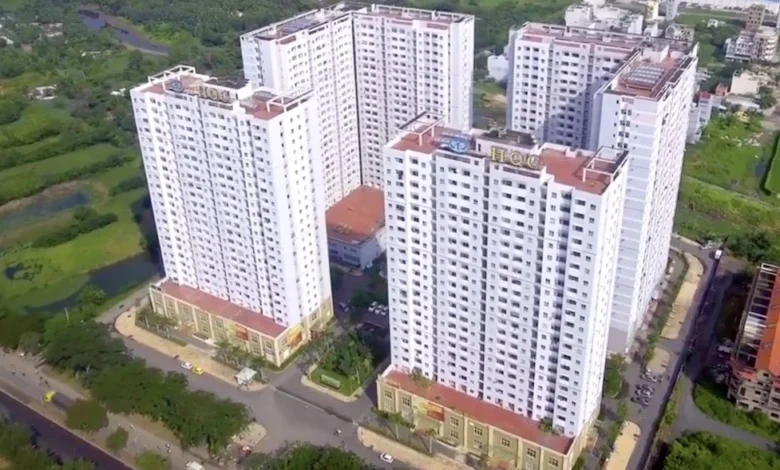
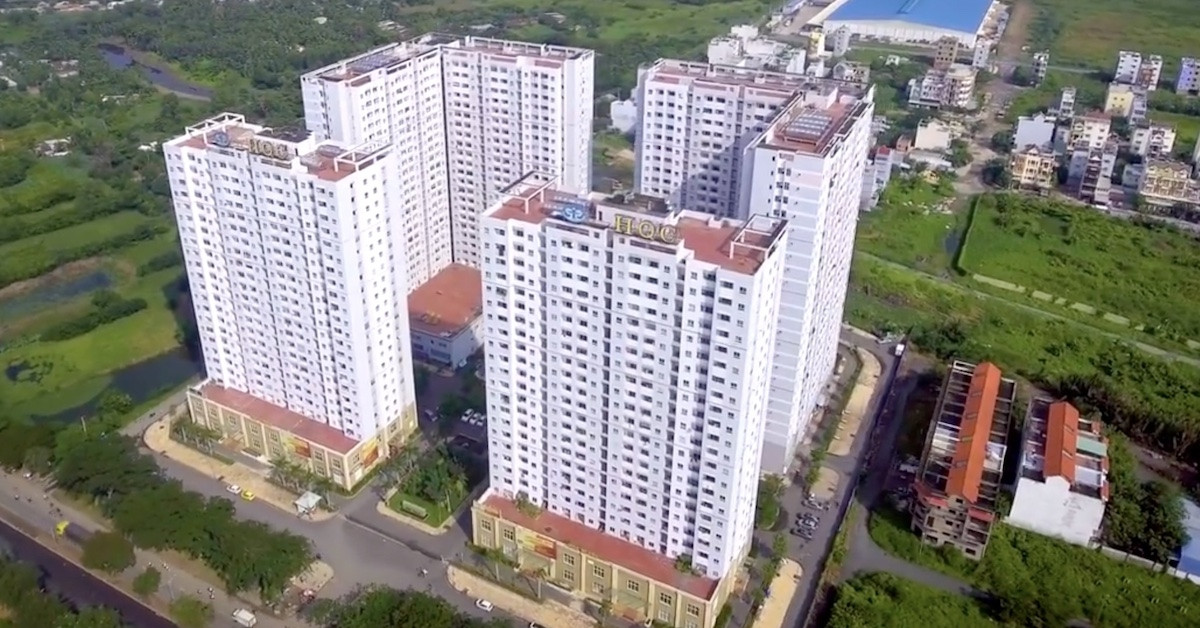
The intricate and often frustrating journey of homeownership for thousands of low-income families in Ho Chi Minh City has hit yet another bureaucratic and financial roadblock. Recently, the Ho Chi Minh City Land Registration Office officially issued a formal document addressed to Tax Branch 8, requesting the cancellation of land-related tax calculations for apartments situated within the CC1-Khu 2 residential complex, located in the Bo Loc resettlement area of the South City New Urban Area—widely known commercially as HQC Plaza—situated in Binh Hung Ward. This decisive step comes in response to mounting grievances from residents who have long struggled to secure their legal property titles, commonly referred to as pink books, despite having fulfilled their housing purchase obligations years ago.
The underlying conflict involves a tangle of administrative miscommunications, unfulfilled developer obligations, and conflicting directives between local tax authorities and land registration agencies. As residents attempt to finalize their long-awaited property documentation, the procedural stalemate highlights systemic vulnerabilities in the management, delivery, and post-construction compliance of social housing projects developed by private entities in Vietnam’s southern economic hub.
Origins of the Dispute and Resident Grievances
The latest turmoil surfaced when apartment owners at HQC Plaza initiated direct contact with the project’s developer, Hoang Quan Consulting – Trading – Service Real Estate Corporation, commonly referred to as Hoang Quan Company, alongside local administrative bodies, to press for an expedited resolution to their missing ownership certificates. To their dismay, residents were verbally informed by representatives that Tax Branch 8 had allegedly refused to accept cadastral information transfer slips submitted by land registration authorities.
According to the feedback received by the homeowners, the root of the rejection supposedly stemmed from an administrative technicality: the transfer slips had been addressed under the name of the Binh Chanh District Tax Branch rather than Tax Branch 8 directly. However, this purported refusal was executed entirely through informal verbal channels, lacking any formal written notification, legal citation, or official administrative record. This absence of formal documentation left residents trapped in a bureaucratic limbo, unable to verify the legal standing of their tax liabilities or advance their applications for property ownership certificates.
Upon receiving formal complaints from the distressed residents, the Ho Chi Minh City Land Registration Office intervened to review the workflow and verify the legitimacy of the administrative transmission. Through internal checks, the registry confirmed that between March and April 2025, it had officially issued three distinct sets of cadastral information transfer slips to the Binh Chanh District Tax Branch—subsequently reorganized and designated as Tax Branch 8. These slips were transmitted precisely to determine and officially verify the financial obligations regarding land use applicable to home buyers residing within the HQC Plaza development.
A Chronology of Delays and Non-Compliance by the Developer
To fully understand the gravity of the current situation, it is essential to examine the extended timeline of delays, unmet requirements, and administrative standstills that have plagued HQC Plaza since its inception.
The project itself was conceived as a cornerstone of Ho Chi Minh City’s social housing development initiative. Developed by Hoang Quan Company, HQC Plaza spans an expansive site of approximately 3.53 hectares along Nguyen Van Linh Parkway in Binh Hung Ward. The development comprises four towering blocks ranging from 23 to 24 stories, aggregating a total of 1,735 residential apartments designed to accommodate low-income urban workers, young families, and disadvantaged households striving for secure housing.
The project officially broke ground in 2013, generating immense optimism and drawing significant interest from buyers desperate for affordable housing solutions. Under the initial investment schedule, the developer projected that construction would be finalized and apartments would be handed over to buyers by the third quarter of 2015. However, reality diverged sharply from projections. Severe construction delays, capital constraints, and logistical hurdles pushed the timeline back significantly, with the developer only managing to complete the formal handover process for the apartments by the end of 2019—a delay of over four years.
Even after residents finally moved into their homes, stability remained elusive. The years following the handover were marred by continuous disputes and administrative roadblocks concerning the issuance of pink books. Without these legal titles, homeowners faced severe restrictions: they were unable to use their properties as collateral for bank loans, faced legal vulnerabilities in property transactions, and lacked full legal security regarding their investments.
The administrative logjam intensified notably in November 2025. At that time, the Ho Chi Minh City Land Registration Office issued a formal written directive instructing Hoang Quan Company to collaborate directly with a professional surveying unit. The objective was clear: the developer was required to re-survey the project land area, redraw the master plan of the project site, produce updated floor plans for all apartment blocks, and accurately delineate boundary corners and specific land parcel positions. These updated technical documents were mandated to be submitted to the Land Registration Office as the mandatory legal baseline required to process and approve individual ownership certificates for the home buyers.
Despite clear instructions and the passage of critical deadlines, Hoang Quan Company failed to execute the required surveying, mapping, and documentation procedures. Consequently, the Land Registration Office repeatedly noted that it lacked the foundational legal and technical framework required by law to process individual certificate applications for the residents. By March 2026, facing prolonged inaction from the developer, the Land Registration Office took formal administrative action: it issued an official notification to Hoang Quan Company formally recalling the entirety of the submitted dossiers. Concurrently, the registry formally requested that Tax Branch 8 suspend and cancel any tax calculations targeting the apartments listed in the attachments of the three original cadastral transfer slips generated between March and April 2025.
Broader Implications for the Social Housing Sector
The predicament facing HQC Plaza residents is not an isolated incident but rather a symptom of broader structural challenges within Vietnam’s real estate market, particularly within the affordable and social housing segments. Over recent years, regulatory tightening, credit squeezes, and financial restructuring have profoundly impacted developers specializing in mass-market housing.
Recent market data underscores the severe financial pressures confronting developers in this sector. For instance, major financial institutions have increasingly resorted to asset seizure and debt recovery measures against prominent real estate enterprises historically engaged in social housing development. Cases involving commercial banks seizing dozens of land parcels and substantial corporate assets from major developers to resolve mounting non-performing loans—often scaling into hundreds or thousands of billions of dong—have become alarmingly frequent. These corporate financial instabilities directly impair a developer’s operational capacity, diverting critical capital away from project completion, maintenance, and post-construction legal compliance.
Furthermore, consumer protection in the affordable housing sector remains a pressing regulatory concern. Across various provinces and municipalities, enforcement agencies have uncovered numerous irregularities, ranging from buyers inadvertently submitting duplicate registrations across multiple projects due to information gaps, to fraudulent schemes involving "ghost projects" that exploit the desperate demand for affordable housing among low- and middle-income earners. When legitimate projects like HQC Plaza become bogged down in administrative standstills between developers and state agencies, the cumulative psychological and financial toll on everyday citizens is immense. Life savings are tied up, dreams of domestic stability are delayed, and trust in public-private housing initiatives is severely eroded.
Expert Analysis and the Path Forward
From a legal and administrative standpoint, the action taken by the Ho Chi Minh City Land Registration Office to halt tax calculations represents a necessary protective measure for residents who are innocent bystanders in a developer-induced compliance failure. Imposing land-related financial obligations and tax liabilities on homeowners whose property titles cannot be issued due to the developer’s failure to provide accurate cadastral surveys and architectural blueprints is fundamentally unjust.
Legal experts note that under Vietnamese housing and land laws, developers bear the ultimate legal responsibility for completing all initial land measurements, construction-as-built validations, and master planning documentation. Only once these foundational legal requirements are fulfilled can the state accurately determine financial obligations and execute the mass issuance of pink books to individual apartment owners. When a developer defaults on these responsibilities, state agencies must intervene with corrective administrative measures, such as recalling incomplete dossiers and relieving residents of premature financial burdens.
Moving forward, resolving the deadlock at HQC Plaza requires decisive, coordinated intervention from municipal authorities, tax watchdogs, and regulatory bodies. First, Hoang Quan Company must be held strictly accountable to fulfill its legal obligations regarding land surveying and technical documentation submission without further prevarication. Second, local authorities must establish clear mechanisms to penalize developers whose administrative negligence obstructs home buyers from realizing their statutory property rights. Finally, transparent communication channels must be maintained between the Land Registration Office, Tax Branch 8, and the resident committee to ensure that homeowners are fully informed of administrative updates, shielding them from informal misinformation and restoring faith in the administrative integrity of Ho Chi Minh City’s housing sector.