Vietnam IT Enterprises in Japan Record Doubled Revenue and Shift Toward High-Value Tech Services


The economic and technological partnership between Vietnam and Japan has achieved remarkable milestones, highlighted by significant growth in revenue, an evolution toward high-value technology services, and a deepening strategic alliance. These insights were revealed during a rapid survey conducted by the Vietnam Software and IT Services Association (VINASA), involving 20 prominent Vietnamese IT enterprises operating in the Japanese market. The findings were officially presented by An Ngoc Thao, Deputy Secretary-General of VINASA, during the opening sessions of Japan ICT Day 2024, which commenced on the afternoon of December 2 in Hanoi.
Rapid Growth and Shifting Business Landscapes
The survey results underline a robust upward trajectory for Vietnamese technology companies anchoring their operations in Japan. Among the 20 surveyed enterprises, the representation spans various corporate scales: 10 companies boast workforces exceeding 1,000 employees, 5 operate with staff sizes ranging from 500 to 1,000, and 5 maintain teams between 200 and 500 professionals.
Between 2020 and 2024, the aggregate revenue of these surveyed IT firms experienced a staggering expansion, surging from $672 million USD to $1.345 million USD—effectively doubling within a four-year window. This financial growth consistently maintained an annual rate of 22% to 28%. Concurrently, total employment across these organizations grew by nearly 8,000 personnel, reflecting a steady workforce expansion rate of 6% to 10% annually.

Deputy Secretary-General An Ngoc Thao emphasized the structural significance of these metrics, noting that the revenue growth rate significantly outpaced headcount growth. This discrepancy points to a clear and measurable increase in labor productivity among Vietnamese enterprises operating abroad. Rather than relying solely on volume-based outsourcing models, these firms are successfully scaling up the value chain.
Transition Toward Advanced Technologies and Product Packaging
A critical takeaway from the VINASA survey is the qualitative transformation occurring within Vietnam’s IT sector in Japan. Vietnamese enterprises are increasingly moving away from basic coding and entry-level IT outsourcing. Instead, they are securing roles in high-tier project segments that command higher economic value, such as advanced research and development (R&D), complex system design, and cutting-edge technological implementations involving Artificial Intelligence (AI) and Blockchain.
Furthermore, these companies are evolving beyond traditional service-provision models. A growing number of Vietnamese technology firms are successfully packaging proprietary software products and delivering comprehensive, ready-to-use solutions directly to Japanese corporate partners. This transition reflects heightened technical maturity, enhanced intellectual property capabilities, and an improved ability to meet the stringent quality standards of the Japanese market.
Core Pillars of Discussion at Japan ICT Day 2024
Japan ICT Day 2024 served as a premier collaborative forum, bringing together over 100 delegates representing more than 30 Japanese and Vietnamese organizations. The two-day event, running from December 2 to December 3, structured its agenda around three primary formats: high-level plenary conferences, business networking sessions, and company tours providing Japanese delegates firsthand exposure to Vietnamese development centers in Hanoi.

Discussions during the conference converged on three focal areas considered crucial for the future of bilateral technological cooperation:
- Artificial Intelligence Integration: Leveraging machine learning and generative AI to optimize business processes, automate enterprise operations, and create intelligent customer-facing applications.
- Modernization of Legacy Systems: Upgrading aging IT infrastructures across Japanese manufacturing, finance, and logistics sectors to align with modern digital standards.
- Smart and Green Manufacturing: Implementing digital transformation strategies that support sustainable industrial production, reduce energy consumption, and lower carbon footprints.
According to VINASA representatives, these three domains represent massive commercial opportunities not only within traditional cross-border frameworks but also within the operational ecosystems of Japanese enterprises established directly inside Vietnam.
Perspectives from Industry Leaders
Akira Watanabe, Director of NTTe-MOI and Vice Chairman of the Vietnam-Japan IT Cooperation Committee under VINASA, provided an expansive overview of the bilateral relationship. He noted that over 400 Vietnamese IT companies currently maintain active business partnerships with corporate entities across Japan.
Watanabe attributed this deep integration to the competitive technical competence, cost-effective operational structures, and cultural affinity demonstrated by Vietnamese engineering teams. He pointed out that key sectors driving this cooperation include automotive manufacturing, industrial production, banking, insurance, cybersecurity, and the semiconductor industry.
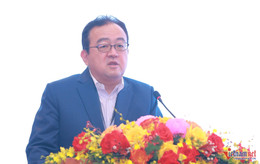
"The prominent areas of cooperation between enterprises of the two countries encompass manufacturing, automotive, finance, insurance, information security, and semiconductor industries," Watanabe stated. "However, to advance further, enterprises must overcome language barriers, stabilize human resources, and continuously enhance international competitiveness."
Adding to this perspective, Junya Kawamoto, Chairman of the International Cooperation Committee at the Japan Information Technology Services Industry Association (JISA), highlighted the macro-level economic pressures shaping Japan’s technology sector. Kawamoto referenced policies introduced by Japan’s Ministry of Economy, Trade and Industry (METI), notably the "DX Stocks" program, which actively encourages domestic enterprises to accelerate digital transformation.
However, the Japanese IT market faces a severe structural crisis driven by demographic shifts, a shrinking domestic workforce, and growing geopolitical risks. According to official statistical projections from METI, Japan is projected to face a critical shortage of approximately 789,000 IT professionals by the year 2030.
"Vietnam has emerged as an ideal partner due to its young labor force, technological proficiency, and consistent governmental support," Kawamoto remarked. "Japanese enterprises hold high expectations for cooperation with Vietnam in human resource development, the sharing of advanced knowledge, cutting-edge technologies, and collaborative business models."

Broader Implications and Future Outlook
The findings presented at Japan ICT Day 2024 illustrate a maturing economic partnership that extends far beyond simple labor arbitrage. As Japan grapples with acute demographic deficits and an urgent imperative for industrial modernization, Vietnam’s stable political environment, digitally skilled youth demographic, and proactive state policies position it as an indispensable strategic ally.
The transition of Vietnamese firms toward high-value R&D, AI integration, and proprietary product development signals a permanent shift in the nation’s economic posture. By moving up the global technology value chain, Vietnamese enterprises are not only securing their long-term viability in sophisticated overseas markets like Japan but are also establishing a robust foundation for domestic technological sovereignty.
As the initiatives discussed during Japan ICT Day 2024 transition into actionable execution, the synergy between Vietnamese engineering capability and Japanese industrial demand is expected to deepen. This partnership will likely serve as a blueprint for international technology collaboration, driving mutual economic resilience and technological innovation across the broader Asia-Pacific region for the remainder of the decade.