Hưởng ứng thành phố xa xưa: Hai thập niên tân nhạc Hà Nội 1934-1954 mở ra không gian ký ức tại Bảo tàng Hà Nội

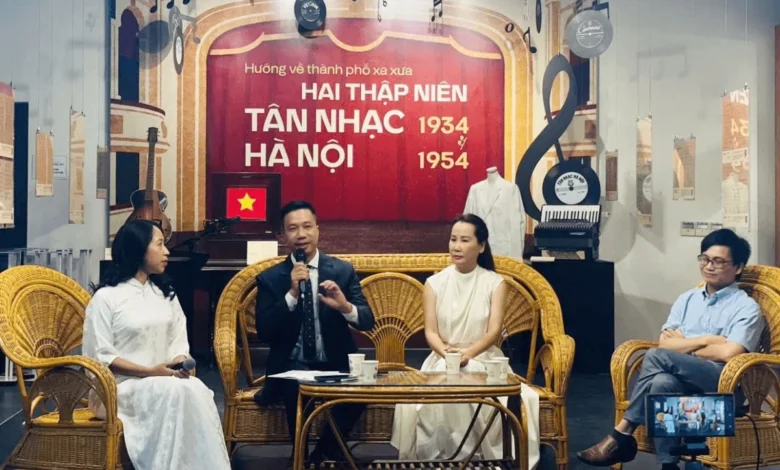
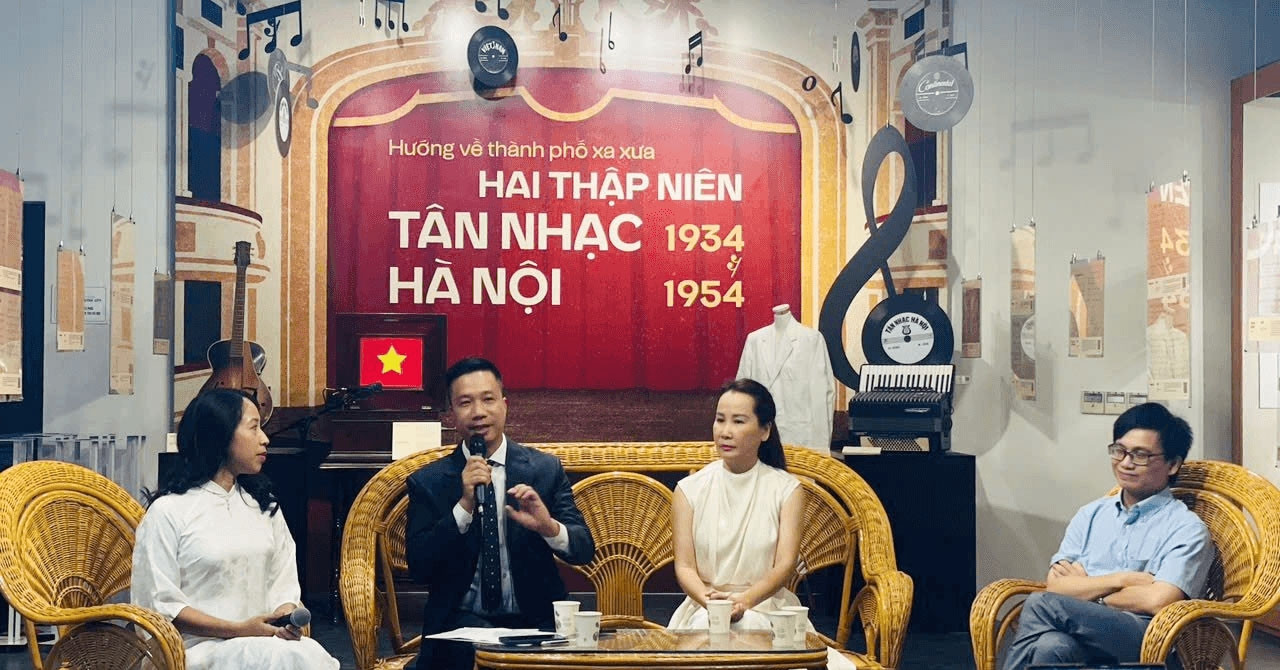
Hanoi’s rich and turbulent musical history took center stage on September 12 at the Hanoi Museum, where a landmark exhibition and scholarly symposium titled "Echoes of an Ancient City: Two Decades of Hanoi Early Modern Music (1934-1954)" officially opened to the public. Running as part of the broader Thang Long – Hanoi Festival II, the event offered visitors and researchers a rare, immersive journey into the foundational era of Vietnamese modern music, commonly known as "tân nhạc."
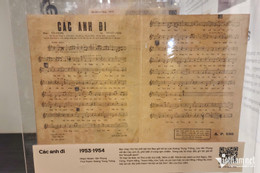
The exhibition brings together an unprecedented collection of 102 rare musical scores, vintage recordings, historical photographs, and archival artifacts. These items trace the birth, evolution, and golden age of Vietnam’s early modern music movement across a critical twenty-year timeline, spanning from the nascent steps of romantic parlor songs in the mid-1930s through the fierce patriotic anthems of the resistance wars, and culminating in the vibrant urban life of the capital leading up to the 1954 Geneva Accords and the liberation of Hanoi.
A Curated Journey Through Five Thematic Chapters
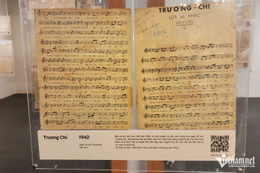
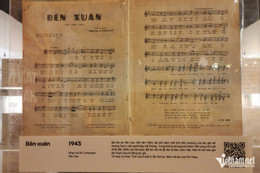
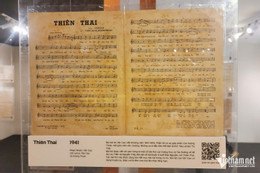
Designed across five distinct thematic zones, the exhibition constructs a living tapestry of Hanoi’s cultural, social, and sonic landscape during a period of profound national transformation. The first zone introduces visitors to the romantic lyricism of early Vietnamese art songs—often characterized by lyrical melancholy, refined poetic imagery, and European harmonic influences adapted to traditional Vietnamese pentatonic sensibilities. Subsequent zones explore the shift toward revolutionary fervor, capturing the unwavering patriotism embedded in clandestine resistance anthems, the unique pulse of urban bourgeois life, and the enduring creative footprints left by foundational composers such as Văn Cao, Đoàn Chuẩn – Từ Linh, Dương Thiệu Tịch, Thẩm Oánh, and other luminaries who fundamentally shaped the architectural identity of modern Vietnamese music.
According to Nguyễn Thị Ngọc Hòa, Director of the Hanoi Center for the Coordination of Creative Activities at the Hanoi Museum, the capital holds an unmatched position in the nation’s cultural topography.
"There is no other locality across the country that boasts as many composers and songs dedicated to it as Hanoi," Hòa stated during the opening ceremony. "Numerous musicians composed pieces about the capital city beginning before the August Revolution, extending through the French resistance, the American war, and into the era of national reunification and peace. Tân nhạc became a vital medium for transmitting emotional and social messages, actively participating in the movement for national liberation."
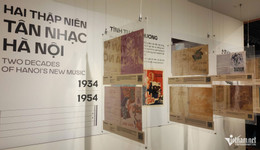
The exhibition serves as a physical manifestation of a long-term archival effort. Out of an extensive private collection comprising approximately 2,000 vintage sheet music scores, rare documents, and historical photographs, the organizing committee meticulously selected 102 premier items for public display. Attendees were granted direct visual and tactile access to original first-edition scores, fragile yellowed manuscript papers, and early shellac discs bearing the master recordings of legendary composers and vocalists whose careers aligned with the pivotal historical milestones of modern Vietnamese music from 1934 to 1954.
Historical Context and the Genesis of Vietnamese Modern Music
To understand the weight of the artifacts on display, cultural researchers and historians emphasize the structural upheaval that characterized Vietnamese society during the first half of the twentieth century. Researcher and writer Nguyễn Trường Quý, who contributed over 100 historical sheet music pieces from his personal collection to the exhibition, highlighted the profound sociological shift behind the artistic movement.
"What we see here are fragile, yellowed sheets of paper, yet they represent the culmination of a transitional phase in the structure of mass culture within Hanoi over two decades," Quý noted. "They mark the creative maturation of the Vietnamese people, leaving an artistic imprint that has exerted a profound influence on the psychological makeup and aesthetic sensibilities of the public across generations. From their inception to their full maturation in the 1940s—particularly during the high tide of the August Revolution—tân nhạc created a distinct sanctuary for Hanoi within the broader framework of Vietnamese culture."
Composer Giáng Sơn, a prominent executive board member of the Vietnam Musicians’ Association and author of the beloved contemporary classic Hà Nội mùa hai mùa hoa (Hanoi of Two Flower Seasons), expressed deep emotional resonance upon witnessing the pristine condition of the preserved scores.
"To be honest, I am seeing some of these physical scores for the very first time," Giáng Sơn shared. "The collectors have demonstrated extraordinary dedication, driven by a profound love for music and a deep understanding of this era. These are all canonical songs from the 1934–1954 period, marking a crucial developmental milestone for Vietnamese musical arts."
Bridging the Generational Divide: Bringing Early Modern Music to Gen Z
Despite the profound historical value and undeniable artistic brilliance of early modern Vietnamese music, contemporary arts administrators and educators acknowledge a growing barrier in connecting these archival masterpieces with younger audiences, particularly Generation Z. In an era dominated by fast-paced digital consumption, algorithmic streaming, and rapidly shifting pop culture trends, younger demographics increasingly perceive historical music as distant, inaccessible, or culturally irrelevant.
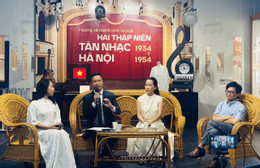
Addressing this challenge during the accompanying symposium, the panelists argued that the disconnect is not an inherent flaw of youth culture, but rather a structural shortcoming in traditional educational frameworks and cultural dissemination systems. Historically, heritage music programs have been relegated to small-scale auditoriums with capacities rarely exceeding one hundred attendees, severely limiting their organic reach to the general public. Furthermore, a psychological dichotomy often divides generations: older audiences may dismiss contemporary pop music as chaotic and lacking depth, while younger listeners frequently characterize early twentieth-century compositions as antiquated and melancholic.
Dr. Trần Ngọc Hiếu, a prominent literary and cultural critic who spoke at the symposium, emphasized the historical role of romanticism in liberating human emotion. Alongside literature and visual arts, early modern musical works provided a crucial outlet for psychological release and social expression during times of intense political and physical turmoil. However, Hiếu cautioned against the risks of treating musical heritage merely as static museum artifacts.
"If the preservation of auditory heritage relies exclusively on digital archiving or internet repositories without active contextualization, we risk stripping away the original aura of the era that gave birth to these works," Hiếu argued. "Rather than stubbornly freezing these compositions in time through dogmatic preservation, we should examine ways to maintain the vitality of songs from the 1920s and 1930s by boldly experimenting with harmonic progressions and rhythmic structures."
Echoing this perspective, Giáng Sơn argued that professional musicians and cultural programmers must adopt a broader, more progressive outlook rather than reflexively condemning contemporary interpretations. She suggested that incorporating elements of modern genres such as Pop, R&B, or tasteful electronic production and rap into heritage compositions can serve as a vital key to ensuring these songs maintain a genuine living presence among younger generations.
"We must not transform music into museum pieces by forcing contemporary vocalists to replicate the exact stylistic mannerisms of past generations," Giáng Sơn noted. "The process of renewal and modernization is essential for bridging the gap."
Practical Solutions and Future Outreach Strategies
To solve the broader challenge of disseminating patriotic and historical music to the masses, symposium participants converged on several concrete, actionable strategies. Chief among them is the expansion of performance venues beyond traditional, closed-door concert halls. Scholars and organizers proposed taking heritage music programs directly to large-scale public spaces, most notably university campuses across Hanoi, where live performances can engage thousands of students simultaneously.
Case studies presented during the event highlighted encouraging grassroots initiatives. For instance, students within academic literature and arts faculties at local universities have begun experimenting organically with interdisciplinary projects, blending traditional poetry and early modern musical motifs with modern theatrical and visual formats. This natural integration allows heritage compositions to resonate authentically within contemporary academic and youth circles.
Furthermore, educational institutions are encouraged to incorporate music heritage studies into broader cultural history curricula, fostering a direct appreciation for the linguistic beauty and emotional depth embedded in foundational Vietnamese compositions. By ensuring regular, meaningful exposure to these historical works, cultural authorities hope to systematically cultivate national pride and historical consciousness among students born and raised in the modern capital.
Conclusion and Ongoing Legacy
The "Echoes of an Ancient City" exhibition and its accompanying symposium at the Hanoi Museum have underscored the enduring relevance of Vietnam’s early modern musical heritage. By successfully bridging historical archiving with contemporary critical discourse, the event has initiated a much-needed dialogue on the future of cultural preservation in the digital age.
As Hanoi continues to position itself as a dynamic creative city within the UNESCO Creative Cities Network, balancing the rigorous preservation of historical memory with innovative artistic adaptation remains paramount. Through thoughtful curation, expanded public outreach, and a willingness to engage younger generations on their own terms, the foundational melodies of 1934–1954 will continue to reverberate, securing their place not merely in the annals of history, but as a living, breathing component of Vietnam’s cultural identity for decades to come.