US Reaches Landmark Security Agreement With Greenland and Denmark As Regional Tensions Mount

Global geopolitical dynamics are shifting rapidly across multiple strategic fronts, highlighted by a landmark security arrangement concerning Greenland, continued military advancements by Russian forces in Ukraine, escalating defense production metrics, and a substantial financial lifeline extended by the European Union to Kiev. These simultaneous developments underscore a period of profound international realignment, where Arctic dominance, European security architecture, and protracted conventional warfare converge at the center of world diplomacy.
The Greenland Security Accord: Realizing a Long-Sought Strategic Vision
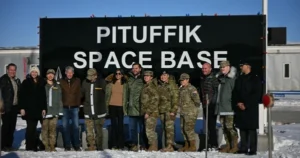
The geopolitical landscape of the Arctic experienced a seismic shift when Washington announced a comprehensive security agreement with Denmark and the autonomous territory of Greenland. The accord solidifies long-term United States oversight regarding regional security, specifically addressing longstanding concerns held by American leadership regarding the strategic posturing of rival powers such as Russia and China in the northern latitudes.
Under the terms of the newly minted framework, adversarial nations are explicitly barred from establishing military bases, deploying armed forces, or executing sensitive investments within Greenland without explicit written consent from the United States. This measure effectively curtails the economic and military footprints that competing global superpowers might attempt to establish in the resource-rich, logistically vital Arctic territory.
Denmark and Greenlandic leadership have moved quickly to validate the terms, emphasizing that the agreement serves to fortify security across the Arctic and North Atlantic regions, providing tangible benefits to both the North Atlantic Treaty Organization (NATO) and broader European stability. Danish Prime Minister Mette Frederiksen and Greenlandic Prime Minister Jens-Frederik Nielsen jointly underscored that the formal text explicitly recognizes Danish sovereignty alongside the fundamental right of self-determination exercised by the people of Greenland.
This diplomatic milestone fulfills a long-held ambition for American leadership, which has historically viewed the world’s largest island as an indispensable linchpin for continental defense, early-warning missile detection, and freedom of navigation across critical maritime corridors. Analysts note that as ice recedes due to shifting climatic conditions, opening new shipping lanes and rendering previously inaccessible mineral deposits viable for extraction, the strategic value of Greenland has multiplied exponentially. By securing a binding mechanism that prevents foreign adversaries from gaining a foothold, Washington has effectively established an impenetrable security buffer along its northern flank.
Territorial Dynamics on the Ukrainian Frontline
While diplomatic maneuvers redefine the Arctic, the theatre of war in Eastern Europe continues to grind forward with unrelenting intensity. Recent operational assessments released by the Russian Ministry of Defense indicate significant territorial gains since the commencement of the year. According to official military reports, Russian forces have successfully seized control of more than 5,300 square kilometers of Ukrainian territory alongside 220 distinct population centers.
The tempo of these operations has accelerated in recent months, with Russian military units reportedly claiming approximately 670 square kilometers and 27 population centers within a single monthly reporting cycle. Operational focus remains concentrated on the establishment of extensive security zones in the Sumy and Kharkiv regions, while advancing steadily toward the vital urban center of Zaporizhzhia along an expansive front. Heavy, protracted engagements persist in the vicinity of Orikhiv, posing continuous challenges to defensive lines.
The most severe urban and positional combat remains concentrated near the strategic Kramatorsk-Sloviansk agglomeration. Intense street fighting has been reported within the central districts of Dobropillia, while pursuing forces actively conduct mopping-up operations around Krasnyi Lyman and Sviatohirsk. Concurrently, Russian forces have consolidated control over key logistical nodes including Oskil, Krymky, and Studenok.
Conversely, officials in Kiev and international monitors have repeatedly pushed back against the narrative presented by Moscow, accusing the Kremlin of orchestrating coordinated information campaigns in tandem with select Western media outlets to project an illusion of unstoppable momentum. Independent military analysts suggest that while Russian forces have achieved incremental tactical advances, the human and material cost of these territorial gains remains extraordinarily high, characterized by attritional warfare and heavily contested grey zones.
Expansion of Russia’s Defense Industrial Base and Baltic Warnings
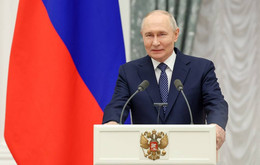
Fueling these sustained military operations is an industrial apparatus that has undergone a profound structural transformation since the outbreak of the conflict. Russian President Vladimir Putin recently addressed the trajectory of the nation’s defense manufacturing sector, highlighting its position as a primary driver of economic growth. Official figures indicate that annual military-industrial export volumes have consistently surpassed the $70 billion threshold, cementing Russia’s status as a dominant global arms supplier despite sweeping international sanctions.
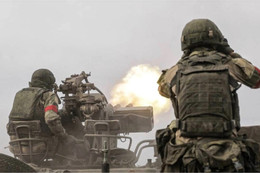
Production scales within domestic factories have multiplied exponentially. According to Kremlin data, manufacturing outputs for heavy artillery and tactical missiles have surged twenty-twofold compared to pre-conflict baselines. Production of specialized radar systems has increased fivefold, while armored combat vehicle output has doubled by a factor of 2.5, and unmanned aerial vehicle (UAV) manufacturing has scaled by multiple orders of magnitude to meet the insatiable demands of frontline units.
Alongside these production figures, President Putin reiterated a willingness to normalize relations and restore functional cooperation with neighboring European states, provided mutual respect is maintained. However, this diplomatic overture was coupled with a stern warning directed at external actors. Moscow explicitly cautioned that any aggressive actions, provocations, or attempts to infringe upon Russian sovereign rights and maritime interests in the Baltic Sea region would be met with swift, decisive, and asymmetric responses. This dual-track messaging illustrates a calculated effort by the Kremlin to sustain domestic military output while simultaneously deterring deeper direct involvement from NATO member states bordering the Baltic basin.
European Financial Support and the 3.3 Billion Euro Lifeline
Amidst the ongoing military stalemate and the intensification of winter conditions, the European Union has moved decisively to shore up Ukraine’s macroeconomic stability. Brussels announced the successful disbursement of an additional 3.3 billion Euros to Kiev, marking the operationalization of the fourth financial tranche under a broader 90 billion Euro assistance package originally greenlit in December 2025.
This critical injection of capital followed a high-level teleconference between European Commission President Ursula von der Leyen and Ukrainian President Volodymyr Zelensky. The discussions focused heavily on fortifying Ukraine’s economic resilience against the backdrop of sustained infrastructural degradation, systemic energy challenges, and the impending hardships of the winter season.
The financial relief arrives as Kiev navigates a daunting budgetary deficit, projected at approximately 23.4 billion Euros for the current fiscal year. While EU institutions and individual member states have collectively funneled over 224.5 billion Euros in financial, humanitarian, and military assistance into Ukraine since 2022, the 90 billion Euro structured loan program serves as a vital structural alternative. Designed to bypass persistent political deadlock surrounding the controversial liquidation or confiscation of immobilized Russian sovereign assets held within European financial institutions, this lending mechanism is engineered to cover roughly two-thirds of Ukraine’s total external financing requirements throughout the 2026-2027 budgetary cycle.
Broader Implications for Global Stability
The simultaneous convergence of Arctic territorial pacts, accelerating industrial-scale warfare in Eastern Europe, and massive institutional financial interventions paints a complex picture of contemporary geopolitics. The Greenland security accord demonstrates that traditional great-power competition has expanded permanently beyond standard geographical boundaries, with the Arctic emerging as a primary theater for strategic deterrence.
Simultaneously, the protracted conflict in Ukraine continues to test the limits of industrial endurance and fiscal sustainability. As Russia’s defense economy achieves record output levels, Western allies are forced to continually calibrate their financial and material commitments to prevent a strategic collapse of Ukrainian defenses. The interplay between these diverse global events signals an entering era of hardened blocs, heightened militarization of critical supply chains, and a permanent transformation of the post-Cold War security architecture.