Clarifying Jurisdiction for Land Title Corrections: Ministry Guidance on Red Book Errors and Administrative Authority

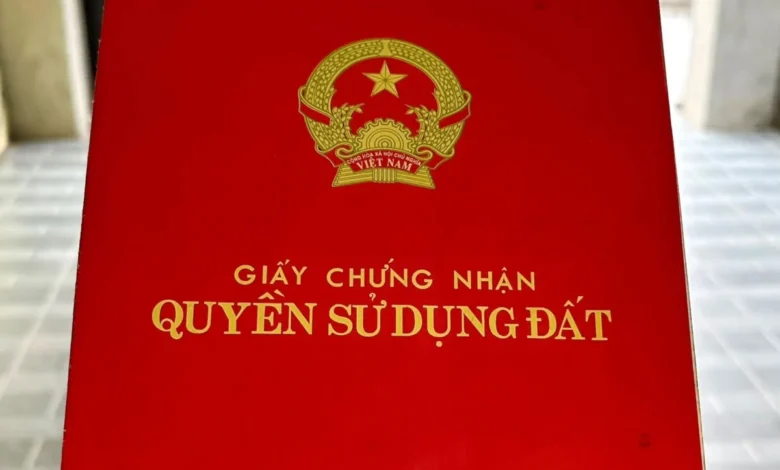
The administration of land management rights and the correction of state-issued land documentation remain critical pillars of property law in Vietnam. Recently, a resident in Tay Ninh province formally sought administrative clarification regarding which government tier holds the legal jurisdiction to correct or revoke land use rights certificates—commonly referred to as "red books"—when informational discrepancies are identified on previously issued documents. The inquiry highlighted two distinct operational scenarios involving documents issued originally in 2003, prompting an official response from the Ministry of Agriculture and Environment. This case has brought to the forefront broader questions concerning administrative decentralization, local governance procedures, and the specific application of the Land Law of 2024.
Background Context and Citizen Inquiries
Land use rights certificates are foundational legal instruments that secure property ownership, facilitate transactions, and ensure legal protection for citizens and corporate entities alike. Over the decades, Vietnam’s land administration framework has undergone significant legislative transformations to streamline bureaucracy, enhance transparency, and resolve long-standing administrative bottlenecks. However, historical document backlogs, evolving mapping methodologies, and administrative handovers between provincial, district, and commune levels have occasionally resulted in technical errors or discrepancies within land registries.
In the case brought forward from Tay Ninh province, the citizen raised two specific operational contexts that expose potential ambiguities in local administrative workflows:
- The First Scenario: A land use rights certificate was initially issued by the district People’s Committee in 2003. Subsequently, in 2006, the local Land Registration Office executed a formal change registration entry on page four of the document. Years later, the current landowner identified inaccuracies within the recorded information, creating uncertainty over whether the commune-level People’s Committee or the Branch of the Land Registration Office holds the statutory authority to correct or revoke the certificate.
- The Second Scenario: Similar to the first, a primary land use rights certificate was issued by the district People’s Committee in 2003. The land parcel was later transferred to a new owner, and the district People’s Committee executed and issued a brand-new certificate to the transferee in 2006. Upon discovering errors in the information recorded on this newly issued document, the citizen sought to determine the appropriate competent authority for administrative correction or revocation.
These inquiries reflect a widespread practical concern among property owners regarding the division of labor between grassroots administrative units (commune People’s Committees) and specialized technical bodies (Land Registration Offices) when rectifying historical paperwork.
Chronology of Legislative Frameworks Governing Land Management
To properly contextualize the resolution of these administrative issues, it is essential to examine the legal evolution governing land registration and certificate issuance in Vietnam:
- 2003–2006 Period: Initial land certificates and early transfers were largely managed under the overarching provisions of the 1993 Land Law and its subsequent amendments, where district-level People’s Committees held primary issuance responsibilities, and specialized registration offices gradually assumed operational management of registry updates.
- Implementation of the 2024 Land Law: The modern legal landscape is governed by the Land Law of 2024, which introduces robust mechanisms for correcting errors, updating changes, and defining administrative jurisdictions with greater precision. Article 152 of this legislation explicitly outlines the competencies, procedures, and conditions for correcting, revoking, and annulling previously issued certificates.
- Recent Regulatory Adjustments (2025–2026): Pursuant to Paragraph 1, Article 15 of Government Decree No. 49/2026/ND-CP—which details and guides the implementation of specific articles of National Assembly Resolution No. 254/2025/QH15—the central government has empowered provincial-level People’s Committees to establish specific administrative procedures tailored to local operational realities. Consequently, several localities have delegated certain routine registration and change-recording tasks directly to commune-level authorities.
Official Response and Statutory Guidelines from the Ministry
In addressing the administrative inquiries raised by the Tay Ninh resident, the Ministry of Agriculture and Environment provided a structured, law-based interpretation grounded in the provisions of the Land Law of 2024 and relevant sub-law normative documents.
According to the Ministry’s official guidance, the determination of jurisdiction depends entirely on when the error was introduced and the specific administrative nature of the correction required:
- Errors Originating During Initial Issuance: If the informational discrepancy occurred at the time the initial land use rights certificate was granted (as seen in cases originating from the 2003 issuance cycle), the commune-level People’s Committee—or the designated local authority acting within its delegated administrative scope—is responsible for executing the necessary corrections and handling the administrative procedures for the revocation or re-issuance of the certificate as mandated by law.
- Errors Involving Subsequent Changes or Registrations: In scenarios where the error relates to entries made during subsequent registration of changes, transfers, or the issuance of a new certificate (such as the 2006 transfer processing), the statutory procedures must follow the established mechanisms for land registration. This involves the Land Registration Office or its local branches executing the corrections, confirming changes, or handling administrative adjustments in accordance with specialized cadastral procedures.
Furthermore, the Ministry emphasized the importance of local decentralization. Because Government Decree No. 49/2026/ND-CP grants provincial People’s Committees the authority to issue local administrative guidelines to resolve practical bottlenecks, the division of tasks between district offices, commune authorities, and branches of the Land Registration Office may feature localized procedural nuances.
Practical Recommendations for Property Owners
Navigating land administration procedures requires careful preparation and adherence to formal bureaucratic channels. Based on the regulatory framework provided by the Ministry of Agriculture and Environment, property owners encountering similar discrepancies on their documentation are advised to undertake the following steps:
- Compile Comprehensive Dossiers: Citizens should gather all historical records, including original certificates, historical tax receipts, boundary documents, transfer contracts, and any prior administrative notifications or registry entries.
- Trace the Origin of the Error: Determining whether an inaccuracy stems from the initial grant phase or a subsequent transfer/change registration is critical for identifying the correct office of first instance.
- Engage Local Authorities Directly: Landowners should contact their local municipal or district-level "One-Stop-Shop" administrative reception departments, or the local branch of the Land Registration Office. Bringing a well-documented file ensures that officials can evaluate the specific legal history of the land parcel against provincial implementation rules issued by the Tay Ninh People’s Committee.
Broader Implications for Vietnam’s Real Estate and Land Administration Sector
The clarification provided by the Ministry highlights ongoing efforts to streamline administrative procedures and eliminate jurisdictional grey areas within Vietnam’s property sector. As real estate values rise and legal security becomes increasingly paramount for citizens, ensuring swift and unambiguous administrative corrections is vital for maintaining public trust in state-managed land registries.
By delineating clear responsibilities between grassroots commune authorities and specialized land registration branches—while simultaneously allowing provincial flexibility under Decree 49/2026—the legal framework aims to reduce processing times and prevent citizens from being caught in bureaucratic loops. For local governments, these guidelines serve as an operational benchmark to improve inter-agency coordination, modernize cadastral databases, and resolve legacy documentation challenges inherited from earlier decades of land reform.