Truck collides with motorbike at village intersection in Hai Phong highlighting rural road safety concerns

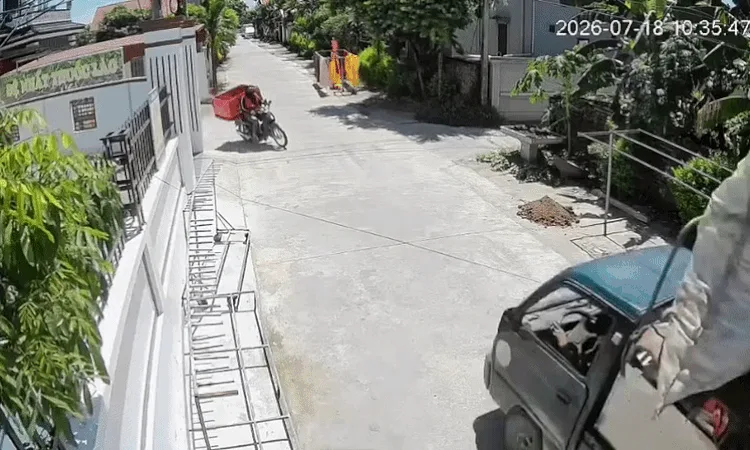
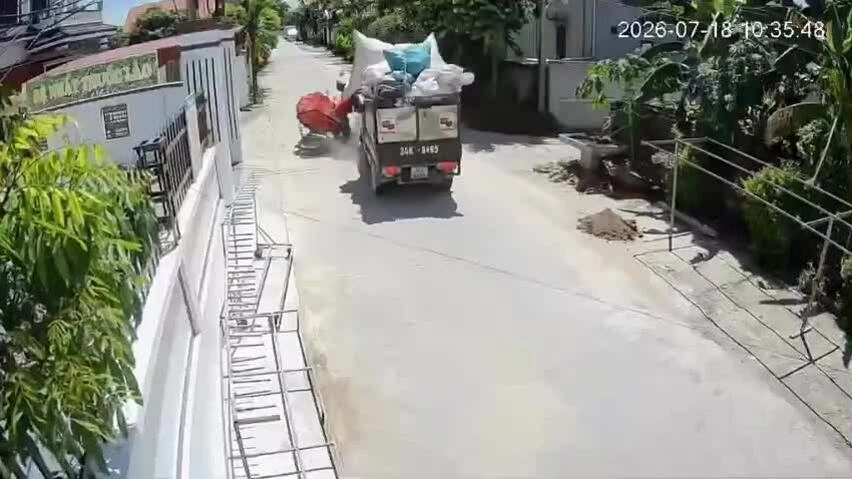
A dramatic traffic accident occurred in the coastal city of Hai Phong on July 18, involving a high-speed collision between a light truck and a motorcycle at a narrow village intersection. The incident, captured on a local security camera, has sparked renewed discussions regarding the safety of Vietnam’s rural road networks, where limited visibility and high speeds often lead to life-threatening encounters. While the motorcyclist miraculously survived the direct impact and was able to stand up shortly after the crash, the severity of the footage serves as a stark reminder of the inherent dangers present in residential areas where infrastructure and traffic discipline often clash.
Chronology of the Incident
The accident took place during the daylight hours of July 18 in a residential area of Hai Phong. According to the recorded footage, a light truck was traveling at a significant speed through a narrow village road. This particular stretch of road is characterized by its limited width and the presence of high brick walls and dense vegetation on both sides, which significantly obstructs the peripheral vision of any driver passing through.
At the same time, a motorcyclist was emerging from a small alleyway on the left side of the truck’s path, attempting to enter the main thoroughfare. The intersection of the alley and the main road lacked any formal traffic control signals, stop signs, or mirrors to assist in navigating the blind corner.
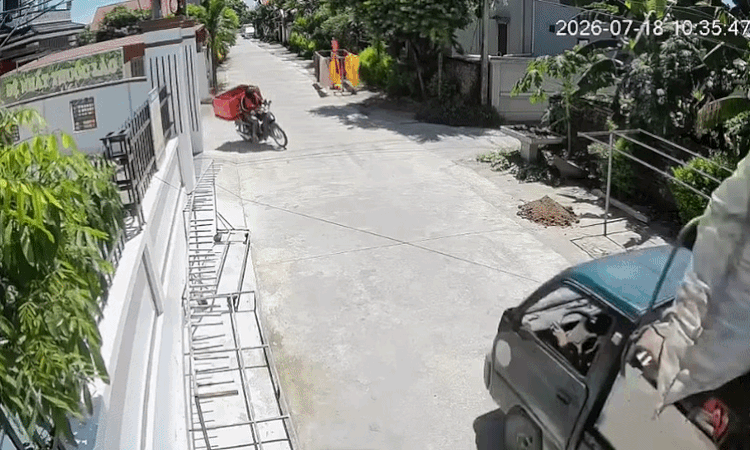
As the truck approached the junction, neither the truck driver nor the motorcyclist appeared to have noticed each other’s presence until the final moments. The motorcyclist exited the alley at a steady pace, while the truck maintained its high velocity. The resulting collision was a direct, front-to-side impact. The force of the truck struck the motorcycle squarely, sending the rider tumbling across the pavement in a violent "flip" motion.
Despite the intensity of the crash, which saw the motorcycle dragged several meters, the rider was seen in the video standing up almost immediately after the impact. While the extent of internal injuries or damage to the vehicles remains unconfirmed, the immediate visual evidence suggests a fortunate outcome for what could have easily been a fatal encounter.
Environmental Factors and Visibility Constraints
The Hai Phong incident highlights a common structural issue found in many Vietnamese villages and suburban communes. The road in question is a classic example of a "village road" (đường làng), which often lacks the safety standards found on major highways or modern urban boulevards.
- Restricted Sightlines: The presence of residential walls built right up to the edge of the road creates "blind junctions." In this specific case, the walls blocked the truck driver from seeing the alley and prevented the motorcyclist from seeing the approaching truck until both were within the intersection.
- Road Width: Narrow lanes leave very little room for evasive maneuvers. When two vehicles meet at a high speed in such a confined space, there is no "buffer zone" to allow for swerving or emergency braking without hitting a secondary obstacle like a wall or a tree.
- Speed Management: Despite being a residential area where pedestrian and local traffic is common, the truck was documented traveling at a speed that appeared inconsistent with the safety requirements of the environment. High speed reduces the "golden time" available for a driver to react to an emerging obstacle.
Statistical Background of Road Safety in Vietnam
To understand the gravity of the Hai Phong collision, one must look at the broader context of traffic safety in Vietnam. According to data from the National Traffic Safety Committee (NTSC), traffic accidents remain one of the leading causes of death and injury in the country.
In the first half of 2024 alone, Vietnam recorded thousands of traffic-related incidents. Motorcyclists are the most vulnerable group, involved in approximately 60% to 70% of all road accidents. The transition from rural alleys to main roads is frequently cited as a high-risk maneuver.
Furthermore, Hai Phong, as a major industrial and port city, sees a high volume of logistics traffic, including light trucks and heavy containers. When these commercial vehicles traverse smaller provincial or village roads to reach warehouses or bypass congestion, the risk to local residents and motorcyclists increases exponentially. The disparity in mass between a light truck and a motorcycle means that even at moderate speeds, the kinetic energy transferred during a collision is often enough to be lethal.
Legal Implications and Right-of-Way Regulations
Under the Vietnamese Law on Road Traffic, specific rules govern the behavior of drivers at intersections and when emerging from small roads.
Article 24 of the Road Traffic Law stipulates that when approaching an intersection, a driver must slow down and give way according to specific priorities. Crucially, vehicles entering a "main road" from a "minor road" or an alley must yield to vehicles already traveling on the main road. In the Hai Phong incident, the motorcyclist emerging from the alley had a legal obligation to stop and observe before entering the path of the truck.
However, the law also places a heavy burden on drivers of motorized vehicles regarding speed control. Circular 31/2019/TT-BGTVT of the Ministry of Transport regulates the speed of vehicles in residential areas. Drivers are required to maintain a speed that allows them to stop safely in the event of an unexpected obstacle. The high speed of the truck in a confined village setting could be interpreted as a violation of the requirement to "master speed" (làm chủ tốc độ), especially in areas with limited visibility.
Legal experts often point out that in such cases, fault is rarely attributed to one party alone. The motorcyclist’s failure to stop and the truck driver’s excessive speed in a restricted area create a "joint negligence" scenario that authorities must investigate to determine liability for damages.
Expert Analysis on Defensive Driving Skills
Traffic safety experts emphasize that the Hai Phong accident was entirely preventable through the application of defensive driving techniques.
For the truck driver, the primary error was a lack of "situational awareness." In a village setting where every gate or alleyway is a potential source of traffic, drivers should adopt a "cover the brake" policy—keeping the foot ready on the brake pedal and reducing speed significantly below the legal limit when passing blind spots.
For the motorcyclist, the error was "blind entry." Experts suggest the "Stop, Look, and Listen" method. When exiting a narrow alley, the rider should come to a complete halt, lean forward to peek around the corner, and only proceed when the road is clear. Many riders in rural areas rely on hearing the sound of an engine to detect approaching traffic, but modern vehicle insulation and ambient noise make this a dangerous and unreliable strategy.
The Role of Infrastructure in Mitigating Risks
While driver behavior is a primary factor, the role of infrastructure cannot be ignored. The Hai Phong accident underscores the need for local authorities to implement low-cost safety measures in village communes:
- Convex Mirrors: Installing mirrors at blind T-junctions allows drivers to see around corners.
- Rumble Strips: Placing small speed humps or rumble strips before an intersection can naturally force drivers to decelerate.
- Signage: Clearly marking "Slow Down" zones or indicating the presence of an intersection can alert non-local drivers to potential hazards.
- Zoning Laws: Ensuring that new constructions (walls or fences) do not further obstruct the view at critical junctions.
Social and Economic Impact of Traffic Accidents
Beyond the immediate physical injuries, accidents like the one in Hai Phong have a lasting socio-economic impact. In Vietnam, many families rely on a single breadwinner who uses a motorcycle for commuting or delivery work. An accident that results in a destroyed vehicle or a period of hospitalization can push a near-poor family into a cycle of debt.
The healthcare burden is also significant. Traumatic brain injuries and orthopedic surgeries resulting from motorcycle crashes occupy a large percentage of hospital beds in major cities like Hai Phong and Hanoi. By enriching the public’s understanding of these risks through the analysis of real-world footage, safety advocates hope to foster a culture of "safety first" that transcends mere compliance with the law.
Conclusion and Future Outlook
The July 18 accident in Hai Phong ended with a lucky escape for the motorcyclist, but it serves as a chilling preview of what happens when speed and poor visibility meet. As Vietnam continues to modernize its rural infrastructure, the gap between traditional village layouts and the increasing number of motor vehicles must be bridged through education, stricter law enforcement, and smarter road design.
The local police in Hai Phong continue to monitor such hotspots, and residents are encouraged to report areas with frequent "near-misses." Ultimately, the responsibility for road safety is shared. Whether behind the wheel of a truck or the handlebars of a motorcycle, the price of a few seconds of saved time is never worth the risk of a life-altering collision. The footage from this incident remains a potent educational tool, illustrating that on the road, the unexpected should always be expected.