Vietnam continues to solidify its standing as a premier destination for foreign direct investment (FDI), drawing substantial capital inflows from an increasingly diverse group of global economies. Despite a complex and volatile geopolitical landscape marked by shifting trade policies, escalating regional conflicts, and disrupted supply chains, the country has demonstrated remarkable economic resilience. According to official reports from the General Statistics Office under the Ministry of Finance, total registered FDI into Vietnam reached an impressive $54.85 billion during the first ten months of the year, representing a substantial 74% increase compared to the same period in the previous year. This figure marks the highest ten-month registered FDI volume recorded in Vietnam over the past 17 years, signaling sustained and robust investor confidence.
The remarkable performance underscores Vietnam’s enduring attractiveness within the Association of Southeast Asian Nations (ASEAN) region. New registered capital accounted for the largest share of this influx, with the country granting licenses to 3,478 new projects totaling $30.73 billion. This reflects a 4.7% increase in the number of projects and a staggering 2.2-fold increase in capital value compared to the previous year. The disproportionate surge in capital relative to the number of projects indicates a significant upward shift in the average scale and quality of incoming investments, as foreign enterprises commit larger financial resources to individual ventures.
Diversification of Investor Base and Strategic Sectors
A notable characteristic of this investment wave is the diversification of source countries. Alongside traditional, long-standing contributors such as Singapore, South Korea, and Japan, new players have emerged as major financial backers. Most notably, Luxembourg and the Special Administrative Region of Hong Kong have channeled substantial capital into the Vietnamese economy, with Luxembourg recording nearly $5 billion in new project investments and Hong Kong contributing heavily across multiple sectors.
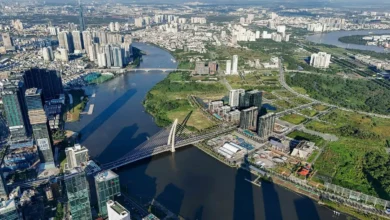
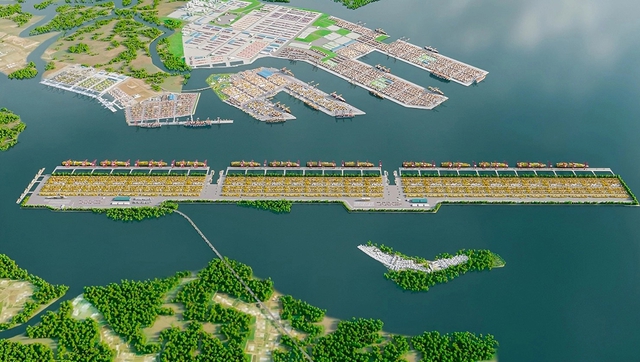
A prime example of Luxembourg’s growing footprint is its involvement in the Can Gio International Transshipment Port project in Ho Chi Minh City. Valued at approximately $4.9 billion, the port project is a joint venture involving Terminal Investment Limited Holding S.A., Vietnam National Shipping Lines (VIMC), and Saigon Port Joint Stock Company. This venture represents one of the largest single project approvals in Ho Chi Minh City, highlighting a strategic shift toward infrastructure and logistics investments.
Furthermore, diplomatic and economic ties between Vietnam and these emerging investor nations have strengthened concurrently. High-level delegations, including bilateral meetings between financial ministry officials from Vietnam and Luxembourg, have resulted in formal memoranda of understanding. These agreements aim to foster deeper integration within capital markets, encourage sovereign and institutional investment funds to explore long-term opportunities, and direct capital toward sustainable infrastructure and green finance initiatives.
Economic Resilience and Strategic Pull Factors
Economic experts attribute this unprecedented FDI surge to a convergence of domestic stability, competitive advantages, and proactive policy frameworks. Vietnam’s macroeconomic fundamentals remain robust, supported by strong gross domestic product (GDP) growth, an expanding domestic consumer market, and an advantageous geographic location at the heart of Southeast Asia’s maritime and terrestrial trade routes.
Industry leaders point out that the evolution of foreign investment goes beyond traditional manufacturing and assembly. Logistics providers, such as regional freight networks expanding their operations in the country, note that the acceleration of digital commerce, modern retail, and industrial manufacturing has created an immense demand for integrated supply chain solutions. Investors are increasingly looking to establish long-term operational capabilities, expand distribution networks, and deploy localized solutions tailored to the needs of Vietnam’s dynamic economy.
Moreover, the Vietnamese government has strategically focused on cultivating high-value sectors, including renewable energy, semiconductor fabrication, artificial intelligence infrastructure, and green technology. Policies designed to incentivize research and development, streamline administrative procedures, and improve public infrastructure have provided a predictable environment for multinational corporations seeking to diversify their global supply chains.
Navigating Global Geopolitical and Economic Challenges
While the investment climate remains exceptionally positive, international economists emphasize the necessity of adapting to global economic headwinds. Geopolitical fragmentation, trade tensions, and macroeconomic volatility—such as fluctuating transport and insurance costs driven by Middle Eastern conflicts—continue to influence global capital allocation. Major economies have increasingly enacted protective policies, localized sourcing mandates, and stringent controls on outbound investments in critical technologies like semiconductors and AI.
In response to these global dynamics, regional competitors have also adjusted their investment incentives. For instance, Malaysia has introduced targeted preferential tax rates within strategic economic zones, while Thailand has enforced stricter local employment quotas to maximize domestic economic benefits. Within this competitive environment, Vietnam maintains its position as the third-largest recipient of FDI in Southeast Asia, trailing regional financial hub Singapore and closely mirroring Indonesia.
To maintain its competitive edge and ensure sustainable long-term development, economic policy advisors recommend that Vietnam transition its FDI strategy from quantitative growth to qualitative depth. This involves moving away from basic assembly toward higher value-added segments of the global supply chain, such as semiconductor testing, packaging, design, and advanced digital infrastructure.
Enhancing Spillover Effects and Upgrading Domestic Capabilities
A central focus for policymakers is maximizing the spillover effects of foreign capital to benefit domestic enterprises. Historically, while large-scale FDI inflows have boosted export volumes, their integration with local small and medium-sized enterprises (SMEs) has occasionally been limited. To address this, experts advocate for performance-based incentive structures tied to measurable outcomes, such as the localization rate of raw materials, the transfer of proprietary technology, and collaboration with local universities and vocational training institutions.
By implementing models that link tax incentives and financial support directly to workforce development, research and development investments, and supply chain integration, Vietnam can ensure that incoming FDI genuinely contributes to domestic industrial capacity. Additionally, stabilizing the supply of clean energy through direct power purchase agreements and expanding specialized industrial parks will be critical in attracting multinational corporations committed to environmental, social, and governance (ESG) standards.
Strong Capital Disbursement and Future Outlook
The positive trajectory of foreign investment is further underscored by actual capital disbursement figures. During the first ten months of the year, realized FDI reached $4.08 billion, representing a 13.1% increase year-on-year and marking the highest disbursement rate for the corresponding period in five years. This steady execution of registered projects demonstrates that foreign investors are actively moving forward with their commitments rather than merely holding speculative capital.
As Vietnam continues to advance its structural reforms, improve transport and logistics networks, and strengthen its commitment to green growth, the nation is well-positioned to navigate global economic uncertainties. By maintaining policy consistency, fostering public-private partnerships, and deepening integration within global technology and trade networks, Vietnam aims to transform incoming foreign direct investment into a sustainable engine for long-term economic prosperity.